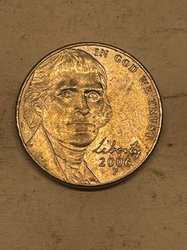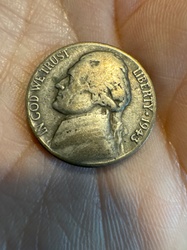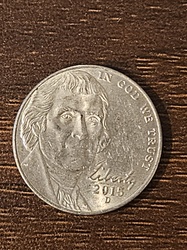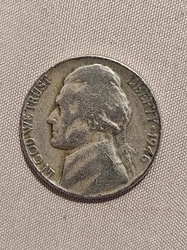
Jefferson Nickel
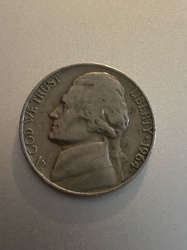
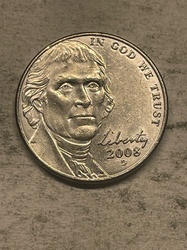
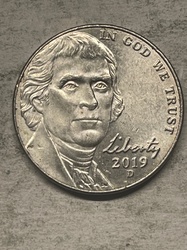
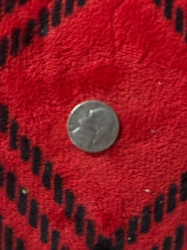
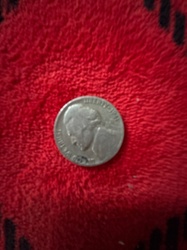
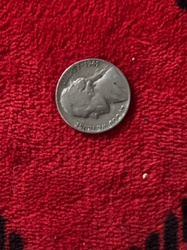
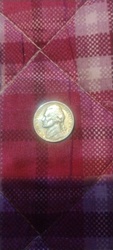
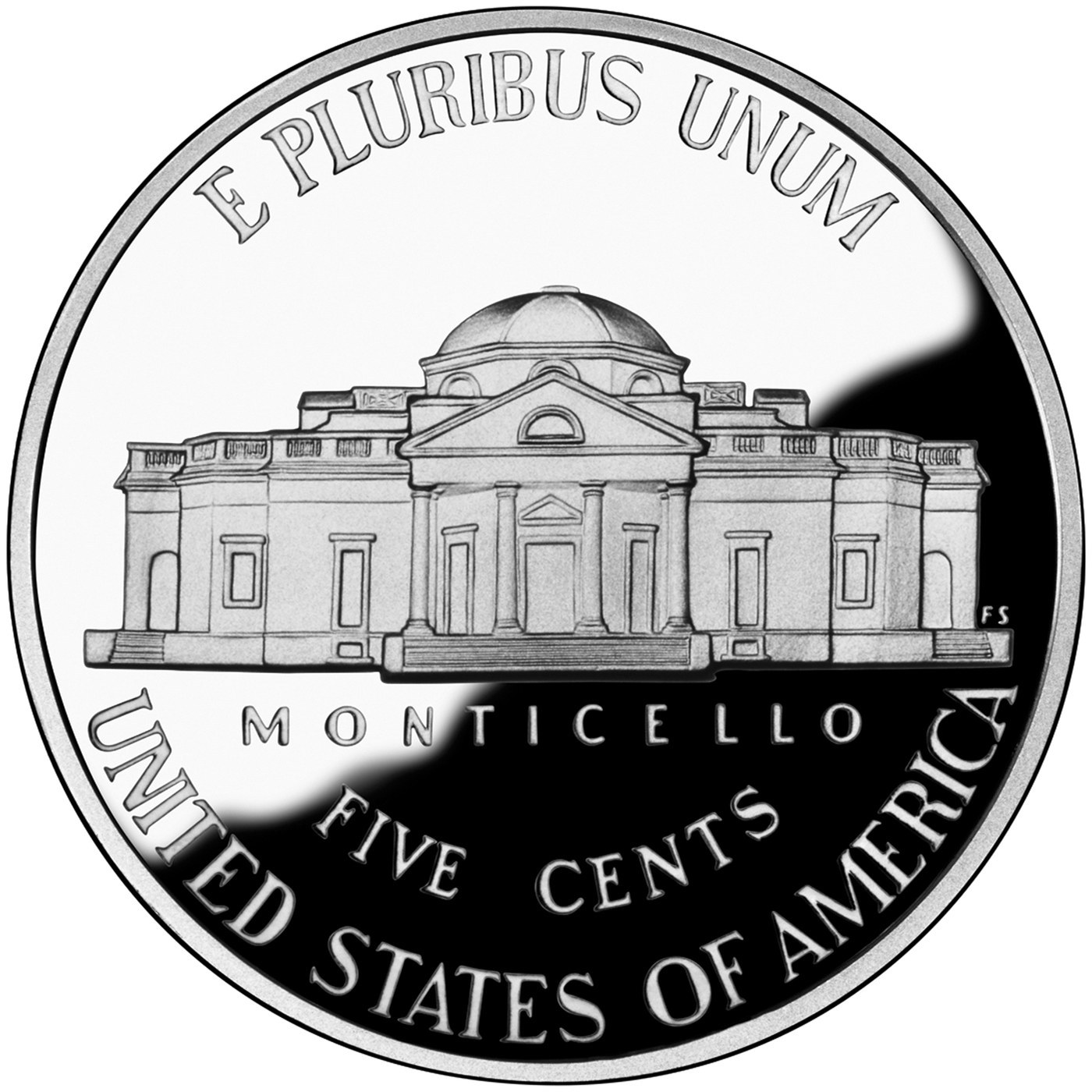
U.S. five-cent piece introduced in 1938, showing Thomas Jefferson on the obverse and his Monticello home on the reverse. 1942–1945 issues are 35% silver.
- Country
- United States
- Denomination
- 5 Cents
- Metal
- Copper-Nickel
Got a coin like this?
Identify any coin from a photo, free.
Overview
The Jefferson Nickel is the United States five-cent coin first issued in 1938 and still produced today. Its obverse carries a left-facing profile of Thomas Jefferson, the nation's third president, and its reverse depicts Monticello, the Virginia home he designed. The coin measures about 21.2 mm in diameter and normally weighs 5 grams.
The 1938–present series is usually struck in a copper-nickel alloy of 75% copper and 25% nickel. The 1945-dated example shown here, however, belongs to the special wartime issue: from mid-1942 through 1945 the coin was made from an alloy of copper, silver, and manganese so that nickel could be conserved for the war effort. These "war nickels" are the same size and design but a different composition.
History & Background
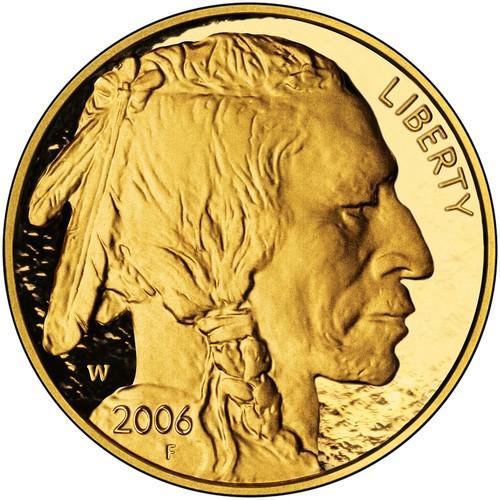
The Jefferson Nickel was introduced in 1938 to replace the Buffalo (Indian Head) nickel, which had completed the 25-year minimum required before a design could be changed without an act of Congress. The original design was created by artist Felix Schlag, whose left-facing Jefferson portrait and front view of Monticello won a public competition held by the U.S. Mint.
During World War II, nickel was a critical war material, so from October 1942 through the end of 1945 the Mint changed the alloy to 56% copper, 35% silver, and 9% manganese. To mark this temporary composition, these coins carry a large mint mark placed above the dome of Monticello on the reverse — including a "P" for Philadelphia, the first time that letter was used on a U.S. coin. The 1945 coin shown here is one of these wartime silver issues. In 1946 the coin returned to the standard copper-nickel alloy, and the design has continued, with later modifications to Jefferson's portrait, into the present day.
How to Identify
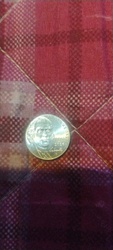
The obverse shows a profile bust of Thomas Jefferson facing left, with "IN GOD WE TRUST" along the left rim, "LIBERTY" and the date to the right. The reverse displays a front elevation of Monticello — a domed, columned building — with "MONTICELLO" spelled beneath it, along with "E PLURIBUS UNUM," "UNITED STATES OF AMERICA," and "FIVE CENTS."
The coin is about 21.2 mm across with a plain (smooth) edge. On the 1945 wartime issue seen here, look for the oversized mint mark centered above Monticello's dome; standard 1938–1942 and 1946-onward nickels instead place a small mint mark to the right of the building, or omit it entirely for Philadelphia coins of that era. This large-mint-mark position is the quickest way to recognize a 1942–1945 silver war nickel.
Value & Collectibility
Most Jefferson Nickels are extremely common and circulate at face value, with worn examples worth only a few cents above five cents. Value rises with grade, original luster, and sharpness of Monticello's steps, which collectors use to judge strike quality. Certain dates and varieties command premiums, such as the low-mintage 1939-D and 1950-D and well-struck "Full Steps" examples.
The 1945 war nickel shown here has additional intrinsic value because it contains about 0.056 troy ounce of silver, so its melt value typically exceeds face value and tracks the silver market. Circulated war nickels are common and modestly priced, while uncirculated pieces with strong detail bring more. As always, condition and authenticity drive value, and certified coins from a reputable grading service offer the most reliable guide.
Frequently asked questions
Is a 1945 Jefferson Nickel made of silver?
Yes. Nickels struck from mid-1942 through 1945 are "war nickels" made of 56% copper, 35% silver, and 9% manganese. The 1945 coin contains roughly 0.056 troy ounce of silver.
Who is on the Jefferson Nickel?
The obverse shows Thomas Jefferson, the third U.S. president. The reverse pictures Monticello, the Virginia home he designed and lived in.
How do I know if my nickel is a silver war nickel?
Check the reverse: war nickels of 1942–1945 have a large mint mark (P, D, or S) centered above the dome of Monticello. Standard nickels place any mint mark to the right of the building.
What is a Jefferson Nickel worth?
Most are common and worth face value in worn condition. Silver war nickels are worth their silver content, and high-grade or key-date coins with sharp Monticello steps can bring more.
When was the Jefferson Nickel first made?
It debuted in 1938, replacing the Buffalo nickel, and has been produced ever since, making it one of the longest-running U.S. coin designs still in circulation.
Jefferson Nickel guides
In-depth guides for identifying, valuing, and collecting Jefferson Nickel.
Jefferson Nickel identified by the community
Real coins identified with Coin Identifier.