How to Identify the Jefferson Nickel
How to read the Jefferson obverse and Monticello reverse, confirm size and metal, and spot a 1942–1945 silver war nickel by its large mint mark above the dome.
Read the full Jefferson Nickel encyclopedia entry →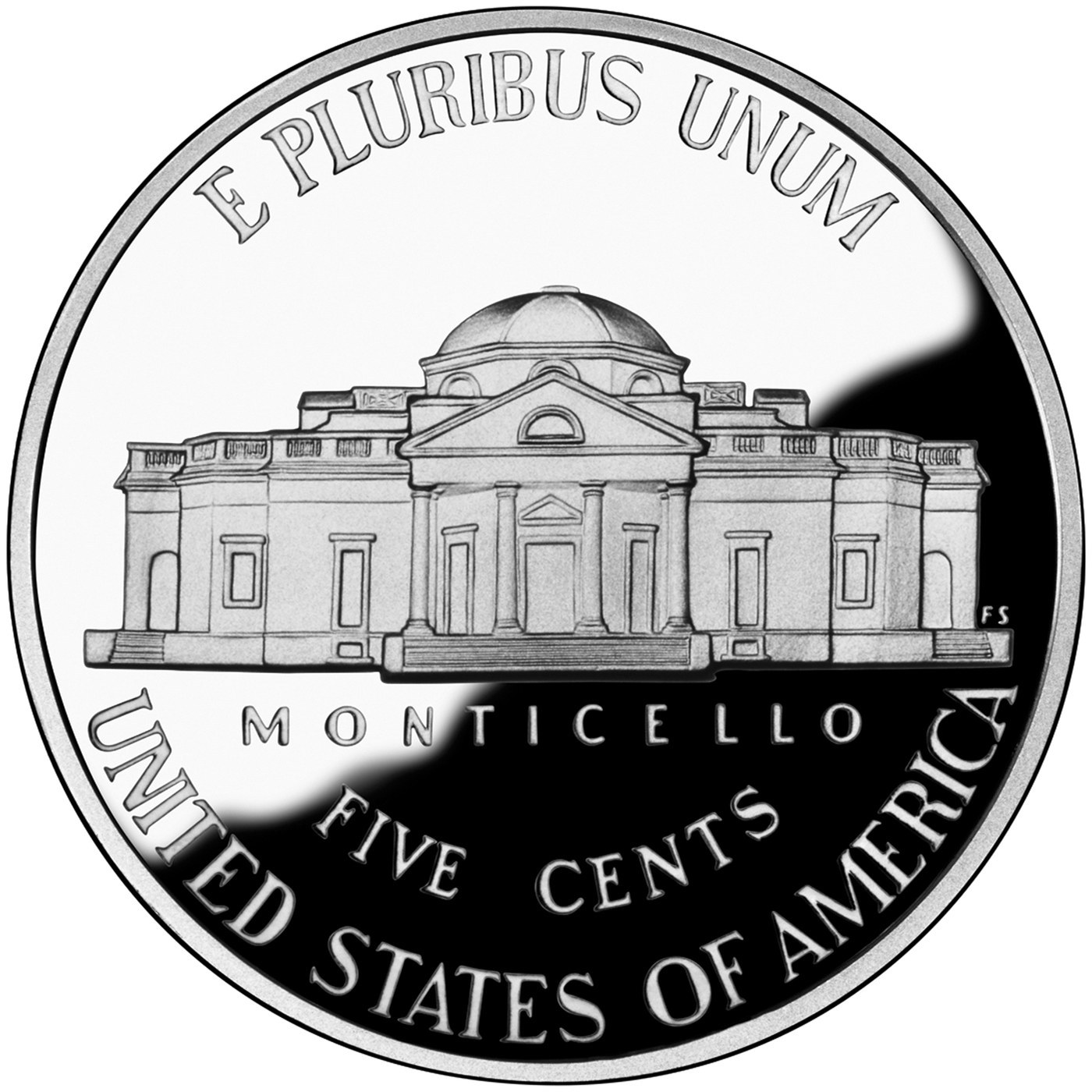
Start With the Obverse
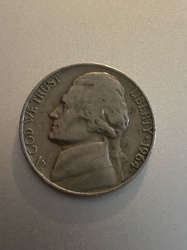
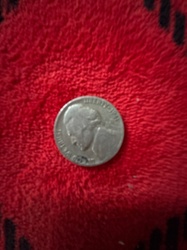
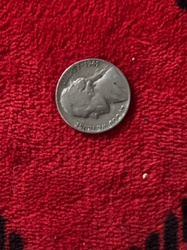
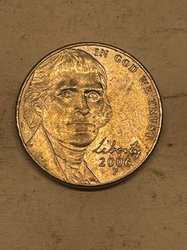
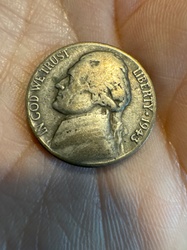
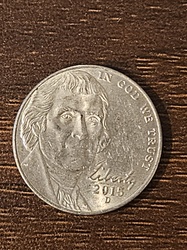
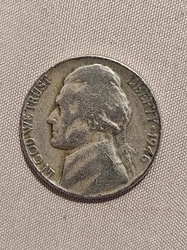
Look for a left-facing profile bust of Thomas Jefferson. "IN GOD WE TRUST" runs along the left edge, while "LIBERTY" and the four-digit date sit to the right of the portrait — our example reads 1945. This original Felix Schlag portrait was used from 1938 until it was modernized decades later, so an older-style, sharply cut profile is normal on a 1945 coin.
Read the Monticello Reverse
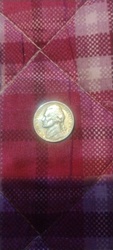
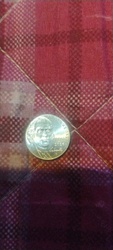
The reverse shows a straight-on view of Monticello, a domed building fronted by columns, with "MONTICELLO" spelled directly beneath it and "FIVE CENTS" below that. The mottoes "E PLURIBUS UNUM" and "UNITED STATES OF AMERICA" curve around the rim. Collectors judge strike quality by how many of the steps below the columns are fully separated — "Full Steps" coins are more desirable.
Confirm Size, Edge, and Metal
A Jefferson Nickel is about 21.2 mm across with a plain, smooth edge and normally weighs 5 grams. Standard coins are copper-nickel and have a uniform gray tone. The 1942–1945 war nickels are the exception: their copper-silver-manganese alloy often tones to a slightly duller gray and can develop a distinctive mottled or dark patina, a useful visual clue alongside the mint-mark test below.
Use the Mint Mark to Spot a War Nickel
Mint-mark placement is the single most reliable diagnostic for a silver 1945 coin. On war nickels the mint mark — "P," "D," or "S" — is large and centered above the dome of Monticello. On all other Jefferson Nickels through 1964, any mint mark is small and placed to the right of the building, and Philadelphia coins of that era carry none at all. If you see a big letter over the dome, you have a 1942–1945 silver issue.
Watch for Look-Alikes and Altered Coins
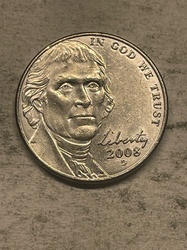
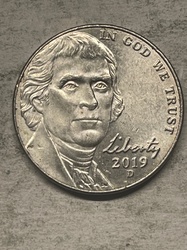
Don't confuse a Jefferson Nickel with the earlier Buffalo nickel, which shows a Native American profile and a bison, or with modern nickels bearing revised Jefferson portraits and reverse designs. Because war nickels carry silver and certain dates carry premiums, be cautious of coins with added or moved mint marks; compare the mint-mark style and position to trusted references, and for any valuable piece rely on a reputable third-party grading service to confirm authenticity.
Frequently asked questions
Where is the mint mark on a 1945 Jefferson Nickel?
On 1942–1945 war nickels the mint mark is large and sits above the dome of Monticello on the reverse. This position, rather than to the right of the building, marks the silver wartime alloy.
How can I tell a Jefferson Nickel from a Buffalo nickel?
The Jefferson Nickel shows a Jefferson profile and the Monticello building. The Buffalo (Indian Head) nickel that preceded it shows a Native American on the obverse and a bison on the reverse.
Does a silver war nickel look different from a regular nickel?
They are the same size and design, but war nickels often tone to a duller or mottled gray because of their silver-manganese alloy. The large mint mark above Monticello is the surest confirmation.
Should I clean a Jefferson Nickel to identify it?
No. Cleaning scratches the surface and reduces collector value. Examine the coin under good light and magnification, and leave any conservation to professionals.
Jefferson Nickel identified by the community
Recent Jefferson Nickel coins identified with Coin Identifier.