
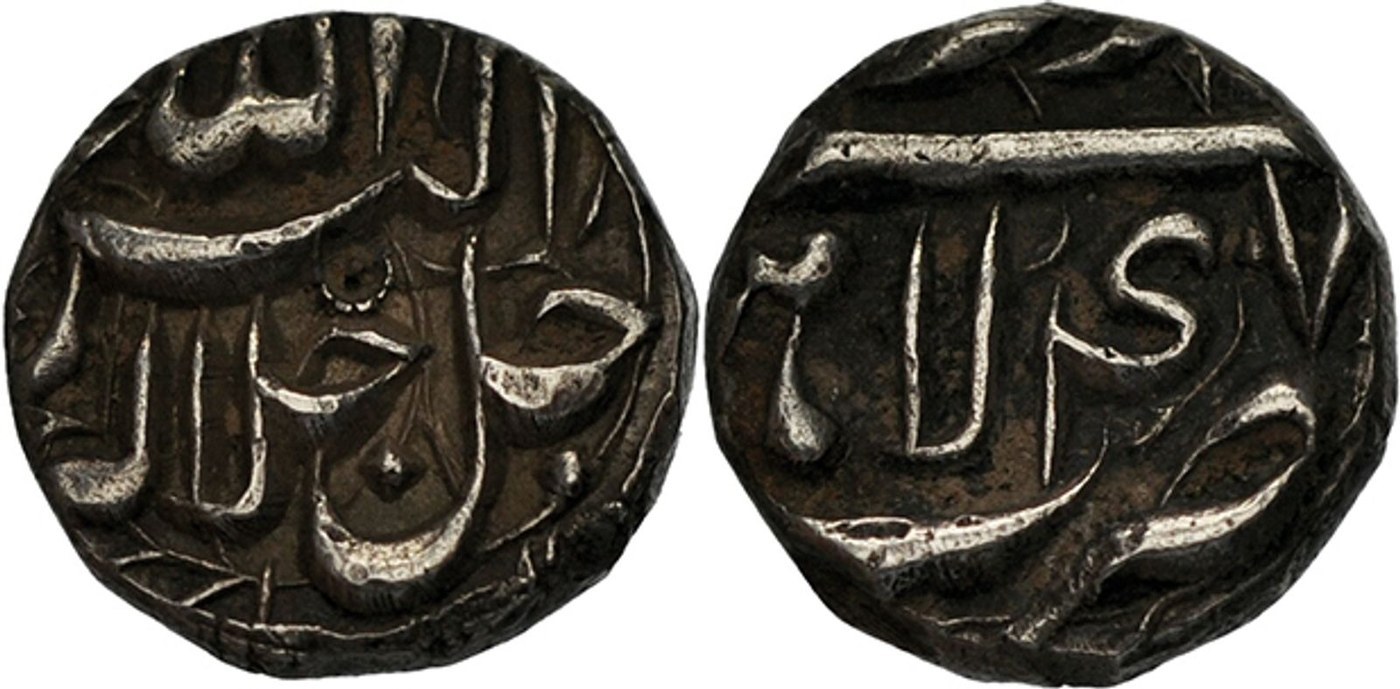
Mughal Quarter-Rupee
A small hammered Mughal silver quarter-rupee inscribed in Persian, struck at the Lahore mint and dated Ilahi 47 (AD 1602-1603).
- Country
- India (Mughal Empire)
- Denomination
- Quarter-Rupee
- Metal
- Silver
Got a coin like this?
Identify any coin from a photo, free.
Overview
The coin pictured is a Mughal silver quarter-rupee, a hand-struck fractional coin of the rupee system used across the Mughal Empire in India. Both faces are filled with Persian script in an ornamented cartouche, a hallmark of Mughal silver coinage, with no portrait or figural design. The reverse carries the mint name Lahore, identifying where the piece was struck.
The coin is dated Ilahi 47 (AD 1602-1603), using the Ilahi era calendar that was in official use during this period of Mughal rule. As a quarter denomination it is a small, thick flan bearing only part of the full legends found on larger rupees, so the inscriptions are compact and often only partly visible from a single strike.
Struck by hammer rather than machine, each example is slightly irregular in shape and centring. This is a genuinely historic circulating coin of early-modern India, valued today for its age, its Persian calligraphy, and its identifiable mint and Ilahi-era date.
History & Background
The rupee was standardized as a silver coin in northern India in the sixteenth century and was carried forward and refined under the Mughal Empire, where it became the backbone of the monetary system. Alongside the full rupee, the mint issued fractional denominations such as the half and the quarter-rupee to serve smaller everyday transactions.
The Ilahi era used to date this coin was a solar calendar adopted at the Mughal court, counting years from the emperor's accession rather than from the Islamic Hijri epoch. An Ilahi 47 date places the coin in the very early seventeenth century, AD 1602-1603, a period of established Mughal authority in the Punjab and the wider empire.
Lahore was one of the principal imperial mint cities, and coins naming Lahore circulated widely through the northern provinces. Mughal silver coins of this kind were struck by hand in large numbers over long periods, so surviving pieces vary in the completeness of their legends; precise mintage figures were not recorded and are not available today.
How to Identify
Identify the type by its all-inscription design. Both sides carry Persian legends in Arabic-Persian script set within a decorative cartouche or panel, with no bust, animal, or pictorial device. This calligraphic, portrait-free style is characteristic of Mughal and other Islamic-world silver coinage.
Look on the reverse for the mint name and the date. This piece names the mint Lahore and is dated Ilahi 47 (AD 1602-1603) in the Ilahi era; the year is written in Persian words or numerals rather than Western figures. The small quarter-rupee flan means the dies were larger than the blank, so expect part of the legend to run off the edge and the strike to be somewhat off-centre.
Confirm size and metal: the quarter-rupee is a small, thick silver coin, noticeably lighter and smaller than a full rupee, with an irregular hand-struck outline. Because Mughal fractional coins share designs across many mints, reigns, and years, the exact attribution should be confirmed by reading the mint name and Ilahi date directly and matching them to a specialist catalog.
Value & Collectibility
Value rests on a combination of silver content, mint, date, and condition, together with how much of the legend is legible. Common Mughal silver fractions with worn or partly struck inscriptions trade at modest prices, a little above their small silver value, while sharply struck pieces with fully readable mint and date bring stronger collector interest.
A clearly identifiable Lahore mint and a legible Ilahi 47 date add appeal, since collectors of Mughal coinage prize pieces that can be firmly attributed. As always with hand-struck coins, examples with clean surfaces, good centring, and complete legends sit at the upper end, while corroded, clipped, or illegible pieces fall to the lower end.
Because Mughal silver is a deep and specialized field with many mints and dates, treat any single figure as a rough guide and compare against recent sales of the same denomination, mint, and era. Professional attribution helps most on better pieces where a specific mint-and-date combination affects the price.
Frequently asked questions
What is a quarter-rupee?
It is a fractional Mughal silver coin worth one quarter of a rupee, struck for smaller everyday payments. It is smaller and lighter than a full rupee but shares the same all-inscription Persian design.
What does 'Ilahi 47' mean?
It is a date in the Ilahi era, a solar calendar used at the Mughal court that counts years from the emperor's accession. Ilahi 47 corresponds to about AD 1602-1603.
Why is there no portrait on the coin?
Mughal silver coinage followed an Islamic tradition of using calligraphic inscriptions rather than images. Both faces carry Persian legends in a decorative cartouche instead of a ruler's portrait.
What does the mint name tell me?
The mint name, here Lahore, identifies the imperial mint city where the coin was struck. Lahore was a major northern mint, and naming it helps place and attribute the coin.
Is it real silver?
Yes. The Mughal quarter-rupee is a silver coin, though as a small fraction its metal content is modest. Its value comes mainly from age, mint, date, and condition rather than bullion alone.
Mughal Quarter-Rupee guides
In-depth guides for identifying, valuing, and collecting Mughal Quarter-Rupee.
Other coins you may enjoy
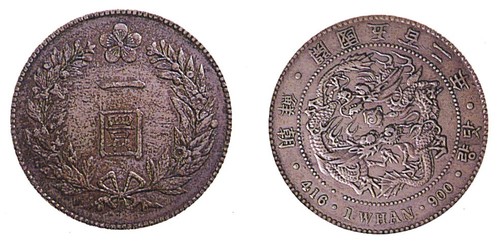
1 Hwan
Taegeuk era, late 1800s
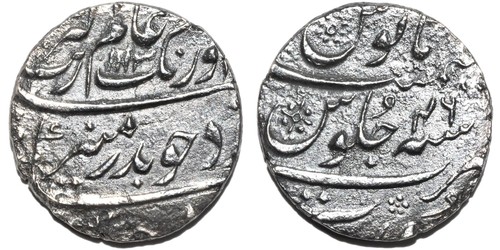
Mughal Rupee (Akbar)
AH 1003 (AD 1594)
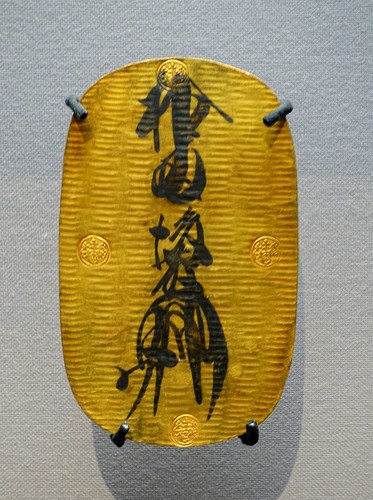
Keicho Oban
Late 1500s to early 1600s AD (Azuchi-Momoyama to early Edo period)
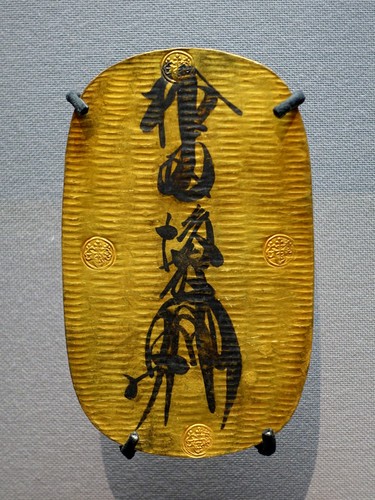
Keicho Koban
Early Edo period, Keicho-era coinage (c. 1601 onward, 17th century)
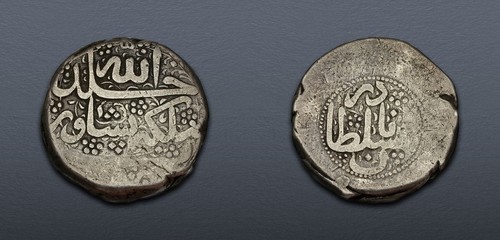
Double Rupi
AH 1151 (AD 1738-1739)
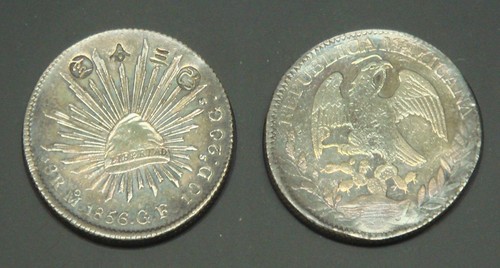
Aratame Sanbu Sadame
Dated 1859 (Ansei 6); round dragon-and-sun pieces are widely encountered as later reproductions
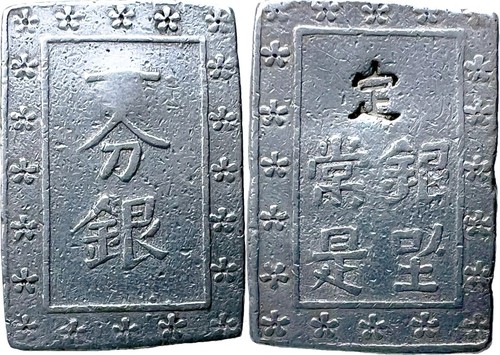
1 Bu Gin
Meiji 1 (1868-1869)
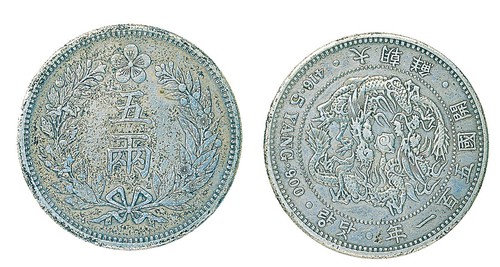
5 Yang
Late Joseon reform coinage, late 1800s (Gaeguk / Taegeuk era)