
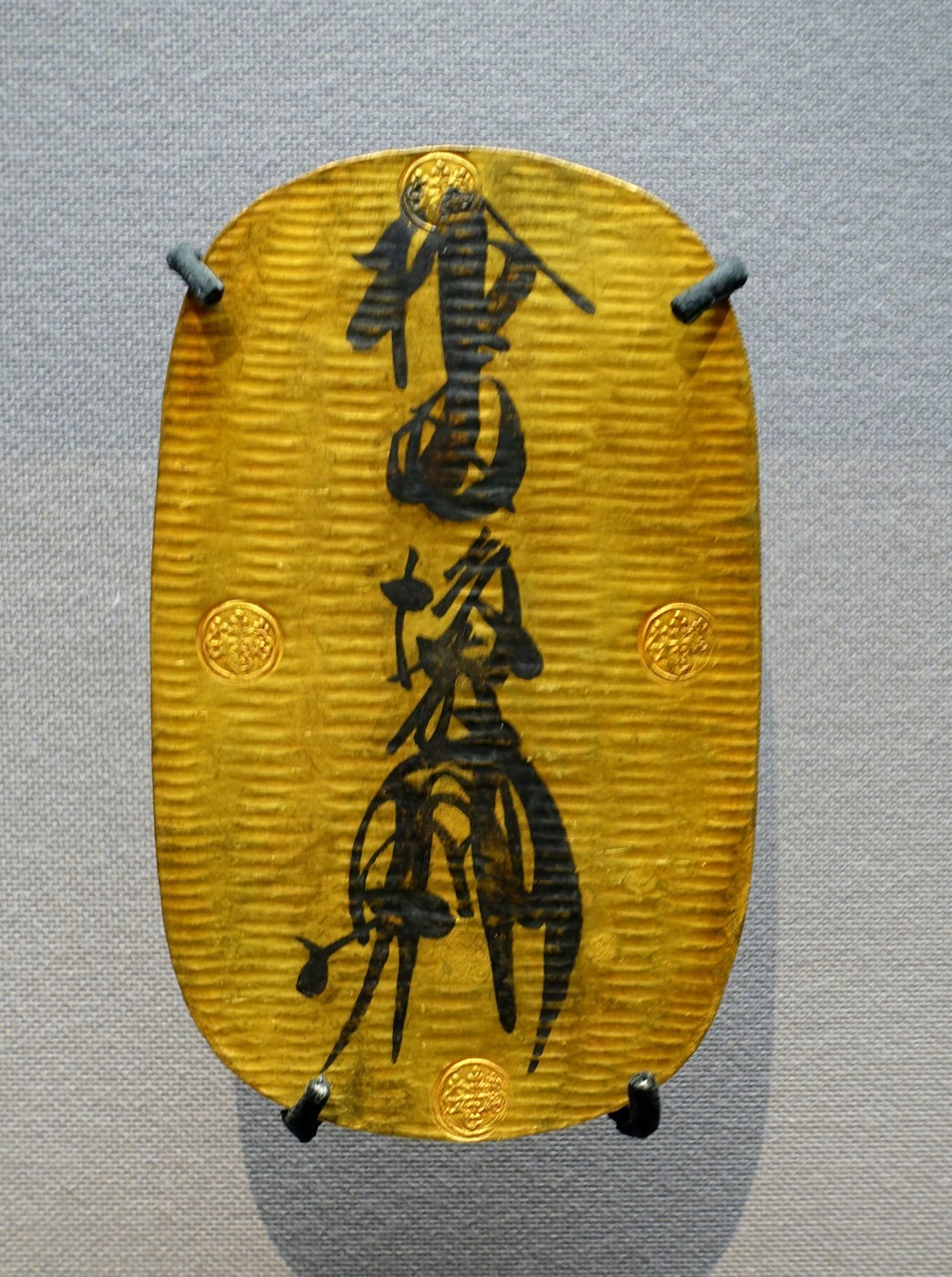
Keicho Oban
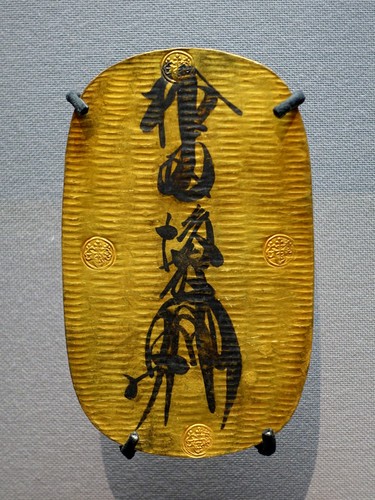
A large, thin oval Japanese gold oban of the Keicho era, hammer-marked with horizontal striations and bearing brush-inked ink signatures and paulownia crests.
- Country
- Japan
- Denomination
- Oban
- Metal
- Gold
Got a coin like this?
Identify any coin from a photo, free.
Overview
The Keicho Oban is a large oval gold plate coin from Japan, produced in the transition from the Azuchi-Momoyama period into the early Edo period under the Tokugawa shogunate. The oban was the largest denomination of the traditional Japanese gold coinage and functioned less as everyday change than as a form of high-value currency used for gifts, rewards, and major payments among the ruling class.
The piece pictured shows the oban's hallmark surface: a field of fine horizontal striations (from the way the thin gold sheet was worked and hammered), broken by decorative cartouches at the sides containing family crests and Japanese characters. On the reverse, similar striations frame a central vertical arrangement of characters and small stamped devices. Much of the writing on an oban was applied by hand in brush ink (sumi) rather than being struck into the metal, which is one of the type's most distinctive traits.
Because it is broad, thin, and oval rather than small and round, the Keicho Oban is unmistakable among world coins. It is prized today as an artifact of samurai-era Japan and as an early product of the centralized gold minting the Tokugawa established.
History & Background
Large gold oban plates first appeared in the sixteenth century, most famously with the Tensho Oban associated with Toyotomi Hideyoshi, before the Tokugawa consolidated coin production. The Keicho issues take their name from the Keicho era (around the turn of the seventeenth century), the period in which Tokugawa Ieyasu unified the country after the decisive events of 1600 and established a nationwide monetary system. The Keicho gold coinage — the oban together with smaller koban and fractional pieces — formed the backbone of this new standard.
Minting of the oban was entrusted to the Goto family, hereditary metalworkers and appraisers who signed and certified the coins. The brush-inked inscriptions on an oban typically record its value and the certifying authority, effectively acting as an official guarantee. This combination of struck crests and hand-written attestation reflects the oban's role as a prestige instrument rather than mass-circulating coin.
Oban were used chiefly for ceremonial gifts, military rewards, and large transactions among daimyo, temples, and the shogunate. Over the long Edo period the gold standard was repeatedly revised, and later oban of reduced size and fineness followed. Genuine Keicho-era pieces, from the earliest phase of this system, are correspondingly scarce and historically significant.
How to Identify
Identify the Keicho Oban first by form: it is a large, thin, oval plate of gold, far bigger than an ordinary coin and clearly hand-worked. The entire surface carries fine horizontal hammer striations. At the left and right you should see stamped cartouches (crests) — commonly paulownia-style family marks and small punch stamps — set into the striated field, with Japanese characters alongside.
The defining feature is the hand-brushed ink inscription. Running vertically down the center is a column of sumi (ink) characters stating the coin's value and the certifying Goto authority, often accompanied by an inked signature or monogram (kao). Because this writing is applied by hand, no two examples are exactly alike, and the ink can be faded or partly lost on worn pieces. Small stamped seals near the corners and center are also typical.
Distinguish the oban from the smaller koban, which shares the oval shape and striated surface but is much smaller and less elaborately inscribed. Later oban issues (Genroku, Kyoho, Tenpo, Manen and others) differ in size, gold color, and inscription details, so precise attribution of a Keicho piece should be confirmed against specialist references — the metal is soft, high-karat gold with a rich yellow tone.
Value & Collectibility
Authentic Keicho-era oban are rare, high-value numismatic objects, and genuine examples generally sell in the range of substantial precious-metal and collector prices rather than modest sums. Each piece carries meaningful bullion weight in high-purity gold, and on top of that a strong historical premium as an early Tokugawa artifact, so values run well into the collectible-to-premium tier for verified specimens.
Condition factors here are unusual: because much of the important information is brush-inked, the survival and legibility of the original ink strongly affect desirability, alongside the state of the gold surface and any repairs or mounting. A piece with clear, intact ink inscriptions and honest surfaces is far more desirable than one where the writing has been lost or re-inked.
Given the value at stake and the prevalence of reproductions, treat any price as subject to expert authentication. Ranges vary widely with era, size, ink state, and provenance, so confirm figures against recent specialist auction results for comparable Japanese gold oban rather than relying on a single quoted number.
Frequently asked questions
Is the Keicho Oban really solid gold?
Yes. The oban is a large plate of high-purity Japanese gold, soft and richly yellow in tone. It was the top gold denomination of its era, which is one reason genuine examples are so valuable and so often reproduced.
Why is there handwriting on the coin?
Much of an oban's inscription was applied by hand in brush ink (sumi) rather than struck into the metal. This writing states the coin's value and the certifying Goto authority and functions as an official guarantee, so no two coins are inked exactly alike.
How is an oban different from a koban?
Both are oval Japanese gold coins with striated surfaces, but the oban is much larger and more elaborately inscribed, used for high-value gifts and rewards. The koban is the smaller everyday gold piece.
What are the crests on the sides?
They are stamped family crests and seals, commonly paulownia-style marks, applied by the Goto minting family to certify the coin. They sit within the horizontal striations along the edges of the plate.
How old is a Keicho Oban?
It dates to roughly the late 1500s to early 1600s, spanning the Azuchi-Momoyama period into the early Edo period, when the Tokugawa shogunate established Japan's centralized gold coinage.
Keicho Oban guides
In-depth guides for identifying, valuing, and collecting Keicho Oban.
Other coins you may enjoy
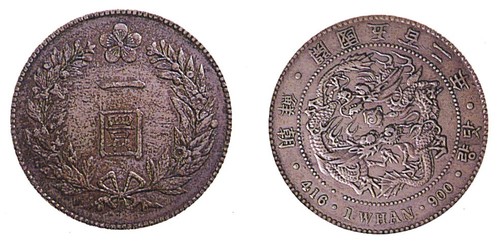
1 Hwan
Taegeuk era, late 1800s
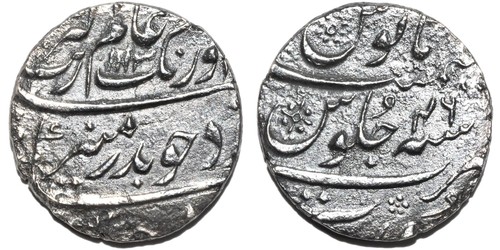
Mughal Rupee (Akbar)
AH 1003 (AD 1594)
Keicho Koban
Early Edo period, Keicho-era coinage (c. 1601 onward, 17th century)
Mughal Quarter-Rupee
Ilahi 47 (AD 1602-1603)
Double Rupi
AH 1151 (AD 1738-1739)
Aratame Sanbu Sadame
Dated 1859 (Ansei 6); round dragon-and-sun pieces are widely encountered as later reproductions
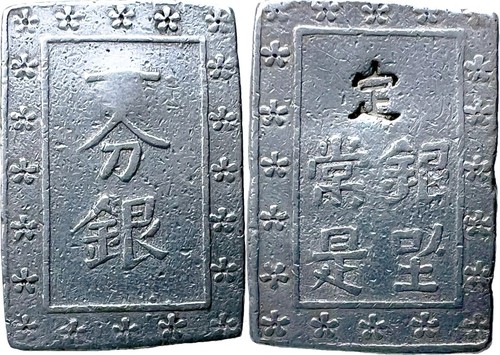
1 Bu Gin
Meiji 1 (1868-1869)
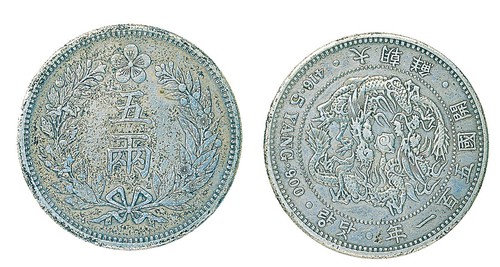
5 Yang
Late Joseon reform coinage, late 1800s (Gaeguk / Taegeuk era)