
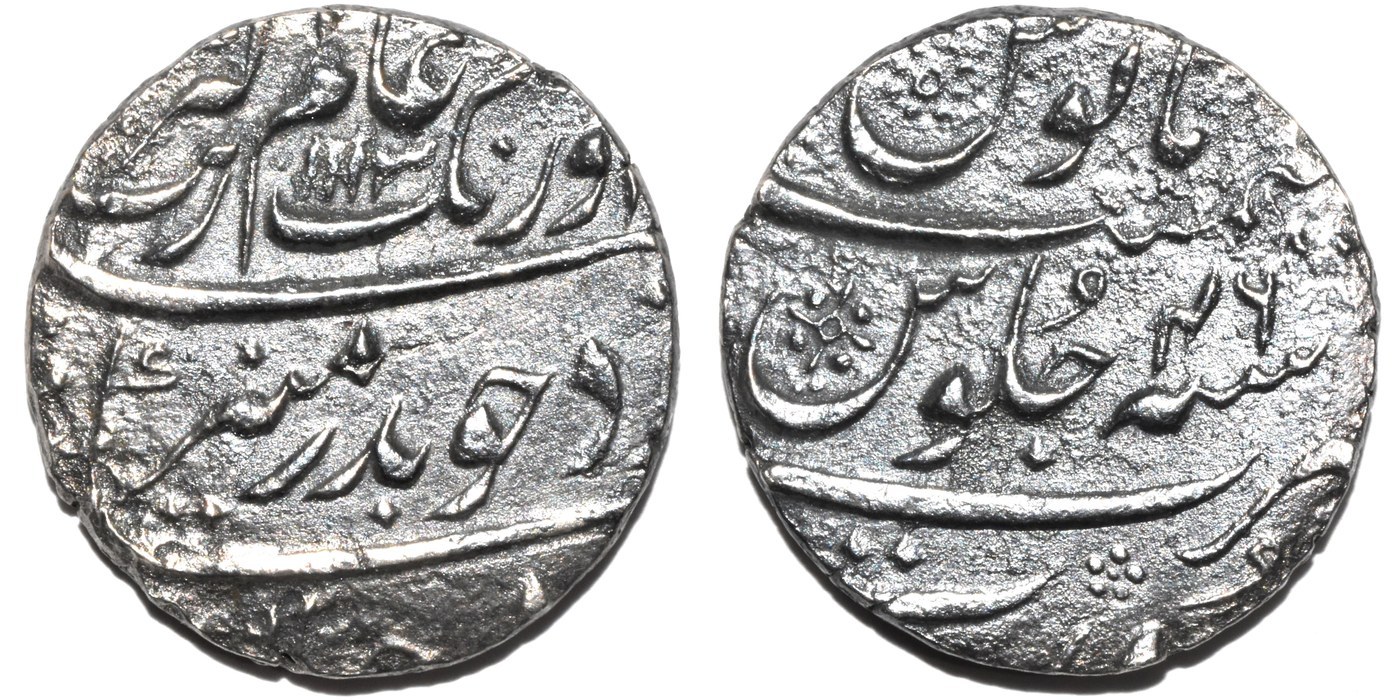
Mughal Rupee (Akbar)
A hand-struck Mughal silver rupee of Emperor Akbar dated AH 1003 (AD 1594), covered on both faces with flowing Persian calligraphy and ornamental borders.
- Country
- India (Mughal Empire)
- Denomination
- Rupee
- Metal
- Silver
Got a coin like this?
Identify any coin from a photo, free.
Overview
The coin pictured is a Mughal silver rupee issued under Emperor Akbar and dated AH 1003 (AD 1594). Both faces are filled with Persian calligraphic inscriptions framed by decorative elements rather than any portrait or figure, in keeping with the aniconic tradition of the coinage. The result is a dense, flowing script laid out to fill a roughly circular or squarish silver flan.
This is a hand-struck coin, not machine-made, so the shape, centering, and strike vary from piece to piece. The inscriptions typically carry the ruler's name and titles, religious formulae, and the mint and date, expressed in the Islamic Hijri calendar.
As a coin of Akbar, one of the most powerful and longest-reigning Mughal emperors, the rupee sits at the foundation of a monetary standard that would endure in South Asia for centuries. Its combination of good silver, historical weight, and elegant calligraphy makes it a widely collected type today.
History & Background
The silver rupee (Persian rupiya) was standardized as a broad, well-controlled silver coin during Akbar's reign in the late 16th century, becoming the backbone of the Mughal monetary system alongside the gold mohur and copper dam. A date of AH 1003 (AD 1594) places this piece firmly within Akbar's long reign, when the empire's mints were producing coinage across a wide network of cities.
Akbar's coinage is notable for its calligraphic artistry and for experiments in design, including issues associated with his eclectic Din-i Ilahi era and the Ilahi calendar. Many rupees, however, follow the more conventional pattern of ruler's name, titles, religious formula, and mint-and-date legend rendered in fine Persian script.
The rupee standard set under Akbar proved remarkably durable, carried forward by later Mughal emperors and eventually adopted and adapted by successor states, trading companies, and modern nations across the subcontinent. Precise mintage figures for individual mints and years are not recorded in the modern sense and should not be assumed; attributions rest on reading the legends and comparing them to specialized catalogs.
How to Identify
Identify the type by its all-inscription design. Both faces are given over to Persian calligraphy surrounded by ornamental borders or panels, with no portrait, animal, or architectural image. The script names the ruler and his titles and includes religious phrasing, while one side commonly carries the mint name and date.
Confirm the date by locating the Hijri year in the legend; here it reads AH 1003 (AD 1594), expressed in Arabic-Persian numerals or written out. Because these are hand-struck coins, expect an irregular flan, off-center strikes, and portions of the legend running off the edge, which is normal for the type rather than a sign of damage.
The coin is a silver rupee, a substantial broad coin of good silver, and its weight and module follow the Mughal rupee standard of the period. Attribution to Akbar specifically depends on reading his name and titles in the inscription and matching the mint and date; a specialized reference or an expert in Mughal coinage is the surest way to confirm ruler, mint, and issue.
Value & Collectibility
A Mughal silver rupee of Akbar carries a baseline silver value from its metal content, with numismatic worth resting on mint, date, calligraphic style, and condition. Common, well-worn rupees trade at modest premiums, while sharply struck pieces, scarce mints, and special design types can command considerably more.
Because the coins were hand-struck, quality of strike and completeness of the legend matter greatly to value: examples with full, clear inscriptions and good centering are more desirable than those with much of the script off the flan. Attractive silver, original surfaces, and legible mint-and-date data all add to collector appeal.
Mughal coins are collected worldwide and are also imitated, so treat any single figure with caution and compare against recent sales of the same mint and date. Professional authentication and attribution add confidence, especially for scarcer mints, rare dates, and higher-grade or unusual issues.
Frequently asked questions
Why is there no portrait on this coin?
Mughal coinage under Akbar followed an aniconic tradition, so the designs are calligraphic rather than pictorial. Both faces carry Persian inscriptions with the ruler's name, titles, and religious formulae instead of a portrait or figure.
What does AH 1003 mean?
AH refers to the Islamic Hijri calendar. AH 1003 corresponds to about AD 1594, placing the coin within Akbar's reign. The date is read from the Persian legend rather than from a Western year.
Is it real silver?
Yes. The rupee is a broad silver coin struck to the Mughal silver standard of the period, so it carries a bullion value beneath any collector premium. Weight and metal follow the rupee standard set under Akbar.
Why is the coin irregular in shape and off-center?
It was hand-struck, not machine-made, so an uneven flan, off-center strike, and legend running off the edge are normal. These traits are characteristic of the type and are not by themselves signs of damage or a fake.
How do I know it is Akbar and not another emperor?
Attribution depends on reading the ruler's name and titles in the Persian legend and matching the mint and date. Because many Mughal rupees look similar at a glance, confirming Akbar specifically is best done with a specialized reference or an expert.
Mughal Rupee (Akbar) guides
In-depth guides for identifying, valuing, and collecting Mughal Rupee (Akbar).
Other coins you may enjoy
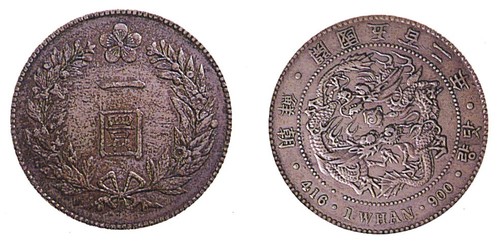
1 Hwan
Taegeuk era, late 1800s
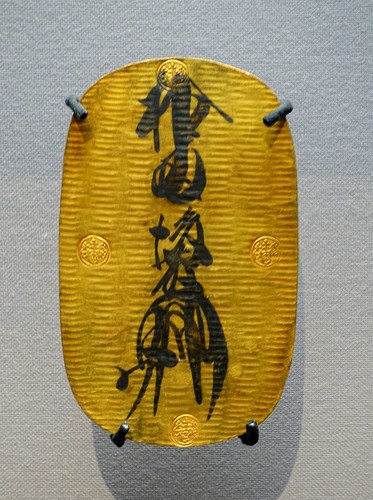
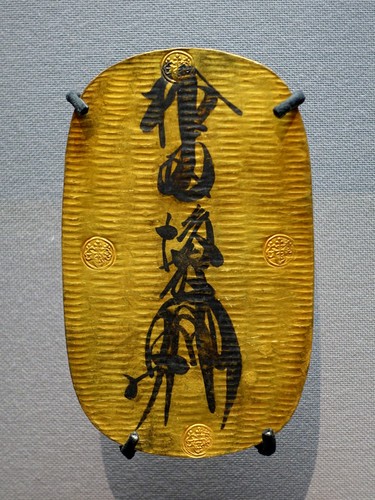
Keicho Oban
Late 1500s to early 1600s AD (Azuchi-Momoyama to early Edo period)
Keicho Koban
Early Edo period, Keicho-era coinage (c. 1601 onward, 17th century)
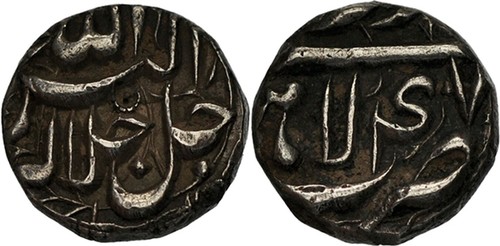
Mughal Quarter-Rupee
Ilahi 47 (AD 1602-1603)
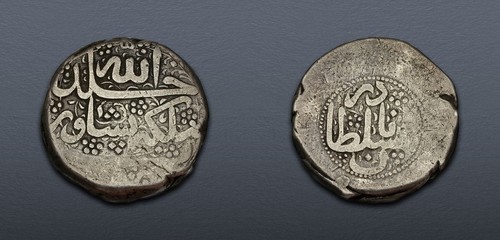
Double Rupi
AH 1151 (AD 1738-1739)
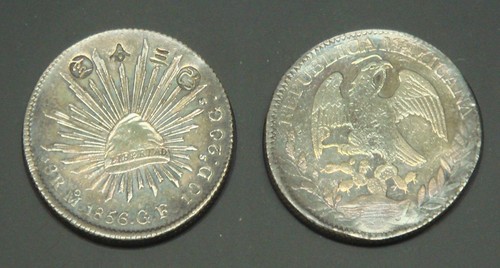
Aratame Sanbu Sadame
Dated 1859 (Ansei 6); round dragon-and-sun pieces are widely encountered as later reproductions
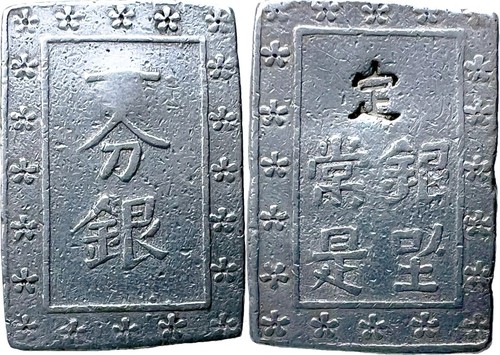
1 Bu Gin
Meiji 1 (1868-1869)
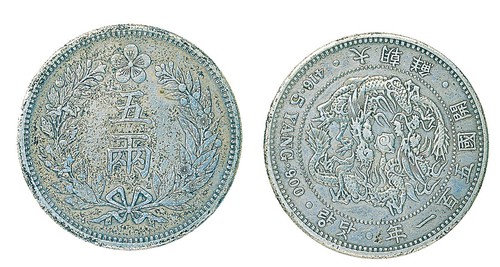
5 Yang
Late Joseon reform coinage, late 1800s (Gaeguk / Taegeuk era)