
How to Identify the Mughal Rupee (Akbar)
A collector's checklist for Akbar's silver rupee: reading the Persian legends, the Hijri date and mint, judging the hand-struck flan, and spotting fakes.
Read the full Mughal Rupee (Akbar) encyclopedia entry →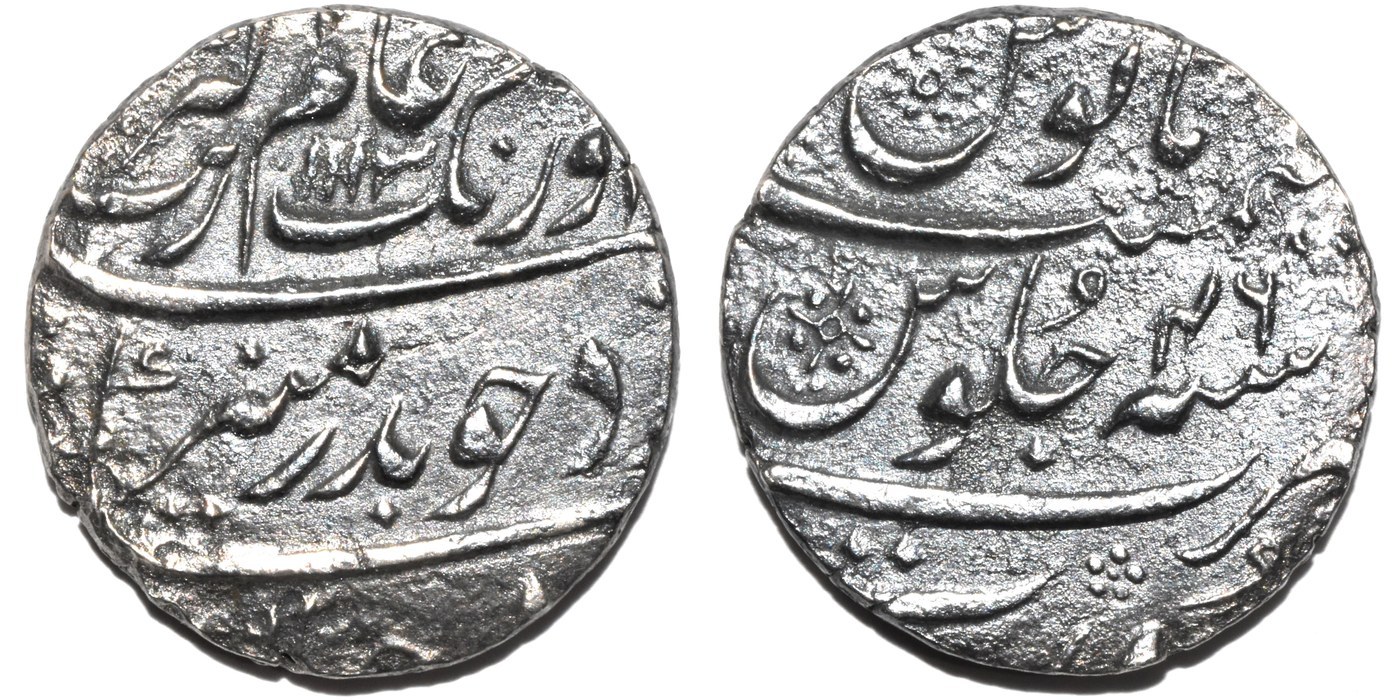
Begin with the overall design, which is the fastest way to place the coin. Both faces are entirely Persian calligraphy set within ornamental borders, with no portrait, animal, or building. This all-inscription layout marks the piece as a Mughal issue rather than a European, ancient, or modern coin, and it points toward a rupee of the classic Mughal type.
Read the legends for the two most useful details: the ruler and titles and the mint-and-date formula. On an Akbar rupee the inscription names the emperor with his titles and includes religious phrasing, while the Hijri date (here AH 1003 / AD 1594) and often a mint name appear as part of the text. Because the script is dense and can run off the flan, work methodically across each face and, where possible, compare the wording against a specialized Mughal reference.
Judge the flan and strike. These coins are hand-struck, so expect an irregular outline, variable thickness, off-center legends, and portions of text missing at the edge. None of this is a defect; it is normal for the type. A completely regular, perfectly round coin with crisp raised rims and machine-even lettering would instead suggest a modern reproduction.
Check size and metal. The rupee is a broad silver coin on the Mughal standard, and weighing and measuring it against published specifications for the period is a good first authenticity test. Genuine silver of the right weight and module, with honest wear and natural toning, is reassuring; underweight, wrong-color, or lightweight castings are red flags.
Watch for imitations and altered attributions. Mughal rupees are widely faked and also copied as tourist and jewelry pieces, and legends are sometimes misread so a coin is assigned to the wrong ruler, mint, or date. Look for casting seams, soft or blurry lettering, files or mount marks, and any legend that does not read consistently. For scarcer mints and dates, or for any high-value example, confirm the reading and authenticity with an expert in Mughal coinage before relying on an attribution or price.
Frequently asked questions
How do I read the date on an Akbar rupee?
The date is given in the Hijri calendar within the Persian legend, not as a Western year. This example reads AH 1003, which corresponds to about AD 1594. Locating the year in the inscription is essential to placing the coin in Akbar's reign.
Should the coin be perfectly round?
No. Mughal rupees are hand-struck, so an irregular flan, uneven thickness, and off-center legends are normal and expected. A perfectly round coin with machine-even lettering and sharp raised rims is more likely a modern reproduction.
How can I tell a genuine rupee from a fake?
Weigh and measure the coin against the Mughal rupee standard and check for good silver, natural wear, and legible hand-cut script. Casting seams, blurry lettering, wrong weight, mount marks, or an inconsistent legend point to a fake or a jewelry copy.
Why do different Akbar rupees look so different?
Akbar's coinage was struck at many mints over a long reign and includes several calligraphic styles and design experiments, including special calendar and era issues. Reading the mint and date in the legend is the way to distinguish one issue from another.