
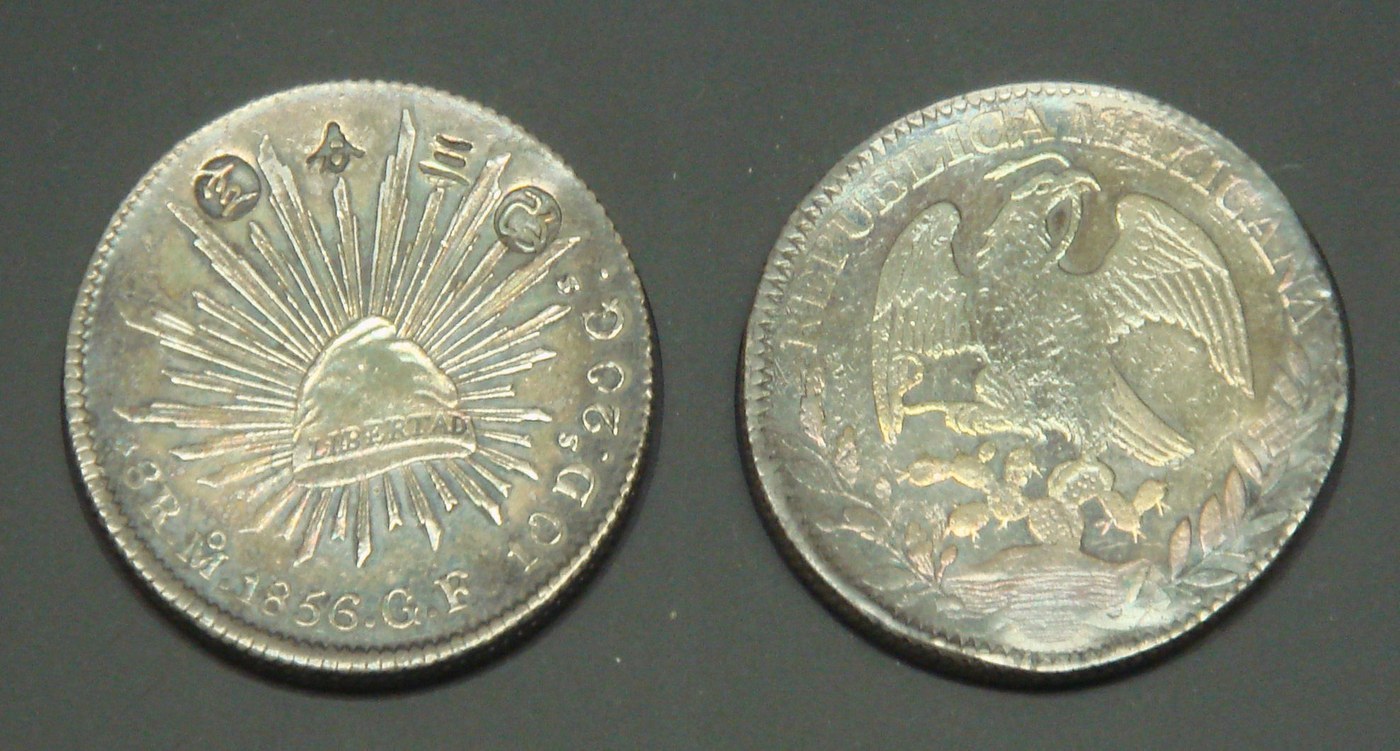
Aratame Sanbu Sadame
A round silver-colored coin with a coiled dragon and the inscription Aratame Sanbu Sadame on one face and a radiating sun on the other, dated 1859.
- Country
- Japan
- Denomination
- Silver Coin (Three Bu / Sanbu)
- Metal
- Silver
Got a coin like this?
Identify any coin from a photo, free.
Overview
The coin pictured is a round, silver-colored piece dated 1859 that carries the Japanese inscription 改三分定 (Aratame Sanbu Sadame), which reads roughly "revised, fixed at three bu." One face shows a coiled dragon surrounded by Japanese characters, and the other shows a radiating sun framed by a floral and decorative border. The design places it in the visual tradition of Japanese "dragon" coinage, with the sun motif echoing Japan's national emblem.
The inscription itself belongs to the turbulent Bakumatsu period, the final years of the Tokugawa shogunate, when the opening of Japan's ports to foreign trade in 1859 forced hurried revaluations of the country's silver currency. The sanbu ("three bu") denomination refers to a unit within the old Edo money system, in which four bu made one ryo.
Because round, machine-style dragon-and-sun coins bearing this legend and an 1859 date are commonly met with today as decorative and reproduction pieces, this entry describes the type as observed on the coin itself rather than asserting it to be an official circulating issue. Anyone holding one should treat authentication as an open question until verified.
History & Background
The phrase Aratame Sanbu Sadame dates to a real moment of monetary crisis. In 1859 (Ansei 6) Japan opened treaty ports to foreign trade, and the mismatch between Japan's domestic gold-to-silver ratio and world prices triggered a rapid outflow of gold. The shogunate responded with emergency re-tariffing and revaluation of its silver money, and inscriptions declaring a coin "revised" and "fixed" at a stated value belong to that scramble to stabilize the currency.
The bu (分) was a denomination of the Edo-period ryo–bu–shu system, where one ryo divided into four bu and each bu into four shu. Genuine everyday silver money of this era, such as the ichibu gin (one-bu silver), was typically issued as small rectangular bars stamped with characters, not as round struck coins with pictorial designs.
The dragon and the radiating sun seen here became defining motifs of Japanese coinage slightly later, during the Meiji modernization from 1870 onward, when Japan adopted Western-style round struck coins. A round, pictorial dragon-and-sun coin bearing an 1859 date therefore blends an authentic Bakumatsu-era inscription with imagery associated with the later machine-struck era, which is why examples of this exact form are often catalogued as commemorative, novelty, or reproduction pieces rather than as documented circulating currency.
How to Identify
Identify this coin first by its inscription. Look for the four characters 改三分定 (Aratame Sanbu Sadame) among the Japanese text around the dragon; this legend, meaning the coin is "revised and fixed at three bu," is the defining feature. The date reads 1859, corresponding to Ansei 6 in the Japanese era system.
The two faces are distinctive: one bears a coiled or writhing dragon ringed by Japanese characters, and the other a radiating sun (a central disc with rays or beading) enclosed by a floral and decorative border. The piece is round and silver-colored. Note the diameter, weight, and edge, and whether the relief is crisp and struck or soft and cast, since these fabric details matter for attribution.
Be aware that authentic Edo-period bu silver was normally rectangular and stamped, not round and pictorial, so a round dragon-and-sun coin should be examined carefully. Weigh and measure it, inspect the surfaces under magnification, and compare it against reference images before drawing conclusions about age or authenticity.
Value & Collectibility
Value for a coin of this description depends heavily on what the individual piece actually is. A verified, genuinely old silver piece of Bakumatsu-era currency would be a scarce and historically significant item of interest to specialists, while the round dragon-and-sun "1859" pieces that circulate today as decorative, novelty, or reproduction items carry little more than curio value regardless of their appearance.
Because this type is so easily confused with replicas, treat any price you see with caution and do not assume precious-metal content from the silver color alone. Weight, dimensions, metal analysis, and struck-versus-cast fabric are the practical starting points for separating a valuable original from a modern copy.
Given the wide gap between those outcomes, avoid buying or selling based on the design alone. For any piece you believe may be old, seek an opinion from a specialist in Japanese coins or a reputable authentication service before assigning it a value.
Frequently asked questions
What does Aratame Sanbu Sadame mean?
The inscription 改三分定 (Aratame Sanbu Sadame) means roughly "revised, fixed at three bu." Bu was a denomination of Japan's Edo-period money system, in which four bu made one ryo, and the wording reflects an official revaluation of silver currency.
Why is this coin dated 1859?
The date corresponds to Ansei 6, the year Japan opened its ports to foreign trade. That event caused a monetary crisis and forced hurried revaluations of Japanese silver money, which is the context in which "revised and fixed" inscriptions appear.
Is my Aratame Sanbu Sadame coin solid silver?
Do not assume so from the color alone. The piece is silver-colored, but round dragon-and-sun coins bearing this legend are widely encountered as reproductions and novelty items. Weight, measurement, and metal testing are needed to know what any specific example is made of.
Did real Edo-period bu silver look like this?
Not usually. Genuine everyday one-bu silver of that era was typically a small rectangular stamped bar, not a round struck coin with a dragon and a radiating sun. The dragon-and-sun imagery is associated more with Japan's later Meiji-era machine-struck coinage.
How can I find out what my coin is worth?
Have it examined by a specialist in Japanese coins or a reputable authentication service. Value ranges from significant for a verified original to little more than curio value for a modern reproduction, so an expert opinion is essential before buying or selling.
Aratame Sanbu Sadame guides
In-depth guides for identifying, valuing, and collecting Aratame Sanbu Sadame.
Other coins you may enjoy
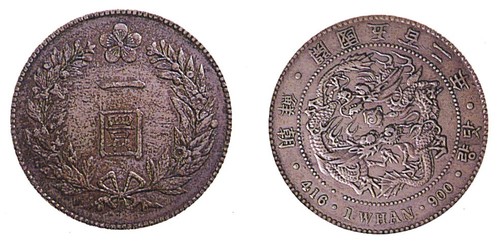
1 Hwan
Taegeuk era, late 1800s
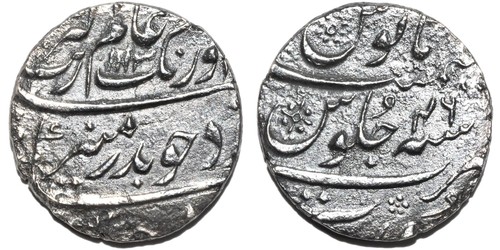
Mughal Rupee (Akbar)
AH 1003 (AD 1594)
Keicho Oban
Late 1500s to early 1600s AD (Azuchi-Momoyama to early Edo period)
Keicho Koban
Early Edo period, Keicho-era coinage (c. 1601 onward, 17th century)
Mughal Quarter-Rupee
Ilahi 47 (AD 1602-1603)
Double Rupi
AH 1151 (AD 1738-1739)
1 Bu Gin
Meiji 1 (1868-1869)
5 Yang
Late Joseon reform coinage, late 1800s (Gaeguk / Taegeuk era)