
How to Identify the Keicho Oban
A collector's checklist for the Japanese gold oban: oval plate form, hammer striations, stamped crests, brush-ink inscriptions, and authentication cautions.
Read the full Keicho Oban encyclopedia entry →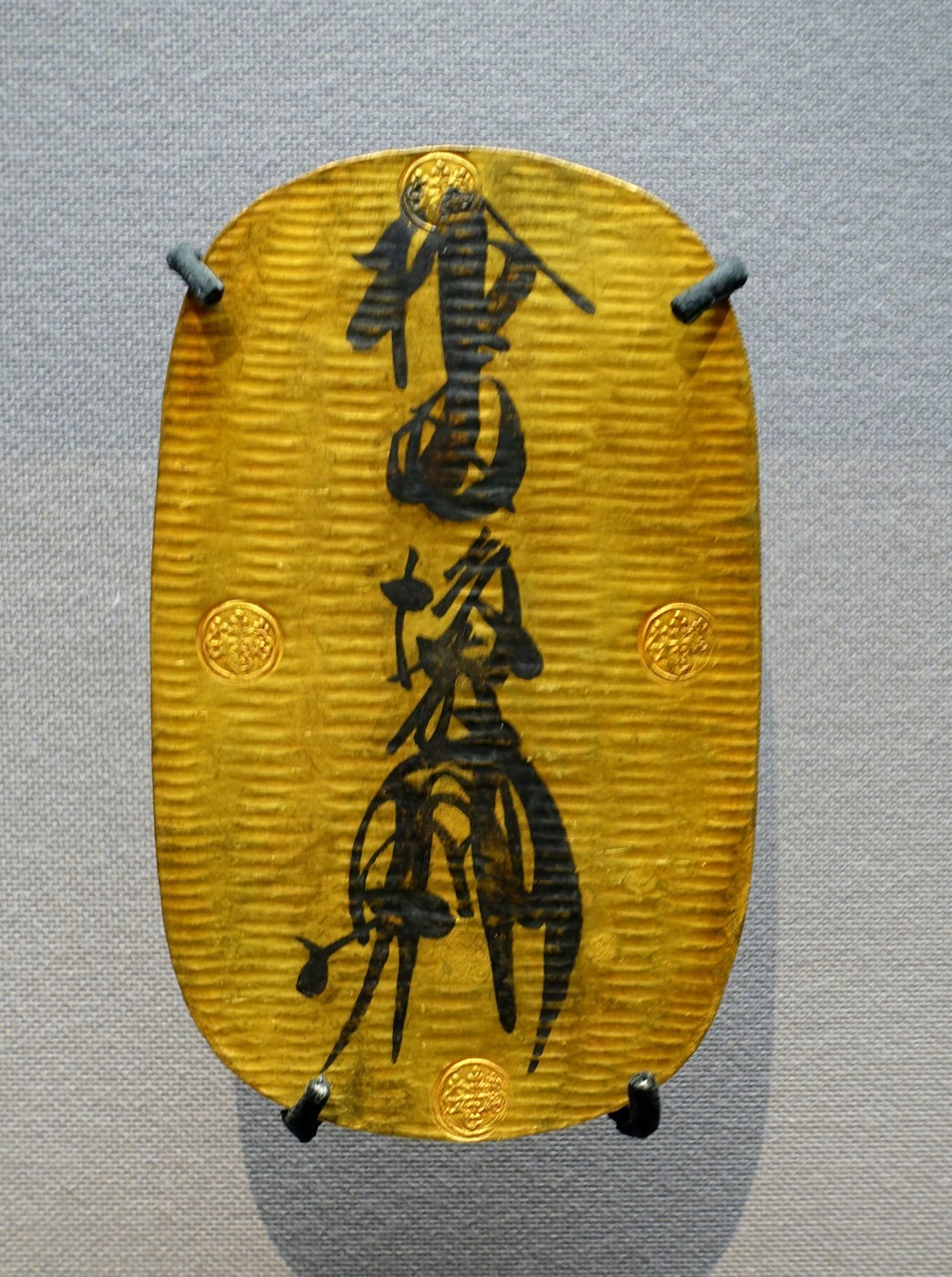
Start with the overall shape and scale. A genuine oban is a large, thin, oval plate of gold worked by hand — noticeably bigger than a normal coin and clearly not machine-round. The surface should be covered in fine, even horizontal striations running across the field. If the object is small, round, or perfectly regular, it is not an oban.
Next examine the stamped devices at the sides. Look for cartouches containing family crests (often paulownia-type marks) and small punch seals set into the striated field, with Japanese characters nearby. These stamps were applied by the Goto minting family as certification. Then focus on the center, where a vertical column of brush-inked characters should record the coin's value and certifying authority. This hand-applied sumi ink is the single most diagnostic feature of the type — struck-only "obans" with no trace of ink writing are a warning sign.
Assess the metal directly. Traditional oban gold is soft, high-karat, and warm yellow, without the paleness of low-purity alloys or the coldness of gilt base metal. Beware pieces that feel too light, ring like brass, show a plated edge, or have suspiciously crisp, uniform "ink" that looks printed rather than brushed. Because ink can genuinely fade with age, judge legibility together with wear on the gold, not in isolation.
Separate the oban from look-alikes. The smaller koban shares the oval striated look but is far smaller and simpler. Later oban (Genroku, Kyoho, Tenpo, Manen and others) differ in size, gold color, and inscription wording, so a Keicho attribution needs the specific era details confirmed. Modern replicas, tourist copies, and gold-plated fantasies are extremely common and are the default assumption until proven otherwise.
Finally, apply strong authentication caution. Given the high value and the flood of reproductions, do not rely on appearance alone: weight, dimensions, metal analysis, and the character of the ink and stamps should all be checked, ideally by a specialist in Japanese numismatics. Compare any candidate against documented Keicho oban and recent specialist auction records before treating it as genuine.
Frequently asked questions
What is the fastest way to spot a real oban?
Check for the combination of a large oval gold plate, all-over horizontal striations, stamped crests at the sides, and a vertical brush-inked inscription down the center. Missing the hand-applied ink writing is a strong red flag.
Could a small oval gold coin be an oban?
Probably not — that is more likely a koban, the smaller everyday gold piece. The oban is distinctly large and elaborately inscribed. Size and the extent of the inked inscription are the clearest ways to tell them apart.
How can I tell a replica from a genuine piece?
Watch for light weight, a brassy ring, plated edges, pale or cold metal color, and crisp printed-looking "ink." Traditional oban gold is soft, high-karat, and warm yellow, with brushed sumi inscriptions. Given how common copies are, seek expert authentication.
Does faded ink mean the coin is fake?
Not necessarily. Genuine brush-ink inscriptions can fade or partly wear away over centuries. Judge the ink together with wear on the gold and the stamped crests, rather than dismissing a piece solely because the writing is faint.