Indian Head Half Eagle
U.S. $5 gold half eagle struck 1908–1929, with an unusual sunken (incuse) design: a headdressed Native American obverse and a standing eagle reverse.
- Country
- United States
- Denomination
- 5 dollars
- Metal
- Gold
Got a coin like this?
Identify any coin from a photo, free.
Overview
The Indian Head Half Eagle is a United States five-dollar gold coin produced from 1908 through 1929. It is best known for its unusual manufacture: instead of the raised relief used on almost every other coin, the design is incuse, meaning the portrait and lettering are recessed below a flat field. Designed by Boston sculptor Bela Lyon Pratt, it shares this sunken style with its smaller companion, the Indian Head Quarter Eagle ($2.50).
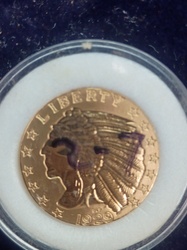
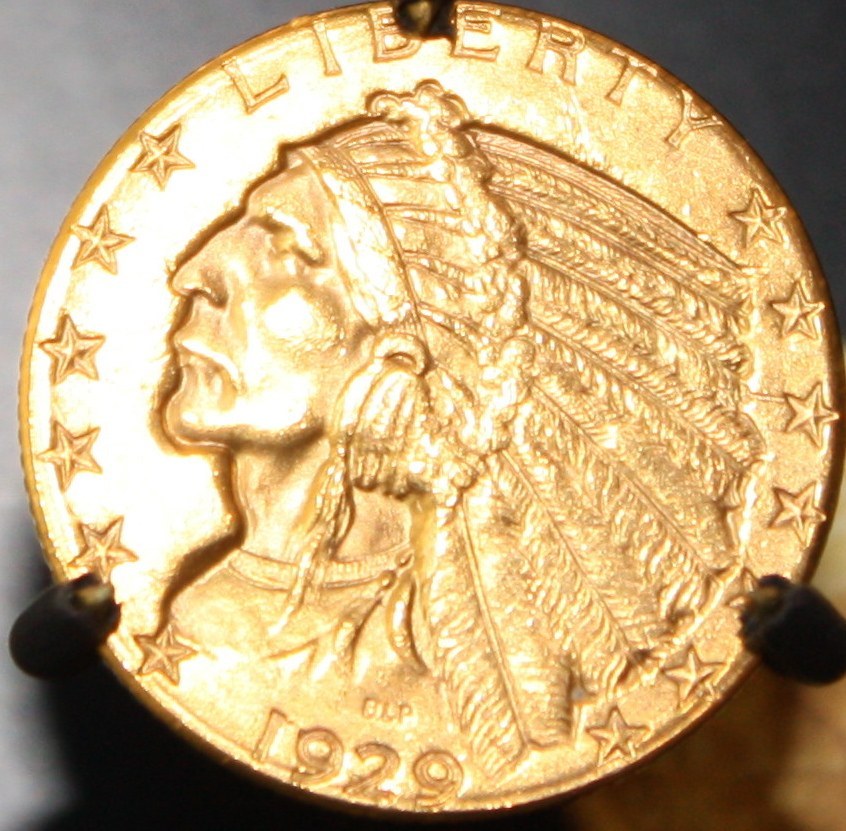
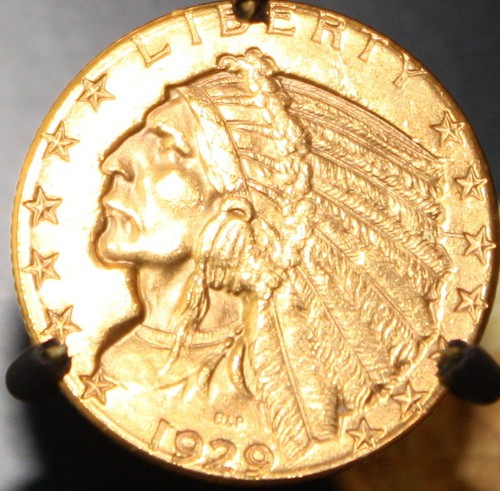
The coin is a small, heavy gold piece struck in the standard U.S. gold alloy of 90% gold and 10% copper, measuring about 21.6 mm across and weighing roughly 8.4 grams. The obverse shows the head of a Native American man wearing a feathered war bonnet, facing left, ringed by stars, with LIBERTY above and the date below. The reverse carries a standing eagle. The example shown here is dated 1929, the final year the series was struck.
History & Background
By the early 1900s President Theodore Roosevelt was pressing the Mint to beautify American coinage. After Augustus Saint-Gaudens redesigned the eagle and double eagle, the smaller gold denominations fell to Bela Lyon Pratt, who proposed a radical treatment: an incuse, or sunken, design in which the figures sit below the coin's surface. The Indian Head Half Eagle and Quarter Eagle debuted in 1908 as the only regular-issue U.S. coins ever made this way.
The format drew immediate criticism. Some contemporaries worried the recessed fields would trap dirt and germs, and the flat, protected rims did not stack or wear like a conventional coin. Despite the controversy the series continued, though not every year. Production ran from 1908 through 1916 and then stopped, resuming for a single final year in 1929 before the denomination was retired. Following the gold recall of the 1930s, large quantities of gold coins were melted, which is why later dates such as 1929 survive in far smaller numbers than their original output would suggest.
How to Identify
Look first for the defining feature: the design is incuse. Run a finger across the surface — the Native American portrait, the stars, and the lettering are sunk into a flat field rather than raised above it. The obverse shows a Native American man in a feathered headdress facing left, with LIBERTY across the top, thirteen stars around the border, and the date below (1929 on the coin pictured).
The reverse depicts a standing eagle perched on a bundle of arrows with an olive branch, closely modeled on Saint-Gaudens's eagle for the $10 coin. The legends UNITED STATES OF AMERICA and FIVE DOLLARS appear around the rim, with E PLURIBUS UNUM and IN GOD WE TRUST in the field. Any mint mark sits on the reverse at the lower left, just left of the arrow points; Philadelphia coins carry no mint mark, while D and S indicate Denver and San Francisco.
By size and weight this is a half eagle: about 21.6 mm in diameter and near 8.4 grams of 90% gold. Its nearly identical but noticeably smaller cousin, the Indian Head Quarter Eagle, is easy to confuse in photos — the diameter and the FIVE DOLLARS versus 2½ DOLLARS reverse legend settle the question.
Value & Collectibility
As a nearly pure-gold coin, the Indian Head Half Eagle always carries substantial value from its metal content alone, and collector demand pushes most dates well above melt. Price depends heavily on date, mint mark, and grade: common Philadelphia issues from the 1908–1915 run trade closer to bullion-plus levels, while scarce dates command strong premiums.
The 1929, shown here, is a recognized key date — struck only in that final year and heavily melted afterward — so it sells for a large multiple of a common date even in circulated grades. The 1909-O, the only New Orleans issue, is likewise a famous rarity. Because these coins are valuable and the incuse fields make certain diagnostics tricky, treat any figures as general context and rely on a graded, authenticated example rather than a raw coin when significant money is involved.
Frequently asked questions
What years was the Indian Head Half Eagle made?
It was struck from 1908 through 1916 and then, after a pause, for one final year in 1929. The coin pictured here is dated 1929, the last year of the series.
Why is the design sunken into the coin?
Designer Bela Lyon Pratt used an incuse format, recessing the portrait and lettering below a flat field. The half eagle and its companion quarter eagle are the only regular U.S. coins made this way.
How much gold is in an Indian Head Half Eagle?
It is struck in 90% gold and 10% copper, weighs about 8.4 grams, and contains roughly a quarter ounce of pure gold, so it always carries real bullion value.
Where is the mint mark?
On the reverse at the lower left, just to the left of the arrow points. Philadelphia coins have no mint mark; a D means Denver and an S means San Francisco.
Is the 1929 date special?
Yes. 1929 was the final year of the series and many were later melted, so surviving examples are scarce and command a strong premium over common dates.
Indian Head Half Eagle guides
In-depth guides for identifying, valuing, and collecting Indian Head Half Eagle.
Indian Head Half Eagle identified by the community
Real coins identified with Coin Identifier.