
Coin Encyclopedia
Search and identify coins from around the world — with country, denomination, metal, mint, history, and how to tell them apart.
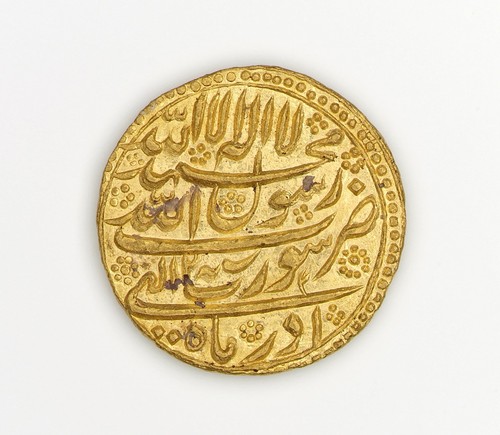
Gold Mohur of Shah Jahan
High-purity gold mohur struck under Mughal emperor Shah Jahan (1628-1658), bearing Persian imperial titles; this example carries the Balkh mint mark.
Mughal India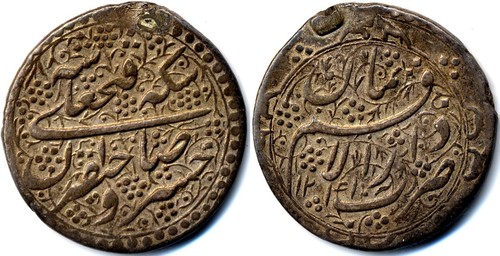
Qiran of Fath-Ali Shah Qajar
A hand-struck silver qiran of the Qajar shah Fath-Ali, carrying Persian calligraphy, a decorative border and crown motif, dated AH 1240–1241 (AD 1825–1826).
Persia / Iran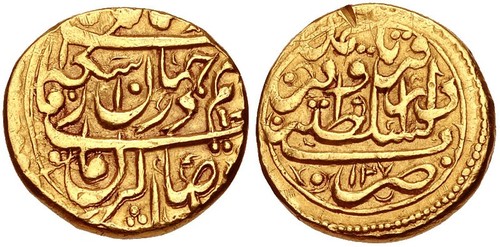
Gold Toman of Agha Mohammad Khan Qajar
A gold toman of Agha Mohammad Khan, founder of the Qajar dynasty, struck at Qazvin in AH 1206–1207 (1792–1793), covered in Persian calligraphy with no portrait.
Persia / Iran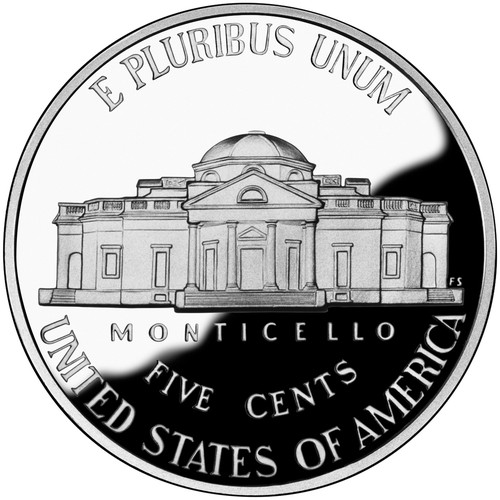
Jefferson Nickel
U.S. five-cent piece introduced in 1938, showing Thomas Jefferson on the obverse and his Monticello home on the reverse. 1942–1945 issues are 35% silver.
Nickel Five Cent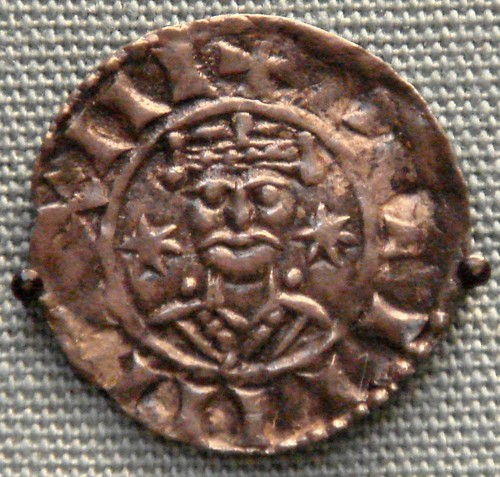
Penny of William I
Hammered silver penny of William the Conqueror, the example showing a profile portrait of the king and a decorated cross reverse, struck circa 1075.
Medieval Coins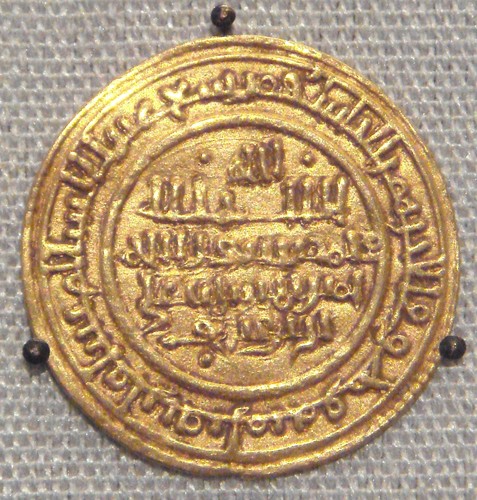
Almoravid Gold Dinar
Pure-gold dinar of the Almoravid dynasty, struck in Islamic Spain and North Africa with concentric Arabic legends; this piece is dated 1116 CE.
Medieval Islamic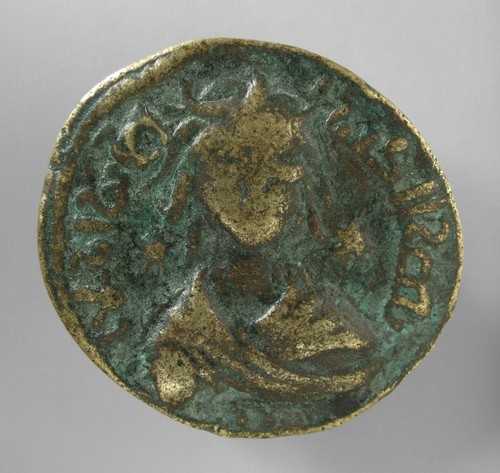
Artuqid Bronze Dirham
A 12th-century bronze coin of the Artuqid Turkmen dynasty, struck with Arabic inscriptions inside ornamental borders across eastern Anatolia.
Medieval Islamic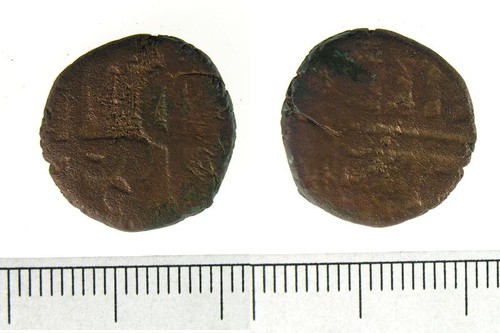
Indian Paisa
A hand-struck copper paisa from early 19th-century India, its legends worn smooth by age and circulation. A humble base-metal coin of everyday commerce.
Princely & Presidency States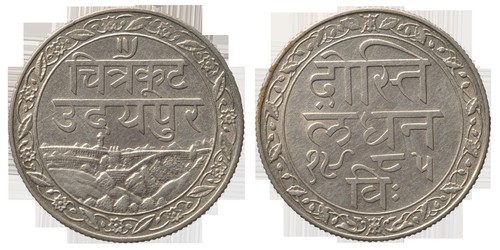
Mewar Chitrakut Half Rupee
A silver half rupee of the princely state of Mewar (Udaipur), dated VS 1985 (c. 1928), with Devanagari legends including the denomination अर्धरुपये.
Princely & Presidency States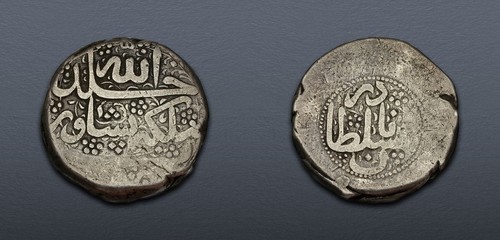
Double Rupi
A large Afsharid silver coin of Nader Shah, the double rupi, dated AH 1151 and covered in flowing Persian calligraphy and ornamental scrollwork.
Historic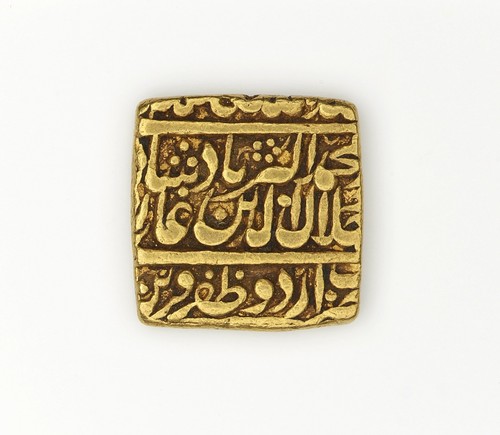
Gold Mohur of Akbar
Aniconic gold coin of Mughal emperor Akbar (1556-1605), struck in Persian calligraphy in the Ilahi coinage style.
Mughal India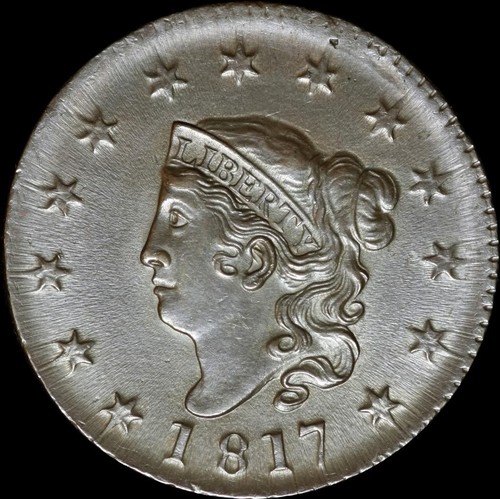
Coronet (Matron Head) Large Cent
A pure-copper U.S. one-cent piece from 1816–1839, showing Liberty in a beaded coronet on the obverse and ONE CENT inside a wreath.
Large Cent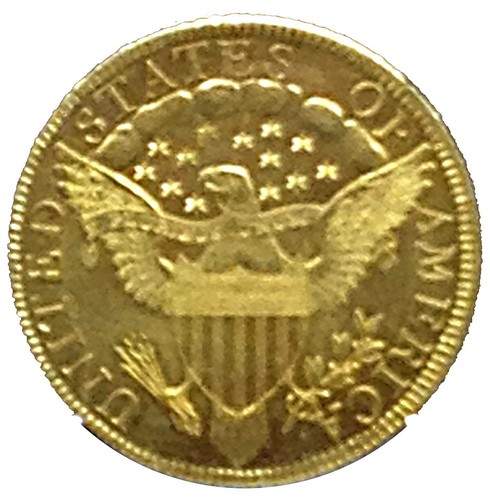
Draped Bust Dollar
Early U.S. silver dollar struck 1795–1804, with a draped bust of Liberty and, from 1798, a heraldic eagle reverse.
Dollar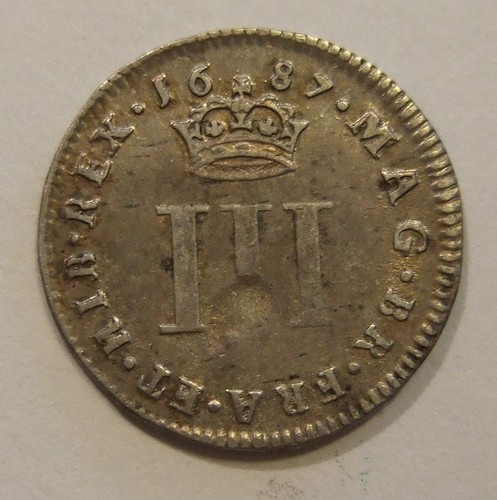
Maundy Three Pence
A tiny sterling-silver threepence tied to Britain's Royal Maundy tradition; the photographed 1687 coin shows James II's bust and a crowned Roman numeral III.
Maundy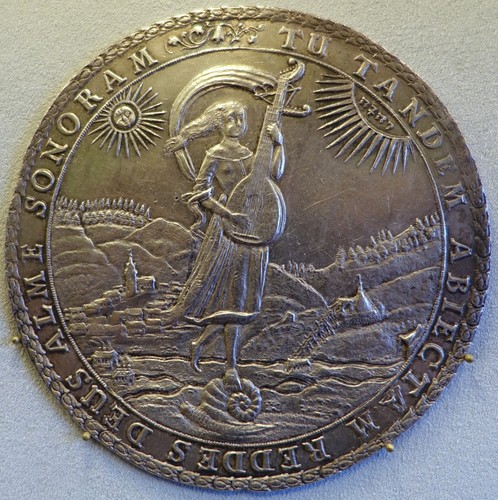
Braunschweig-Lüneburg 3 Thaler
A large silver 3 Thaler of Braunschweig-Lüneburg dated 1685, its obverse showing an allegorical Libertas figure in classical dress against a landscape.
German States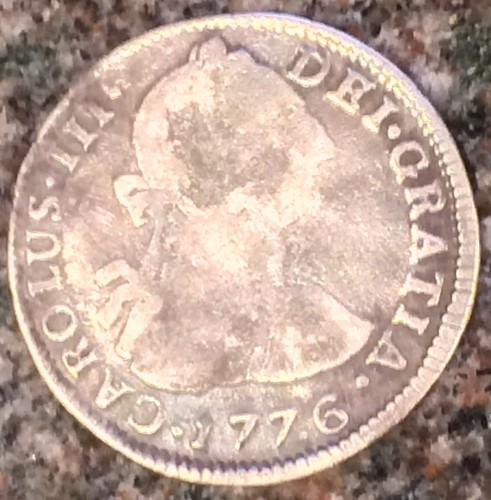
Spanish Colonial 2 Reales (Milled)
A small milled silver coin of the Spanish Empire, struck in colonial American mints; this example is dated 1776 and shows heraldic lions, castles and a crowned shield.
Colonial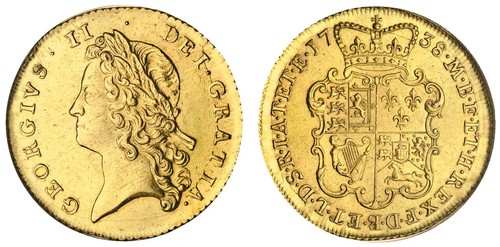
Two Guineas of George II
A large milled gold two-guinea piece of George II, with his left-facing laureate head and a crowned garnished shield of the royal arms; the pictured coin is dated 1738.
Milled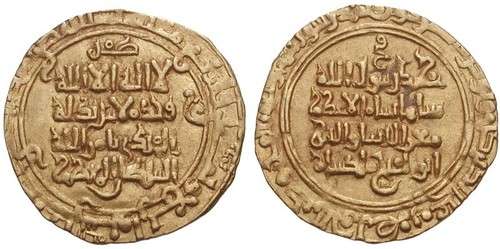
Gold Dinar of Malik Shah I
A hand-struck Seljuk gold dinar naming Malik Shah I (r. 1072–1092), covered in Arabic inscriptions with the ruler's titles and genealogy and an ornamental cartouche.
Islamic (Medieval)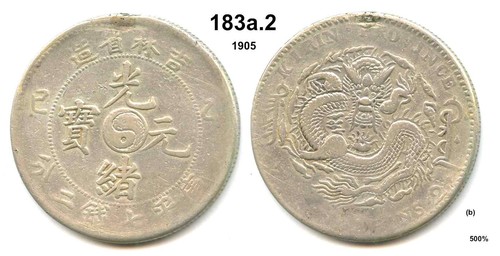
Guangxu Yuanbao Dollar
A crown-sized silver dragon dollar of Qing China inscribed 光緒元寶 (Guangxu Yuanbao), with a coiled dragon reverse and a provincial mint inscription; this piece dated 1905.
Circulation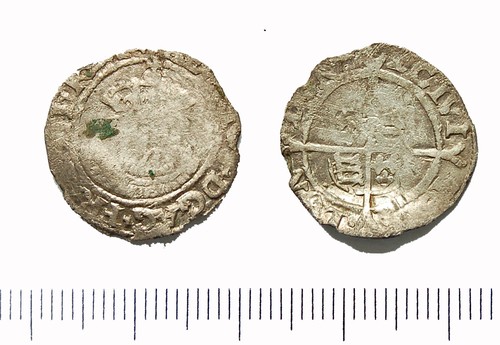
Edward VI Half Groat
Small hammered silver twopence of Edward VI (1547-1553), with a left-facing royal profile and a cross-and-shield reverse.
Hammered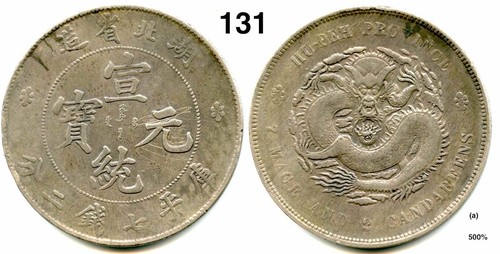
Xuantong Yuanbao 7 Mace 2 Candareens
A late Qing silver dollar-size coin of the Xuantong era (1909-1911), reading 宣統元寶 on the obverse with a Chinese dragon on the reverse.
Circulation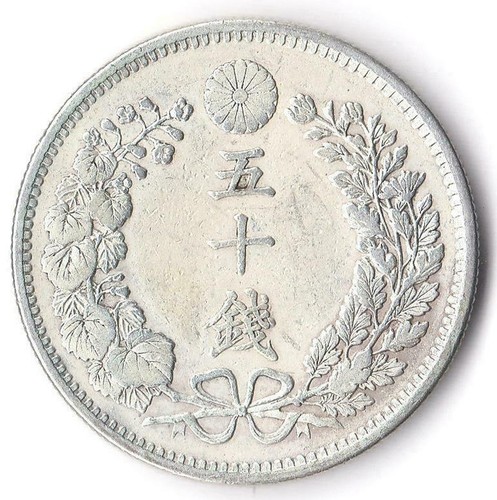
50 Sen (Dragon Type)
A Meiji-era Japanese silver 50 sen: a coiled dragon on one face, a sunburst-and-wreath value design on the other, dated Meiji 4 (1871).
Circulation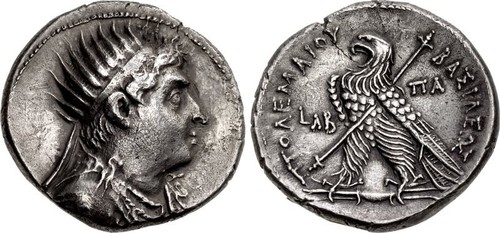
Tetradrachm of Ptolemy VIII
Silver tetradrachm of Ptolemy VIII of Egypt, c. 170-116 BC, with a diademed royal head on the obverse and an eagle on a thunderbolt reverse.
Ancient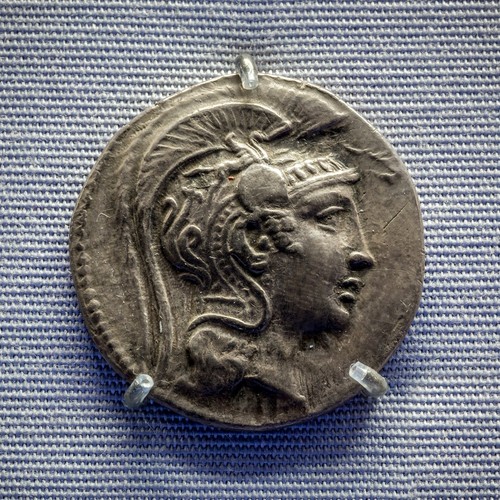
Athenian Owl Tetradrachm
Broad silver 'New Style' tetradrachm of Athens (c. 165-42 BC): helmeted Athena on the front, owl on an amphora within an olive wreath on the back.
Ancient Coins