
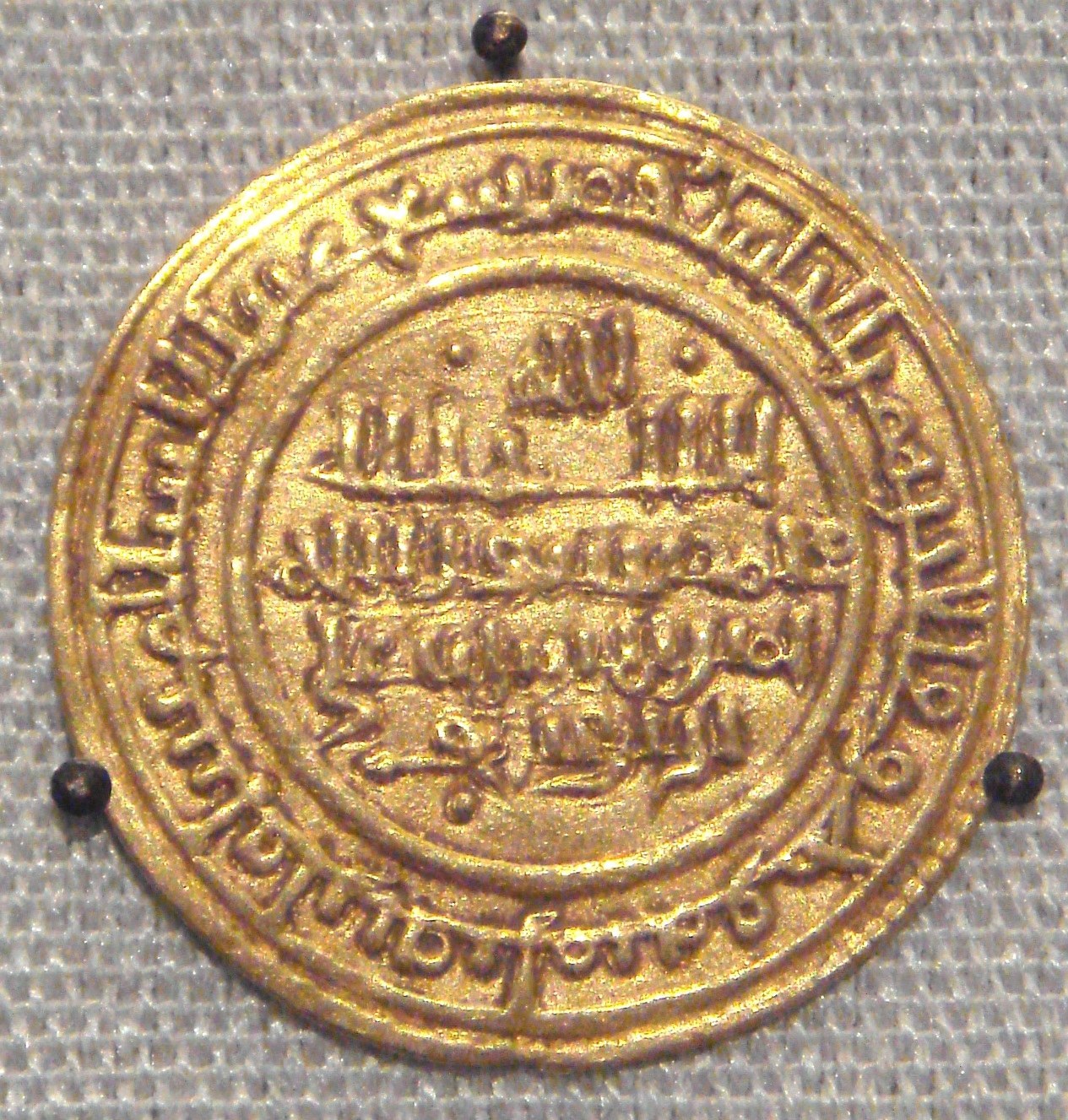
Almoravid Gold Dinar
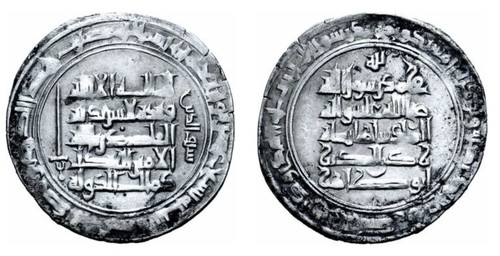
Pure-gold dinar of the Almoravid dynasty, struck in Islamic Spain and North Africa with concentric Arabic legends; this piece is dated 1116 CE.
- Country
- Spain
- Denomination
- Dinar
- Metal
- Gold
Got a coin like this?
Identify any coin from a photo, free.
Overview
The Almoravid gold dinar is a medieval Islamic coin issued by the Almoravids (al-Murabitun), a Berber dynasty that ruled Morocco and Muslim Spain (al-Andalus) from the late 11th to the mid-12th century. It is a small, thin, nearly pure gold coin covered on both faces with Arabic religious and dynastic inscriptions arranged in concentric circular bands, with no portrait or figural image.
The example described here is dated to 1116 CE, placing it in the reign of the Almoravid ruler Ali ibn Yusuf. Coins of this type circulated widely across the western Mediterranean and were so trusted for their gold content that Christian kingdoms in Iberia imitated them and adopted the name "maravedí" for their own gold and later billon coinage.
History & Background
The Almoravids rose from a religious-military movement among the Sanhaja Berbers of the Sahara and, by the 1080s, controlled both Morocco and much of al-Andalus after intervening against the advancing Christian kingdoms. Their gold, drawn largely from trans-Saharan trade routes reaching the Sudan and West African gold fields, funded a stable dinar that became a benchmark currency of the region.
Under Yusuf ibn Tashfin and especially his son Ali ibn Yusuf (reigned 1106–1143 CE), dinars were struck at a network of mints on both sides of the Strait of Gibraltar, including Andalusian centers such as Seville, Granada, and Almería as well as North African mints like Aghmat, Sijilmasa, and Marrakesh. A coin dated 1116 CE falls squarely within Ali ibn Yusuf's rule.
The Almoravid dinar's reputation for consistent weight and fineness gave it international standing. In Latin Europe it was known as the marabotin or maravedí, and its influence outlasted the dynasty, which fell to the Almohads around 1147 CE.
How to Identify
Almoravid dinars are immediately recognizable as purely epigraphic: every design element is Arabic script, with no ruler's portrait, animal, or emblem. The obverse and reverse each carry a central inscription enclosed by one or more concentric circular bands of marginal legend, exactly as seen on this piece. The legends typically combine the Muslim profession of faith, a Quranic passage, the names and titles of the Almoravid ruler and heir, acknowledgment of the Abbasid caliph in Baghdad, and a marginal band naming the mint and the year (in the Islamic Hijri calendar).
The fabric is distinctive: a small flan roughly 23–27 mm across, thin, and struck in high-purity gold that gives a warm yellow color. Standard full dinars weigh about 4 grams, though weights vary and fractional (half and quarter) dinars also exist.
Because the design is legend-only, attribution to a specific ruler, mint, and date depends on reading the Arabic marginal inscriptions rather than on any pictorial feature.
Value & Collectibility
Almoravid dinars are relatively available compared with many medieval gold issues, and their value is driven mainly by gold content, weight, the clarity and completeness of the legends, and the desirability of the mint and date. Common, legible examples of Ali ibn Yusuf typically trade in the low-to-mid hundreds of dollars, while sharply struck coins from scarcer mints, or well-preserved dated pieces, can bring more.
As a nearly pure gold coin of about 4 grams, any genuine example carries a solid bullion floor, but crisp centering, full marginal legends, and an identifiable mint and date add substantial collector premium. Clipped, holed, or heavily worn coins sell for less.
Because values depend heavily on specific mint, date, and condition, treat any single figure as indicative only and consult recent auction results and a specialist in Islamic coinage before buying or selling.
Frequently asked questions
What is an Almoravid gold dinar?
It is a medieval Islamic gold coin issued by the Almoravid dynasty, which ruled Morocco and Muslim Spain from the late 11th to mid-12th century. It is struck in nearly pure gold and covered with Arabic inscriptions rather than any image.
Why is this coin dated 1116 CE?
The marginal legend records the year in the Islamic Hijri calendar, which converts to 1116 CE. That date falls within the reign of the Almoravid ruler Ali ibn Yusuf (1106–1143 CE).
Is it connected to the Spanish maravedí?
Yes. The Almoravid dinar was known in Latin Europe as the marabotin or maravedí, and Christian Iberian kingdoms imitated it and borrowed the name for their own coinage.
How much gold does it contain?
A full Almoravid dinar is nearly pure gold and weighs roughly 4 grams, giving it a strong intrinsic bullion value in addition to its collector appeal.
Almoravid Gold Dinar guides
In-depth guides for identifying, valuing, and collecting Almoravid Gold Dinar.
Other coins you may enjoy
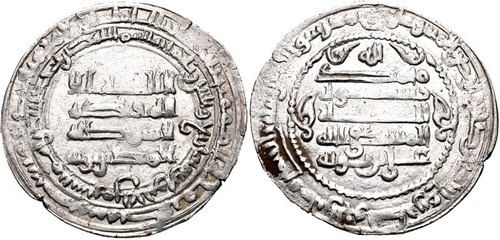
Buyid Silver Dirham
10th century CE (Buyid rule c. 934-1062)
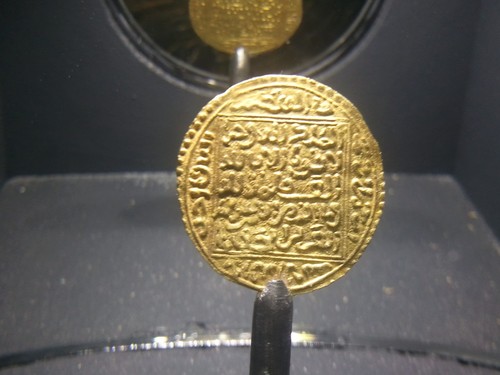
Marinid Gold Dinar
c. 1244–1465 (13th–15th century)
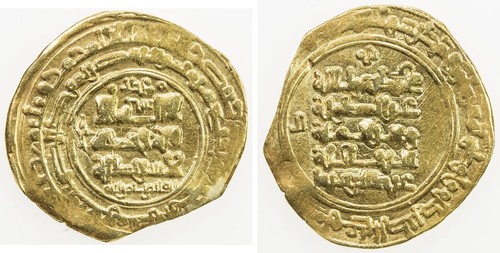
Ghaznavid Dinar
10th–11th century CE
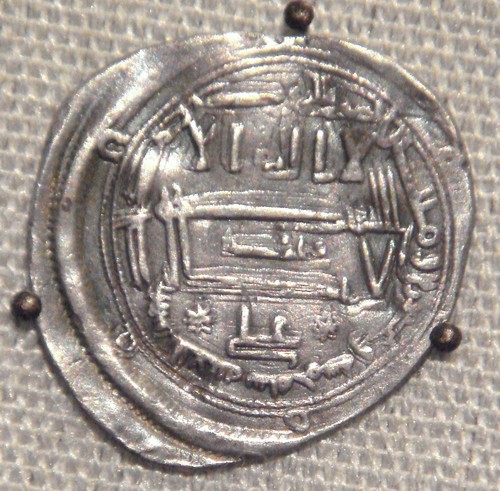
Idrisid Gold Dinar
c. 789-974 CE (example dated 840 CE)
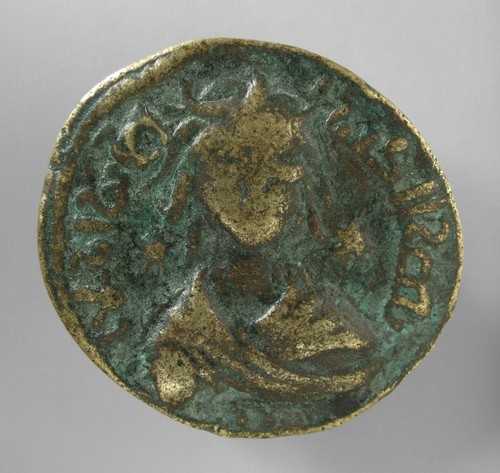
Artuqid Bronze Dirham
12th century (c. 1100s CE)
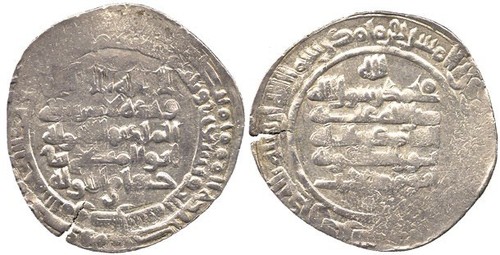
Dirham of Qirwash ibn al-Muqallad
393 AH (1003 CE)
Dirham of Kamal al-Dawla Gharib
10th century (300s AH)