
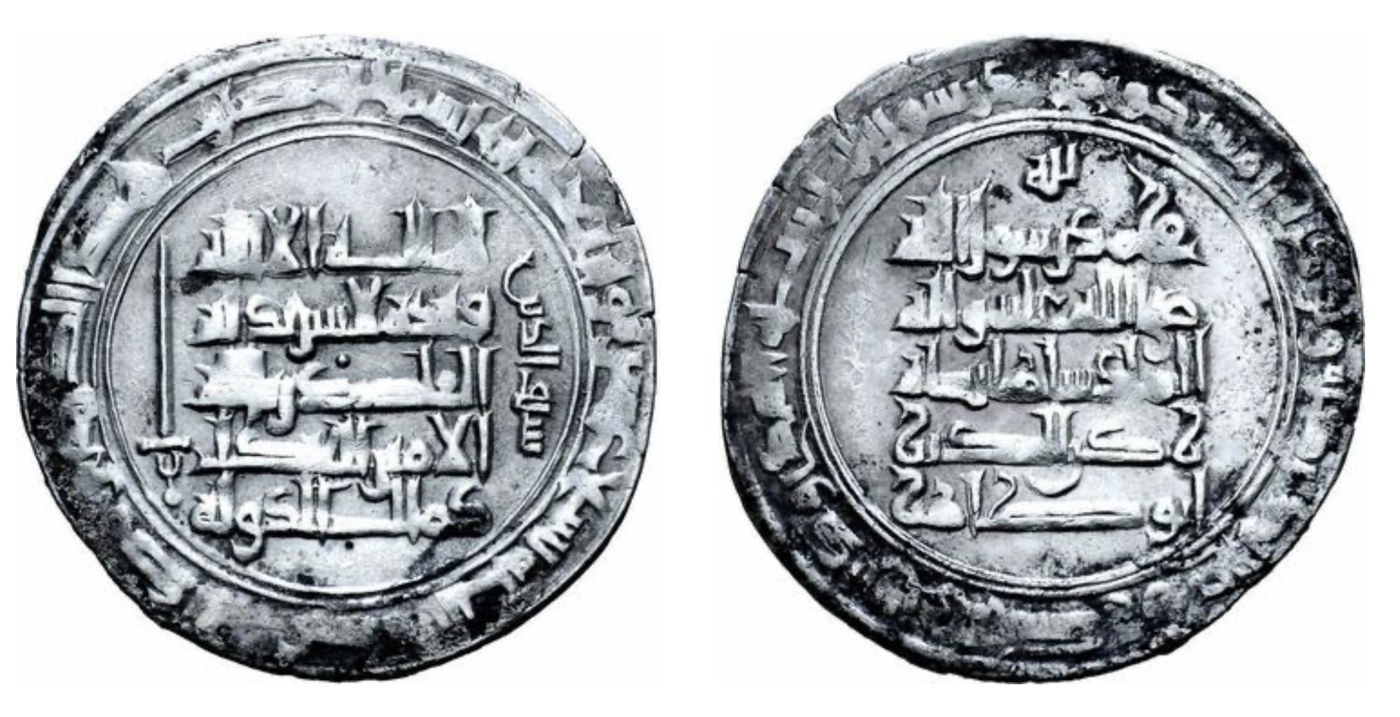
Dirham of Kamal al-Dawla Gharib
Silver dirham from 10th-century Iraq/Mesopotamia naming the ruler Gharib with the honorific Kamal al-Dawla, struck with Kufic Arabic legends.
- Country
- Iraq/Mesopotamia
- Denomination
- Dirham
- Metal
- Silver
Got a coin like this?
Identify any coin from a photo, free.
Overview
The Dirham of Kamal al-Dawla Gharib is a medieval Islamic silver coin from the region of Iraq and Mesopotamia, struck during the 10th century CE (the 300s AH). It follows the standard epigraphic form of the classical dirham: flat silver flans bearing only Arabic religious and dynastic inscriptions, with no portraits or figural imagery.
The piece takes its name from the honorific title "Kamal al-Dawla" ("Perfection of the State/Dynasty") paired with the personal name Gharib, which appears in the reverse legend. Titles of this kind were granted by the Abbasid caliphs to local rulers, governors, and military commanders during a period when much of Iraq was governed by regional strongmen who still acknowledged the caliph in their coinage.
History & Background
By the 10th century the Abbasid caliphate in Baghdad had lost much of its direct authority, and effective power across Iraq and Mesopotamia passed to a succession of amirs, warlords, and provincial dynasties. These figures received grand honorific titles ending in "al-Dawla" and expressed their standing by striking coinage in their own names while still citing the reigning Abbasid caliph as sovereign.
A dirham naming Kamal al-Dawla Gharib belongs to this world of fragmented, title-bearing authority. Silver dirhams were the everyday high-value coin of the Islamic world and circulated widely in trade, so surviving specimens document both the local political arrangements of the issuer and the broader monetary economy of medieval Mesopotamia.
Because records for many minor 10th-century issuers are incomplete, attributions of this type rest primarily on the coin's own legends. The naming of the ruler, the caliphal formula, and the mint-and-date statement in the margin are the key historical evidence the coin itself provides.
How to Identify
The obverse carries an Arabic legend in three horizontal lines, rendered in the angular Kufic script typical of the period. On dirhams of this era the central field normally states the Islamic profession of faith (the kalima), sometimes with additional lines naming an authority.
The reverse likewise shows a three-line Arabic legend in the central field, here including the name Gharib together with the honorific Kamal al-Dawla, and this side is surrounded by an outer marginal inscription. On classical dirhams that circular margin conventionally records the mint city and the year of striking, often introduced by a Quranic phrase.
The coin is struck in silver on a broad, thin flan and is entirely epigraphic, with no images. Identification therefore depends on reading the legends: confirm the silver fabric, the three-line arrangement on both faces, the presence of the reverse marginal ring, and the name-and-title combination Kamal al-Dawla Gharib within the reverse field.
Value & Collectibility
Value for medieval Islamic silver dirhams depends heavily on the specific ruler, mint, date, legibility, and state of preservation rather than on bullion content alone. Coins of well-documented major dynasties trade actively, while dirhams of minor or scarce title-bearing issuers are valued more by numismatic interest and rarity.
As a broad guide, common late Abbasid-era dirhams in circulated grades tend to sell in the modest tens of dollars, while scarce issuers, sharp strikes with fully legible legends, or coins with a clearly readable mint and date can command more. A specimen tied to an uncommon named ruler such as Kamal al-Dawla Gharib may hold added interest for specialists.
Condition factors that raise value include complete, well-centered legends, an intact marginal inscription, minimal weakness or corrosion, and clear attribution. For a firm figure, compare recent sales of the same ruler and mint and, for higher-value pieces, seek an expert opinion.
Frequently asked questions
What is the Dirham of Kamal al-Dawla Gharib?
It is a 10th-century silver dirham from Iraq/Mesopotamia that names the ruler Gharib with the honorific title Kamal al-Dawla in its Arabic legends. Like other dirhams of the period it is purely epigraphic, with no portrait or image.
What does "Kamal al-Dawla" mean?
It is an Arabic honorific title meaning roughly "Perfection of the State (or Dynasty)." Such "al-Dawla" titles were granted to regional rulers and commanders in the fragmented Abbasid period and appear on their coins alongside their personal names.
Is the coin made of real silver?
Yes. The dirham was the standard silver denomination of the medieval Islamic world. This type is struck on a broad, thin silver flan, though the exact fineness and weight can vary between issues and mints.
Why are there no pictures on the coin?
Classical Islamic coinage after the late 7th century deliberately avoided figural images, using Arabic inscriptions instead. The legends convey the profession of faith, the ruling authority, and the mint and date.
How can I tell which mint and year it is from?
That information is normally recorded in the outer marginal inscription around the reverse. Reading this Kufic legend, which typically follows a set mint-and-date formula, is the way to pin down where and when the coin was struck.
Dirham of Kamal al-Dawla Gharib guides
In-depth guides for identifying, valuing, and collecting Dirham of Kamal al-Dawla Gharib.
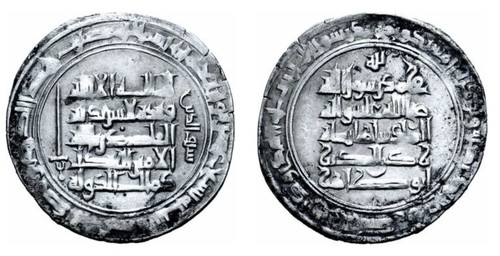
Dirham of Kamal al-Dawla Gharib identified by the community
Real coins identified with Coin Identifier.
Other coins you may enjoy
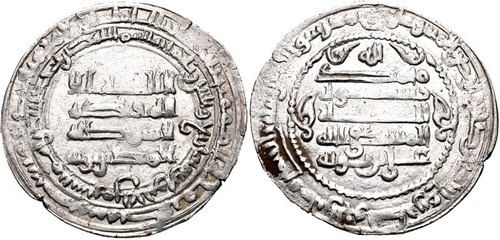
Buyid Silver Dirham
10th century CE (Buyid rule c. 934-1062)
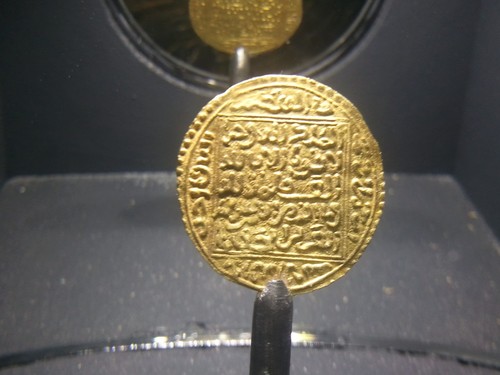
Marinid Gold Dinar
c. 1244–1465 (13th–15th century)
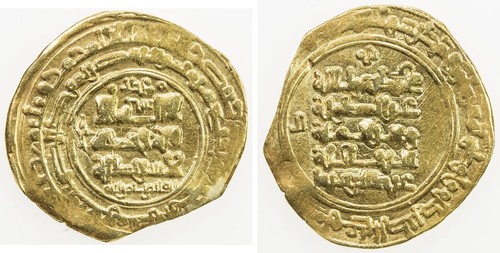
Ghaznavid Dinar
10th–11th century CE
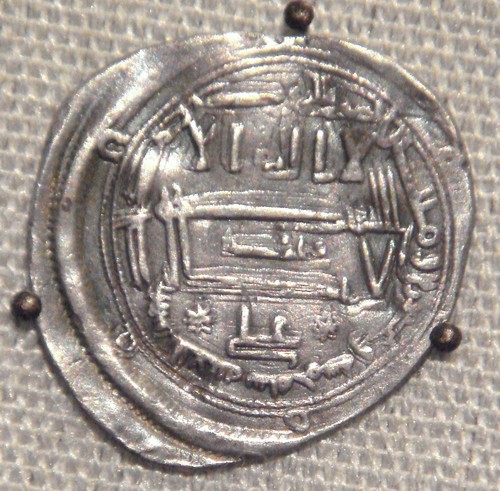
Idrisid Gold Dinar
c. 789-974 CE (example dated 840 CE)
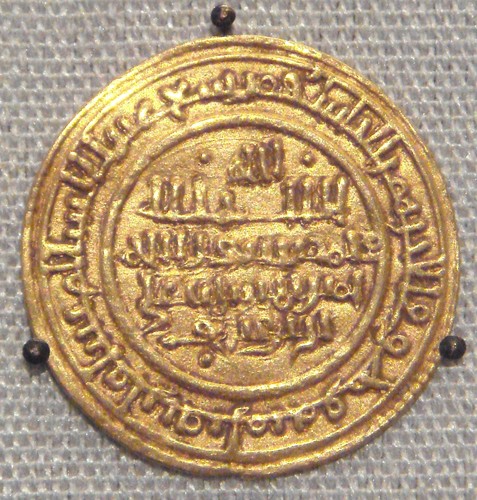
Almoravid Gold Dinar
c. 1087–1147 CE (this type dated AH 510 / 1116 CE)
Artuqid Bronze Dirham
12th century (c. 1100s CE)
Dirham of Qirwash ibn al-Muqallad
393 AH (1003 CE)