
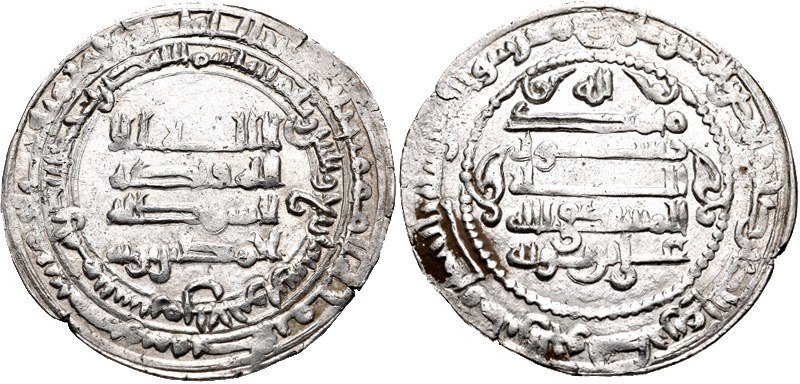
Buyid Silver Dirham
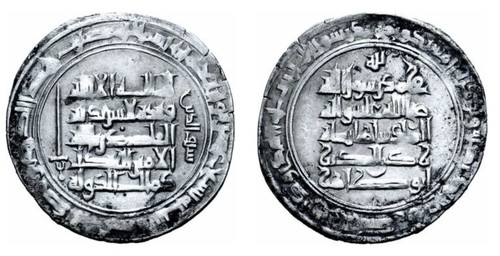
Broad, thin silver dirham of the Buyid (Buwayhid) dynasty, struck in Kufic Arabic with religious legends and marginal mint-and-date text.
- Country
- Buyid Dynasty
- Denomination
- Dirham
- Metal
- Silver
Got a coin like this?
Identify any coin from a photo, free.
Overview
The Buyid silver dirham is a hand-struck medieval Islamic coin issued by the Buyid (Buwayhid) dynasty, a Shia Persian power that dominated Iraq and much of Iran during the 10th and 11th centuries. Like other dirhams of the era, it is a thin, comparatively broad silver piece carrying only Arabic inscriptions in the angular Kufic script, with no portrait or figural imagery.
The example shown follows the standard layout: the obverse presents an Arabic religious inscription arranged in horizontal lines within a central field, while the reverse carries a further Arabic legend surrounded by an outer marginal band of text. That marginal band typically records where and when the coin was struck, making these pieces valued more as historical documents than as bullion.
History & Background
The Buyids rose from Daylamite military origins in northern Iran and, by 945 CE, had taken control of Baghdad. Though Shia, they ruled in the name of the Sunni Abbasid caliphs, keeping the caliph as a nominal sovereign while wielding real power themselves. Their coinage reflects this arrangement: dirhams often name the reigning Abbasid caliph alongside the Buyid amir who actually commissioned the strike.
Silver dirhams were the workhorse currency of this world, circulating across a vast trade network that reached into Central Asia, the Caucasus, and even Viking Scandinavia, where Islamic dirhams have been recovered in large hoards. Over the dynasty's roughly 120-year span the silver content and weight standards varied, and later issues are frequently debased, reflecting the fiscal strains of the period.
How to Identify
Look first for an all-Arabic, all-text design in Kufic script with no images. The central inscriptions usually render the Islamic profession of faith (the kalima) split across lines, together with the names of the Abbasid caliph and the Buyid ruler. The reverse marginal legend commonly cites a Quranic passage and, crucially, states the mint city and the year of striking in written-out Arabic.
Physically, dirhams tend to be broad and thin with irregular, hand-struck edges, and weight and diameter vary from piece to piece rather than following a modern machined standard. Surfaces are often uneven, with areas of weak strike or crystallized silver. Reading the mint name and date in the margin is the most reliable way to attribute a specific coin, and specialist references on Buyid coinage are needed to match a ruler's name to a reign.
Value & Collectibility
Buyid dirhams are relatively available on the ancient and medieval coin market, and common types in worn or partially struck condition are generally modest in price. Value rises with legible legends, a clearly readable mint and date, good silver surfaces, and full flans that show the complete inscription rather than a clipped or off-center strike.
Scarcer mints, named rulers of particular historical interest, and unusually well-preserved examples command more. Because condition, legibility, and specific attribution drive price far more than metal content, any firm valuation should rest on identifying the exact type and mint rather than on the silver weight alone. Treat online figures as context, not fixed prices.
Frequently asked questions
What is a Buyid dirham?
It is a silver coin of the Buyid (Buwayhid) dynasty, a Shia Persian power that controlled Iraq and Iran in the 10th and 11th centuries. It carries only Arabic Kufic inscriptions, with no portrait or image.
Why does the coin name a caliph and a ruler?
The Buyids governed in the name of the Abbasid caliphs while holding actual power. Their dirhams often cite the reigning Abbasid caliph together with the Buyid amir who ordered the coin struck.
Is the coin made of pure silver?
It is a silver issue, but fineness varies. Early dirhams can be good silver, while many later Buyid strikes are noticeably debased. Weight and purity were not standardized across the dynasty.
How do I know where and when it was made?
The outer marginal legend on the reverse normally spells out the mint city and the year in written Arabic. Reading that band, with a specialist reference, is how the coin is attributed.
Are Buyid dirhams valuable?
Common worn types are usually inexpensive, while legible legends, readable mint and date, scarce mints, and well-preserved silver raise value. Exact attribution matters far more than silver weight.
Buyid Silver Dirham guides
In-depth guides for identifying, valuing, and collecting Buyid Silver Dirham.
Other coins you may enjoy
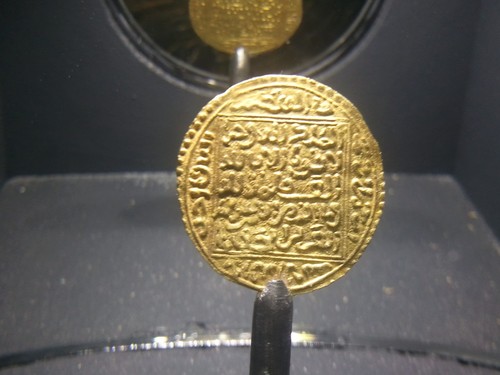
Marinid Gold Dinar
c. 1244–1465 (13th–15th century)
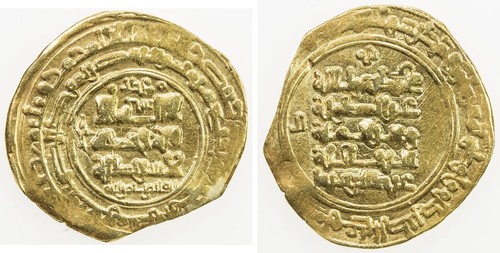
Ghaznavid Dinar
10th–11th century CE
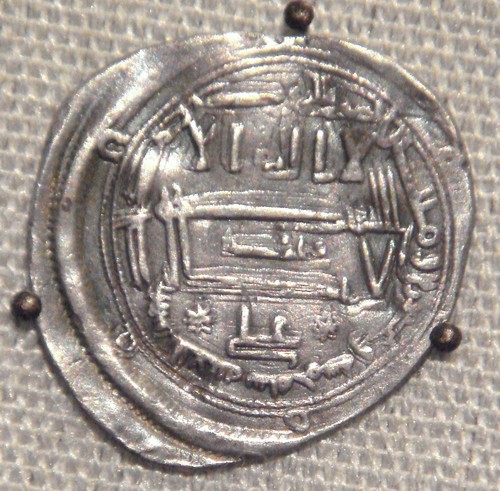
Idrisid Gold Dinar
c. 789-974 CE (example dated 840 CE)
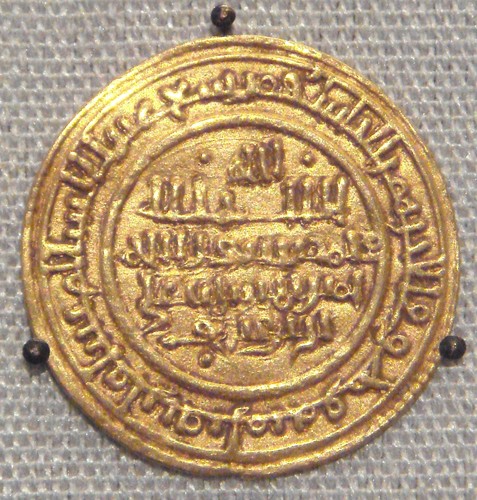
Almoravid Gold Dinar
c. 1087–1147 CE (this type dated AH 510 / 1116 CE)
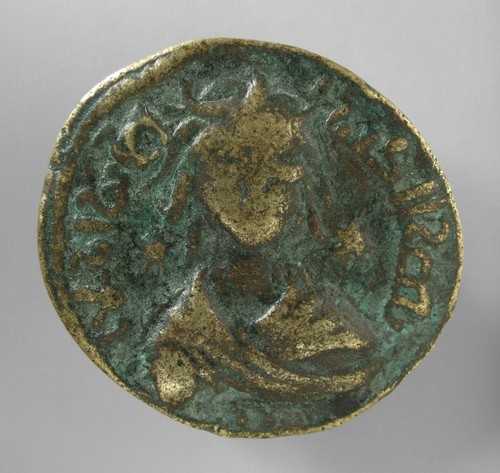
Artuqid Bronze Dirham
12th century (c. 1100s CE)
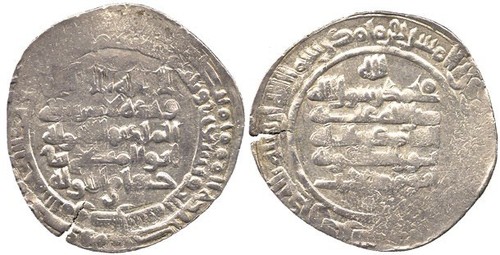
Dirham of Qirwash ibn al-Muqallad
393 AH (1003 CE)
Dirham of Kamal al-Dawla Gharib
10th century (300s AH)