
How to Identify the Buyid Silver Dirham
A collector's walkthrough for confirming a Buyid dirham: Kufic legends, marginal mint-and-date text, flan shape, and how to avoid look-alikes.
Read the full Buyid Silver Dirham encyclopedia entry →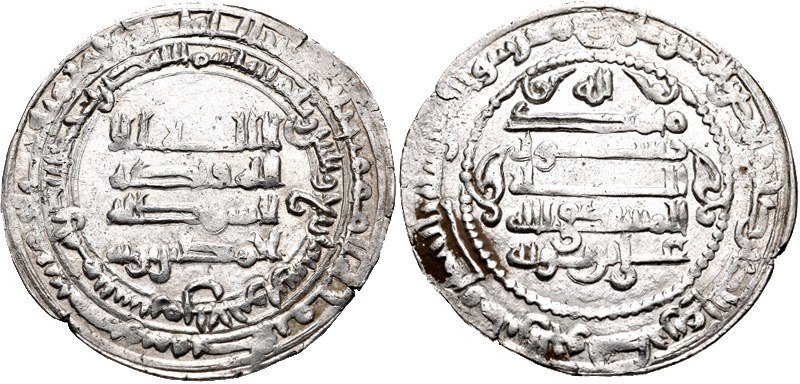
Start with the script and layout. A Buyid dirham is entirely covered in Arabic Kufic lettering, the angular early script, with no human or animal figures anywhere. The obverse holds a central inscription in horizontal lines, and the reverse pairs a central legend with a continuous ring of marginal text around it. If you see a portrait, a date in Western numerals, or a beaded modern rim, it is not a Buyid dirham.
Read the fields for names. Buyid strikes characteristically carry the Islamic profession of faith across the central lines, plus the name of the Abbasid caliph and the Buyid amir. The presence of two authorities, a caliph and a separate ruler, is a strong pointer toward this dynastic series rather than a purely Abbasid or Samanid issue. The reverse margin is where you find the mint city and the year written out in words; this is the single most useful line for pinning down the exact coin.
Check the physical form. These are hand-struck, so expect a broad, thin flan with an irregular outline, off-center areas, and variable weight and diameter rather than a uniform machined disc. Silver tone ranges from bright to gray, and later issues may look pale or coppery where the alloy was debased. Weak or doubled strikes and patches of crystallized surface are normal for the period and do not by themselves indicate a fake.
Separate it from look-alikes. Contemporary Samanid, Abbasid, Saffarid, and Ziyarid dirhams share the same all-text Kufic format and can look similar at a glance; only reading the ruler and mint names reliably tells them apart. Because attribution hinges on legends, use a specialist catalog of eastern Islamic coinage or consult a knowledgeable dealer rather than relying on general appearance.
Be cautious with authentication. Cast copies and tourist reproductions exist; genuine hand-struck coins show sharp, slightly raised lettering and natural flan irregularity, while casts often have soft, mushy detail, seams, or bubbles. Modern engraved fantasy pieces and cleaned or tooled surfaces also turn up. When a coin's value depends on a scarce mint or ruler, seek a second expert opinion before paying a premium.
Frequently asked questions
How can I tell a Buyid dirham from other Islamic dirhams?
They share the same Kufic, text-only format, so read the names. Buyid coins typically cite an Abbasid caliph plus a separate Buyid ruler, and the reverse margin gives the mint and date that confirm the attribution.
What should the edges and shape look like?
Expect a broad, thin, hand-struck flan with an irregular outline and variable weight. Perfectly round, evenly milled, or beaded-rim coins are modern and not authentic medieval strikes.
How do I spot a fake or cast copy?
Genuine strikes show crisp, slightly raised lettering and natural flan irregularity. Soft mushy detail, casting seams, surface bubbles, or suspiciously uniform silver suggest a cast reproduction.
Do I need to read Arabic to identify one?
It helps, but you can match the Kufic legends against published Buyid coin references or photographs. For scarce mints or rulers, a specialist dealer or catalog is the safest way to confirm the type.