
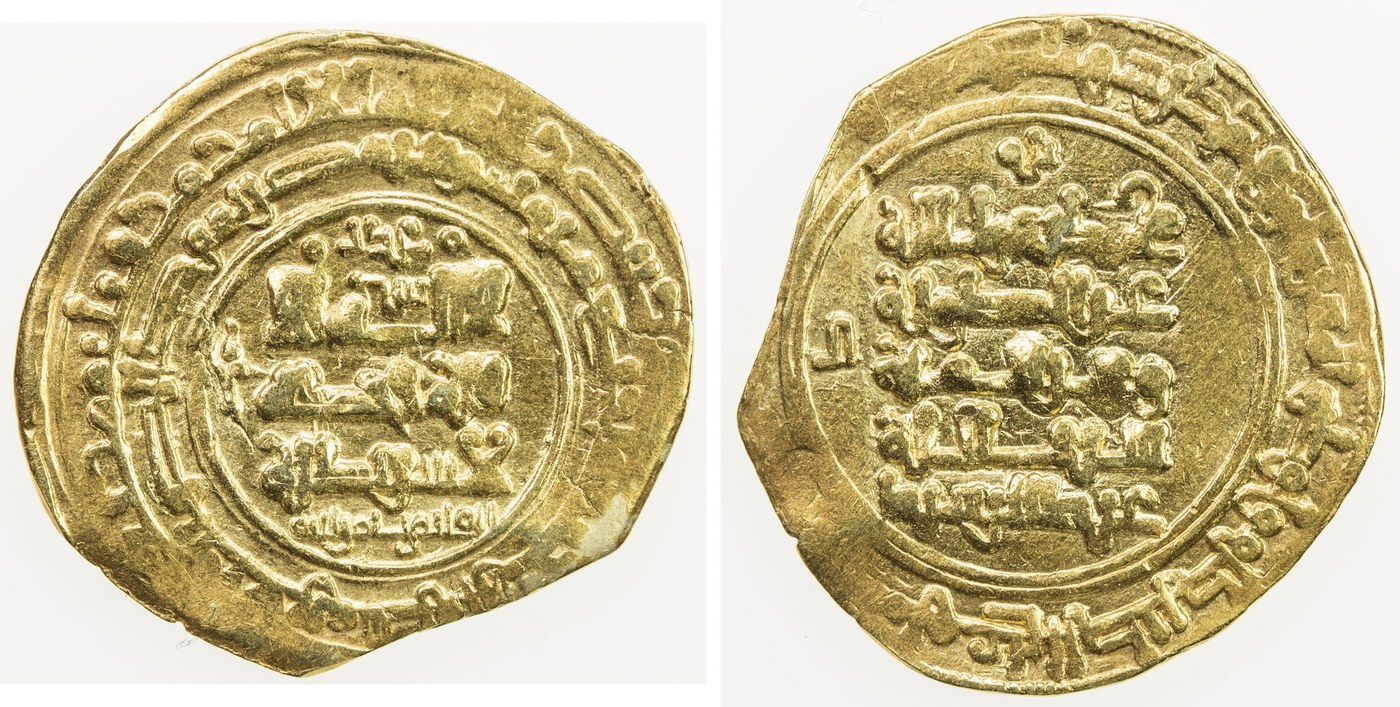
Ghaznavid Dinar
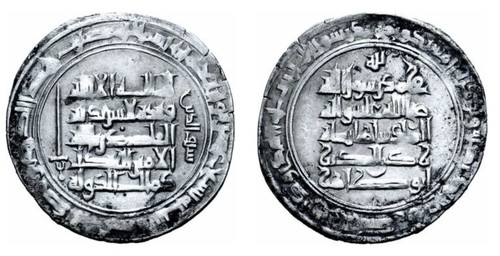
Gold dinar of the Ghaznavid dynasty (c. 10th–11th century), an epigraphic Islamic coin struck at Ghazna and allied mints in Afghanistan.
- Country
- Afghanistan
- Denomination
- Dinar
- Metal
- Gold
Got a coin like this?
Identify any coin from a photo, free.
Overview
The Ghaznavid Dinar is a gold coin of the Ghaznavid dynasty, a Persianate Muslim state of Turkic origin that ruled from Ghazna (modern Ghazni, Afghanistan) and extended across Khurasan and into northern India during roughly the 10th and 11th centuries CE. Like most medieval Islamic gold, it is a purely epigraphic issue: it carries no portrait or figural image, only Arabic inscriptions arranged on both faces.
On the coin photographed here, both the obverse and reverse present Arabic text set within a rectangular cartouche framed by a decorative border. The legends typically record the Islamic declaration of faith, the name of the reigning Abbasid caliph acknowledged as overlord, and the name and titles of the Ghaznavid ruler. The dinar was the principal high-value gold denomination of the era and circulated widely in trade across the eastern Islamic world.
History & Background
The Ghaznavid dynasty was founded in the late 10th century by Sebuktigin, a former Turkic slave-soldier, and reached its height under his son Mahmud of Ghazni (reigned 998–1030 CE), whose campaigns carried Ghaznavid power deep into the Indian subcontinent. Gold and silver struck in this period funded a vast empire and a celebrated court, and the coinage names successive rulers alongside the Abbasid caliph in Baghdad, whose spiritual authority the Ghaznavids formally recognized.
Ghaznavid dinars were minted at Ghazna and at major cities the dynasty controlled, including Nishapur and Herat. The coins follow the established Abbasid epigraphic tradition, and their inscriptions serve as historical documents, dating each piece and naming its issuer. After the mid-11th century the dynasty's western territories were lost to the Seljuqs, and later Ghaznavid gold is generally scarcer and often of reduced fineness before the line ended in the 12th century.
How to Identify
The clearest markers of a Ghaznavid dinar are its material and its all-text design. It is a gold coin bearing only Arabic script — no human or animal images — with the inscriptions organized into fields and surrounding margins. The example shown places the central legends inside a rectangular cartouche with an ornamental border on each face, a framing device that distinguishes it from the plain concentric-circle layout of many earlier Abbasid dinars.
Reading the legends is the key to attribution. Islamic gold typically states the profession of faith in the central field, while the marginal or secondary legends give the ruler's name and honorifics, the acknowledged caliph, and frequently the mint city and the year in written-out Arabic (Hijri dating). Weight is usually in the low single grams of gold, though Ghaznavid dinars were not always struck to a rigid standard. Because the coins are hand-struck, expect slightly irregular flans, uneven striking, and legends that run partly off the edge.
Value & Collectibility
Ghaznavid dinars are actively collected as tangible relics of a major medieval Islamic empire, and value is driven chiefly by the ruler named, the mint and date, the completeness and legibility of the inscriptions, and overall condition. Common dinars of well-documented rulers such as Mahmud of Ghazni appear on the market with some regularity and sit at the more accessible end, while scarce mints, short reigns, or exceptionally well-struck and well-preserved examples command substantial premiums.
As a rule, expect a broad range rather than a fixed figure: worn or fragmentary pieces are modest, while sharp, fully legible dinars with a clear mint and date are worth considerably more. Because these are gold coins from a period and region with many die varieties, attribution by a specialist in Islamic numismatics has a real effect on price. Any specific value should be confirmed against recent auction results for the exact ruler, mint, and grade.
Frequently asked questions
Is a Ghaznavid dinar made of real gold?
Yes. The dinar was the gold denomination of the Islamic monetary system, and Ghaznavid dinars were struck in gold. Fineness could vary, especially in later issues, but the standard piece is a genuine gold coin.
Why does the coin have no picture, only writing?
Medieval Islamic coinage was deliberately non-figural. Instead of a ruler's portrait, the dinar carries Arabic religious and political inscriptions — the profession of faith, the caliph's name, and the issuing ruler's name and titles.
Where were Ghaznavid dinars made?
They were struck at Ghazna (modern Ghazni, Afghanistan), the dynasty's capital, and at other important cities under Ghaznavid control such as Nishapur and Herat. The mint is often named within the coin's legends.
How old is this coin?
Ghaznavid gold of this type dates to roughly the 10th and 11th centuries CE, the peak era of the dynasty, including the reign of Mahmud of Ghazni around the year 1000.
Ghaznavid Dinar guides
In-depth guides for identifying, valuing, and collecting Ghaznavid Dinar.
Other coins you may enjoy
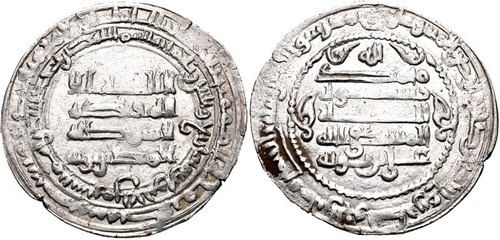
Buyid Silver Dirham
10th century CE (Buyid rule c. 934-1062)
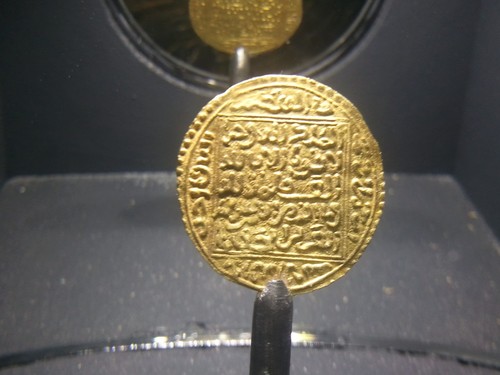
Marinid Gold Dinar
c. 1244–1465 (13th–15th century)
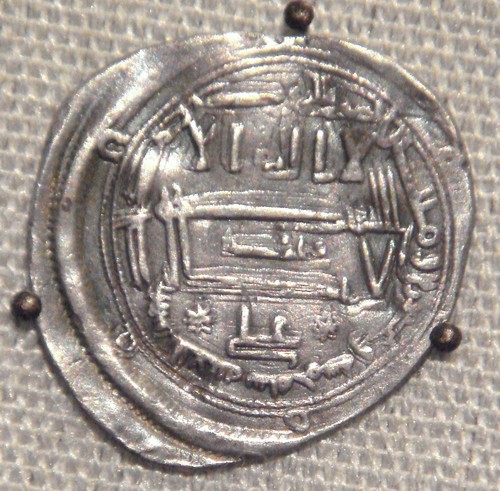
Idrisid Gold Dinar
c. 789-974 CE (example dated 840 CE)
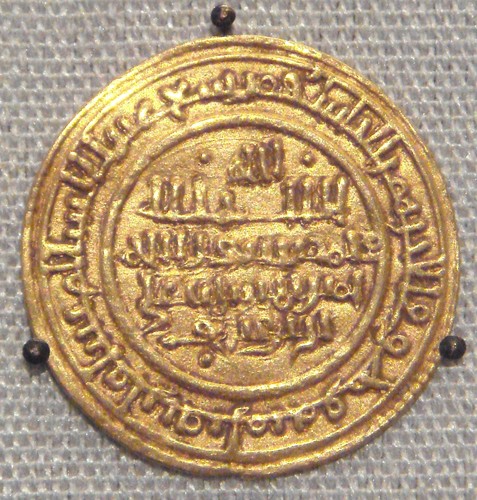
Almoravid Gold Dinar
c. 1087–1147 CE (this type dated AH 510 / 1116 CE)
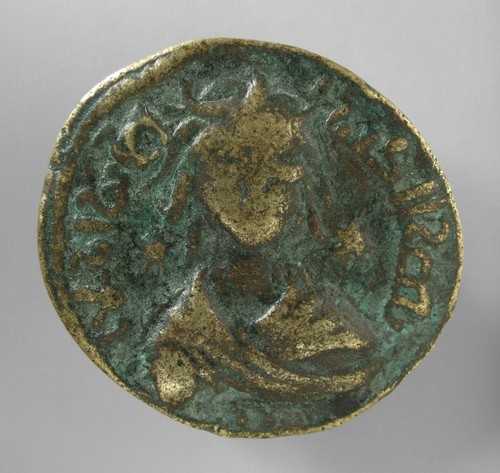
Artuqid Bronze Dirham
12th century (c. 1100s CE)
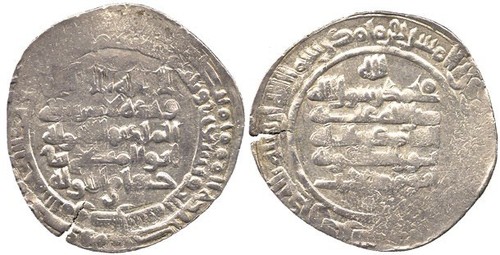
Dirham of Qirwash ibn al-Muqallad
393 AH (1003 CE)
Dirham of Kamal al-Dawla Gharib
10th century (300s AH)