
How to Identify the Ghaznavid Dinar
A collector's walkthrough for recognizing a Ghaznavid gold dinar: epigraphic design, cartouche layout, mint and date legends, and authentication cautions.
Read the full Ghaznavid Dinar encyclopedia entry →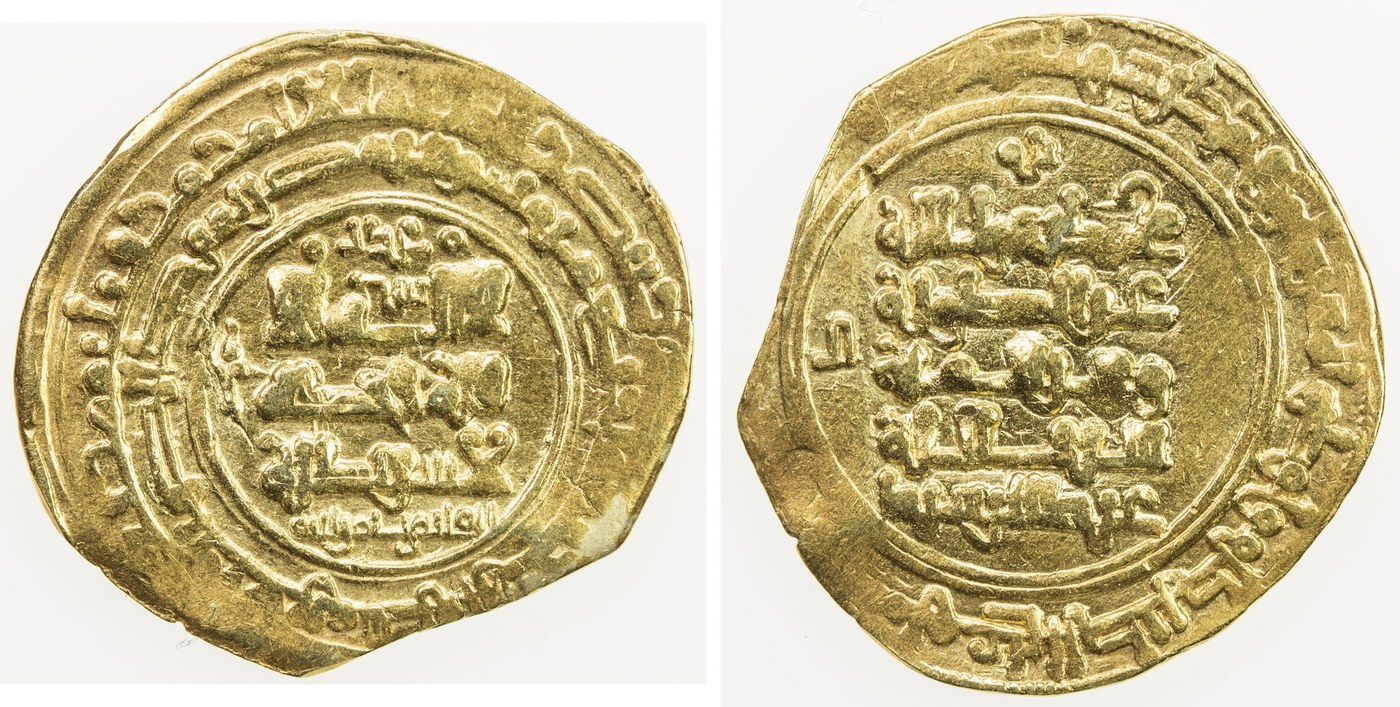
Start with metal and format. A Ghaznavid dinar is a hand-struck gold coin covered entirely in Arabic script, with no figural imagery whatsoever. If a coin of this size and period shows any portrait, animal, or pictorial device, it is not a Ghaznavid dinar. On the piece shown here the central legends are enclosed in a rectangular cartouche with a decorative border on both faces — note the frame, since it separates the inner field text from the surrounding marginal legend.
Work the two faces separately. One field typically carries the Islamic profession of faith, while the other field and the margins name the Ghaznavid ruler with his honorific titles and the Abbasid caliph acknowledged above him. The outer margin usually spells out the mint city and the year in written Arabic (Hijri) rather than numerals. Even if you cannot read the script fluently, the presence of a named ruler plus a caliph plus a mint-and-date margin is the diagnostic combination for this series.
Check the physical characteristics. Expect a gold flan in the low single-gram range, often slightly irregular in shape, with an uneven strike that leaves part of the legend weak or off the edge — all normal for hand-struck medieval coinage. A perfectly round, perfectly centered, machine-even piece is a red flag. Genuine gold color and heft, combined with crisp but hand-cut lettering, are what you want to see.
Beware of look-alikes. Ghaznavid dinars resemble other eastern Islamic gold — Samanid, Buyid, and especially Seljuq dinars, which succeeded the Ghaznavids in the same regions and share the epigraphic style. Attribution depends on reading the ruler's name and mint, so treat any coin sold only as a generic "Islamic gold dinar" as unattributed until the legends are confirmed. Modern tourist copies and cast forgeries exist; these often show soft, mushy lettering, casting seams or bubbles, wrong weight, or suspiciously uniform surfaces.
When in doubt, get the legends read. Because value and identity both hinge on the exact ruler, mint, and date, a specialist in Islamic numismatics — or a reputable reference and auction archive — should confirm the attribution before you rely on it. Photograph both faces flat and well-lit so the marginal legends are legible for comparison against published die studies.
Frequently asked questions
How can I tell a Ghaznavid dinar from a Seljuq or Samanid dinar?
They share the same all-Arabic epigraphic style, so the answer is in the legends. Identify the ruler's name and titles and the mint city named on the coin; a specialist or a good reference can match these to the Ghaznavid line rather than a neighboring dynasty.
What should I look for to spot a fake?
Watch for soft or blurry lettering, casting seams or air bubbles, incorrect weight, and unnaturally uniform, perfectly round surfaces. Authentic dinars are hand-struck gold with crisp but slightly irregular strikes and genuine gold heft.
Do I need to read Arabic to identify one?
It helps but is not essential. You can recognize the type by its gold metal, fully epigraphic design, and cartouche-and-margin layout, then have the specific ruler, mint, and date read by a specialist or matched against published examples.
Does the mint name really appear on the coin?
Usually yes. The outer marginal legend typically names the mint city and the year of striking in written Arabic, which is central to attributing and dating the piece.