
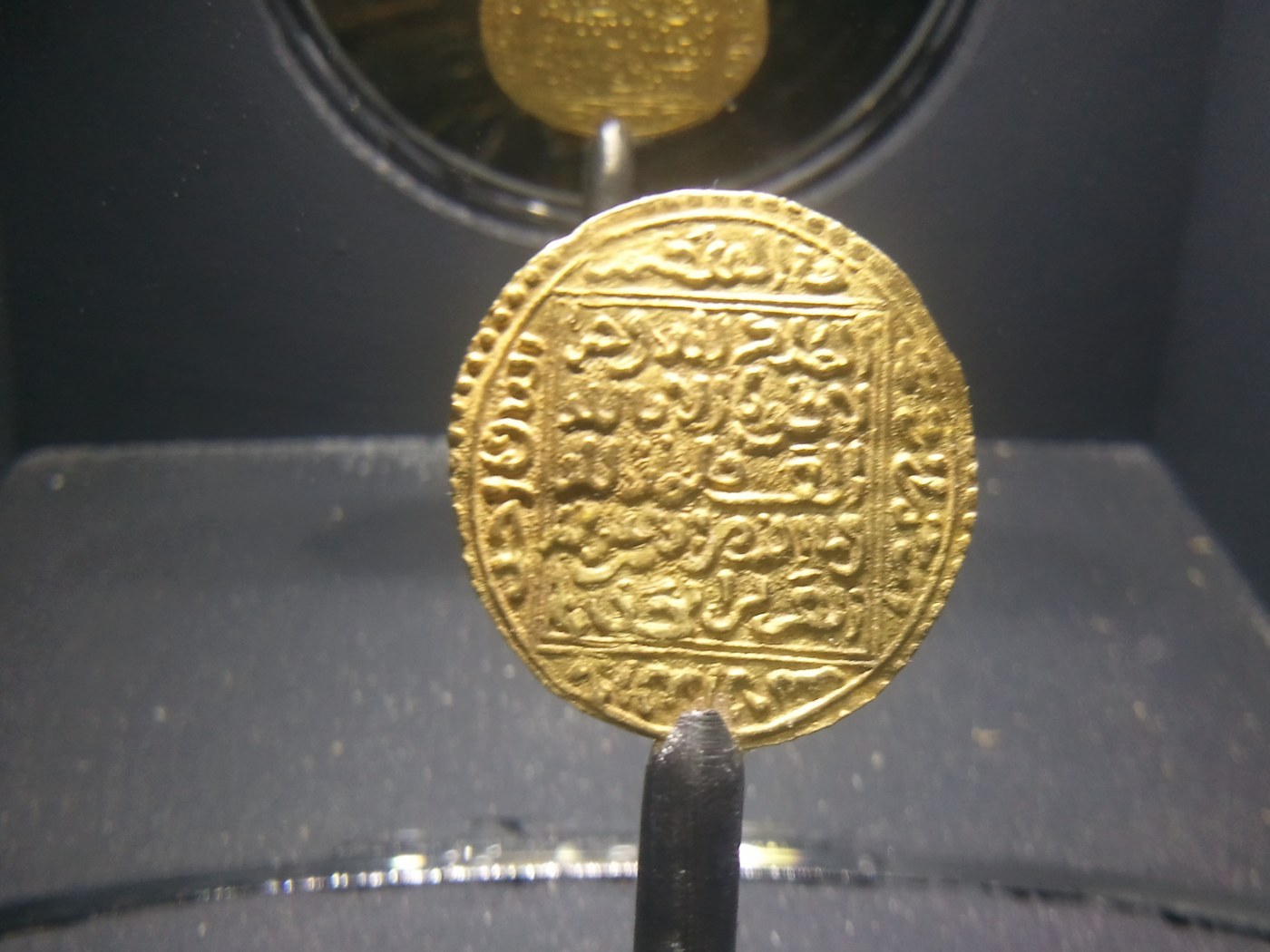
Marinid Gold Dinar
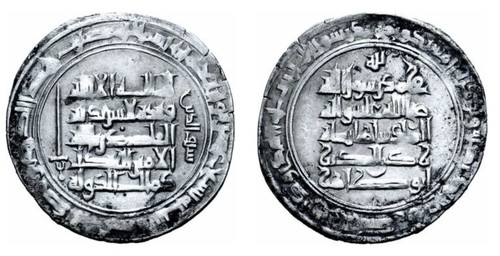
Aniconic Islamic gold dinar of the Marinid dynasty of Morocco, its faces filled with Arabic religious inscriptions framed by geometric border bands.
- Country
- Morocco
- Denomination
- Dinar
- Metal
- Gold
Got a coin like this?
Identify any coin from a photo, free.
Overview
The Marinid Gold Dinar is a medieval Islamic gold coin struck by the Marinid (Banu Marin) dynasty, a Berber Zenata power that ruled Morocco and parts of the western Maghreb from roughly the mid-13th to the mid-15th century, with Fez as its principal capital. Like other coins of the Islamic west, it bears no portrait or figural imagery: both faces are entirely given over to Arabic inscription, arranged in blocks and surrounded by decorative geometric border bands.
These dinars belong to the broader Maghrebi gold tradition inherited from the preceding Almohads. They were struck on broad, relatively thin gold flans and carried religious formulae along with dynastic and mint information, making them both currency and a statement of political and religious legitimacy.
History & Background
The Marinids rose to power as the Almohad caliphate declined, taking Fez in the 1240s–1250s and consolidating control over Morocco over the following decades. Their gold coinage continued the format established by the Almohads, and the resulting dinars circulated widely across North Africa and around the Mediterranean rim.
The gold itself was tied to the trans-Saharan trade, which carried West African gold northward to Maghrebi mints. This steady supply made Moroccan gold coinage important far beyond its borders; Maghrebi gold pieces of this family influenced and were echoed by Christian Iberian gold issues of the later Middle Ages. Coins were struck at several regional mints associated with Marinid authority, and issues can vary in inscription, arrangement, and workmanship across reigns and locations.
How to Identify
Both sides are aniconic and inscription-only. The obverse and reverse each carry Arabic legends—typically the Islamic profession of faith and related pious formulae, together with dynastic and mint references—set within a plain central field and enclosed by decorative geometric border bands and marginal ornament. The script is in the angular Kufic or rounded Maghrebi/Naskh style characteristic of western Islamic coinage.
The coins are gold, generally struck on wide, thin flans, so surviving pieces are often slightly wavy or unevenly struck at the edges rather than sharply circular. Because there is no image or Latin lettering, the geometric framing bands and the layout of the Arabic text blocks are the primary visual signatures. Exact mint and ruler must be read from the legends themselves, and many pieces are undated or only partially legible.
Value & Collectibility
As a medieval Islamic gold coin, the Marinid Gold Dinar carries a base value from its gold content, with collector premiums layered on top. Values depend heavily on the completeness of the flan, sharpness of the strike, legibility of the legends, the identifiable ruler and mint, and overall preservation.
Well-struck, fully legible examples with attractive surfaces command more than worn, clipped, or weakly struck pieces. In general terms these coins range from the low hundreds of dollars for modest examples into the low thousands for scarce mints, well-preserved strikes, or historically desirable rulers. Because gold coins of this era are widely imitated, buyers should favor pieces with clear provenance or specialist attribution.
Frequently asked questions
Why doesn't the coin show a ruler's face?
Marinid coinage follows the aniconic tradition of western Islamic coinage, which avoids figural images. Instead, both faces are filled with Arabic religious and dynastic inscriptions framed by geometric border bands.
What is written on a Marinid gold dinar?
The legends are in Arabic and typically include the Islamic profession of faith and other pious formulae, along with references to the dynasty and the mint. Exact wording and arrangement vary by reign and mint.
Where does the gold come from?
Moroccan gold coinage of this period drew on the trans-Saharan trade, which brought West African gold to Maghrebi mints, helping make Marinid gold important across the Mediterranean.
Is it the same as an Almohad dinar?
It follows the same Maghrebi gold tradition and general format inherited from the Almohads, but Marinid issues carry their own dynastic inscriptions and can differ in layout, script, and detail.
Marinid Gold Dinar guides
In-depth guides for identifying, valuing, and collecting Marinid Gold Dinar.
Other coins you may enjoy
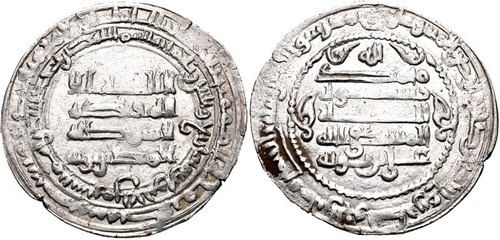
Buyid Silver Dirham
10th century CE (Buyid rule c. 934-1062)
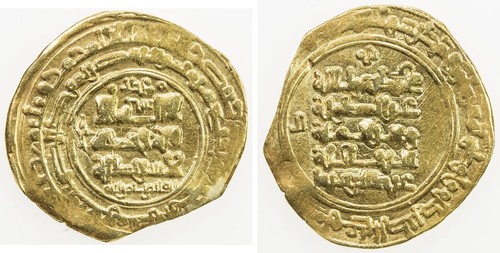
Ghaznavid Dinar
10th–11th century CE
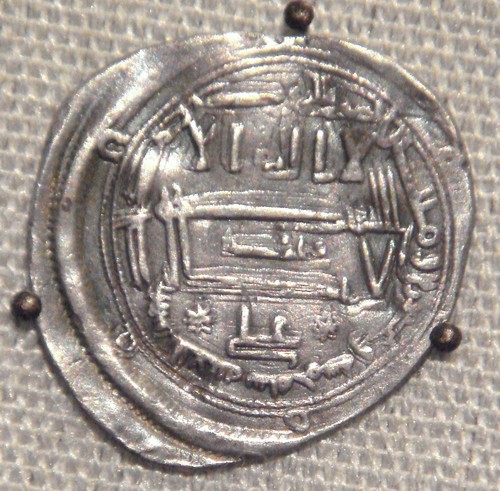
Idrisid Gold Dinar
c. 789-974 CE (example dated 840 CE)
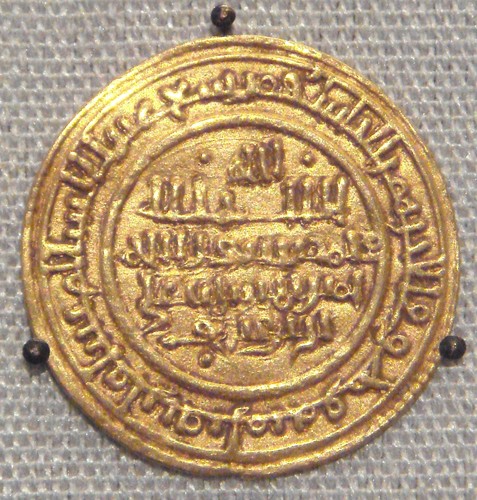
Almoravid Gold Dinar
c. 1087–1147 CE (this type dated AH 510 / 1116 CE)
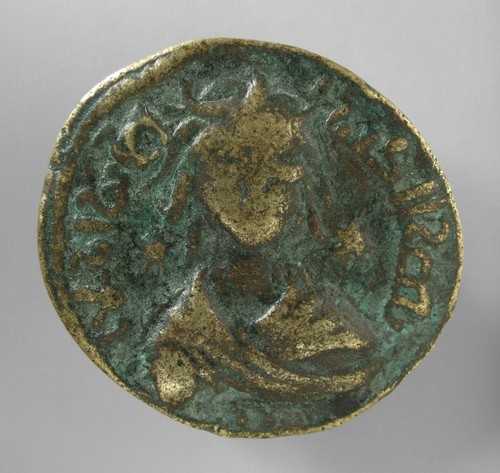
Artuqid Bronze Dirham
12th century (c. 1100s CE)
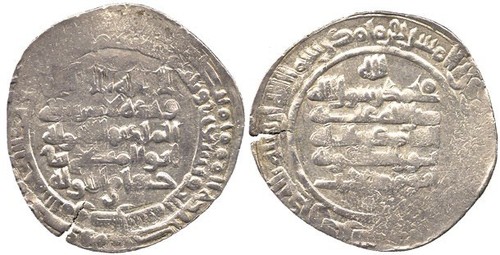
Dirham of Qirwash ibn al-Muqallad
393 AH (1003 CE)
Dirham of Kamal al-Dawla Gharib
10th century (300s AH)