
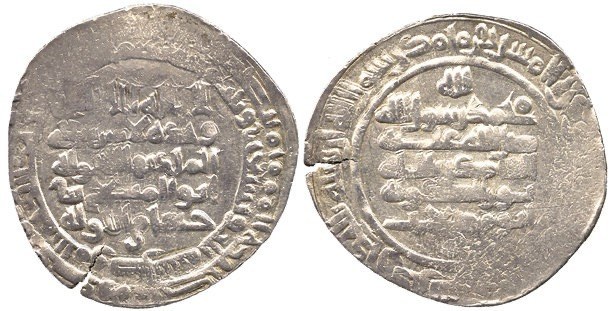
Dirham of Qirwash ibn al-Muqallad
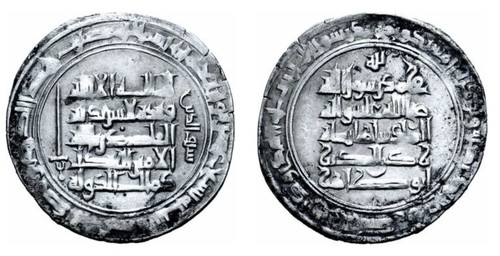
Silver dirham struck under the Uqaylid amir Qirwash ibn al-Muqallad of Mosul, dated 393 AH (1003 CE), with three-line Arabic legends.
- Country
- Mosul
- Denomination
- Dirham
- Metal
- Silver
Got a coin like this?
Identify any coin from a photo, free.
Overview
The Dirham of Qirwash ibn al-Muqallad is a medieval Islamic silver coin issued under Qirwash ibn al-Muqallad, the Arab Uqaylid amir who governed Mosul and the surrounding Jazira region in the early 11th century. The observed example is dated 393 AH, corresponding to 1003 CE.
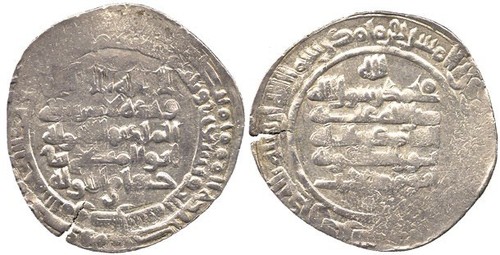
Like other coins of its era, it is a purely epigraphic issue: it carries no portrait or image, only Arabic religious and political inscriptions. The obverse shows an Arabic inscription in three lines within a central field, while the reverse bears an Arabic legend surrounded by a marginal inscription. These legends typically combine a statement of Islamic faith with the names of the ruling authorities recognized at the time of striking.
As a product of a regional Bedouin dynasty operating on the frontier of the declining Abbasid Caliphate, this dirham is of particular interest to specialists in Islamic and Jaziran numismatics rather than to general collectors.
History & Background
Qirwash ibn al-Muqallad was a member of the Uqaylid dynasty, an Arab tribal house of the Banu Uqayl that rose to control Mosul, Kufa, and much of the Jazira (Upper Mesopotamia) around the turn of the 11th century. He held power for several decades in the first half of the 400s AH, ruling as a largely autonomous amir during a period when central Abbasid authority had fragmented and real power in Iraq was contested among Buyid and other regional lords.
Coins such as this one served both economic and political functions. Beyond facilitating trade, their inscriptions publicly declared allegiance: Uqaylid dirhams of this period commonly name the reigning Abbasid caliph as nominal sovereign alongside the local amir, and at times acknowledge a Buyid overlord. The 393 AH date places this issue early in Qirwash's long career, in the reign of the Abbasid caliph al-Qadir.
The Uqaylids eventually declined and were absorbed by the rising Seljuq Turks later in the 11th century, making surviving coinage an important primary source for reconstructing the dynasty's chronology and shifting political loyalties.
How to Identify
This coin is identified first by its inscriptions rather than any pictorial device. The obverse presents an Arabic inscription in three lines, characteristically a form of the Islamic profession of faith (the kalima), sometimes accompanied by additional names. The reverse carries a central Arabic legend with a marginal inscription running around the edge; on Islamic silver of this type the margin usually records the mint formula and the date, and often a Quranic passage.
The piece is a hammered (struck) silver dirham, thin and broad in the manner of medieval Islamic silver rather than thick and small. Flans of this period are frequently irregular, slightly wavy, or unevenly filled, so weight and diameter vary from coin to coin. The date 393 AH is expressed in Arabic words in the marginal legend, not in numerals.
Attribution to Qirwash ibn al-Muqallad specifically depends on reading the ruler's name and titles in the field legends and confirming the Uqaylid context; the naming of the contemporary caliph and any overlord helps confirm both the issuer and the period.
Value & Collectibility
Values for Uqaylid dirhams are driven by legibility, completeness of the flan, and the clarity of the ruler's name rather than by bullion content, since the silver is modest. Well-struck, fully attributable examples of Qirwash's coinage command a premium over pieces that are clipped, weakly struck, or partly off-flan.
These are specialist items traded within the medieval Islamic series, so realized prices depend heavily on the venue and on demand from Jaziran and Uqaylid collectors. As with all hand-struck medieval silver, condition is relative: a coin with complete legends and a readable date and mint will always be worth considerably more than a common, worn example.
Because no reliable published mintage figures exist for individual Uqaylid issues, avoid treating any single quoted price as definitive. Provenance, an authoritative attribution, and full readability are the practical drivers of value.
Frequently asked questions
Who was Qirwash ibn al-Muqallad?
He was an Arab amir of the Uqaylid dynasty who ruled Mosul and much of the Jazira in the first half of the 11th century, governing as a largely independent lord during the decline of central Abbasid power.
What does the 393 AH date mean?
AH stands for Anno Hegirae, the Islamic lunar calendar counted from the Hijra. The year 393 AH corresponds to about 1003 CE, placing this dirham early in Qirwash's career.
Why does the coin have no picture?
Medieval Islamic coinage was typically aniconic, using Arabic inscriptions instead of portraits or images. The design relies entirely on religious and political legends.
What do the inscriptions say?
The legends generally combine a statement of Islamic faith with the names of the recognized authorities and a marginal mint-and-date formula. Precise wording must be read directly from each coin.
Is this a rare coin?
Uqaylid dirhams are specialist items rather than common trade coins. Fully legible, well-attributed examples naming Qirwash are scarcer and more sought after than worn or fragmentary pieces.
Dirham of Qirwash ibn al-Muqallad guides
In-depth guides for identifying, valuing, and collecting Dirham of Qirwash ibn al-Muqallad.
Other coins you may enjoy
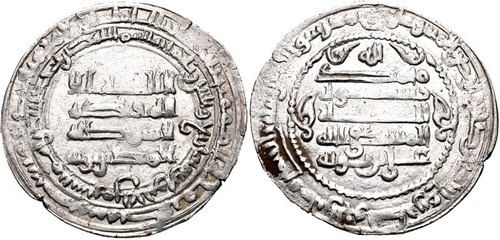
Buyid Silver Dirham
10th century CE (Buyid rule c. 934-1062)
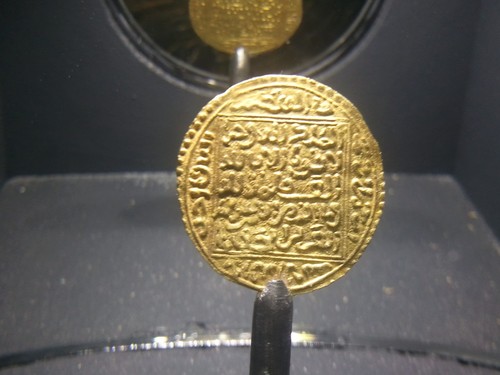
Marinid Gold Dinar
c. 1244–1465 (13th–15th century)
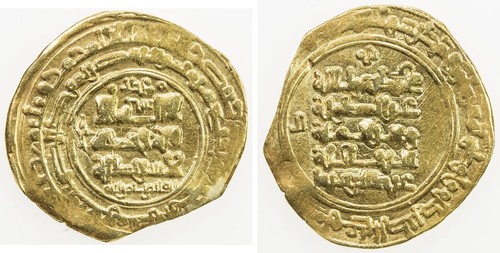
Ghaznavid Dinar
10th–11th century CE
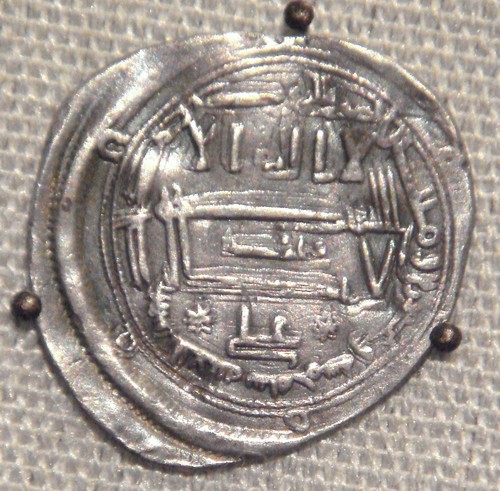
Idrisid Gold Dinar
c. 789-974 CE (example dated 840 CE)
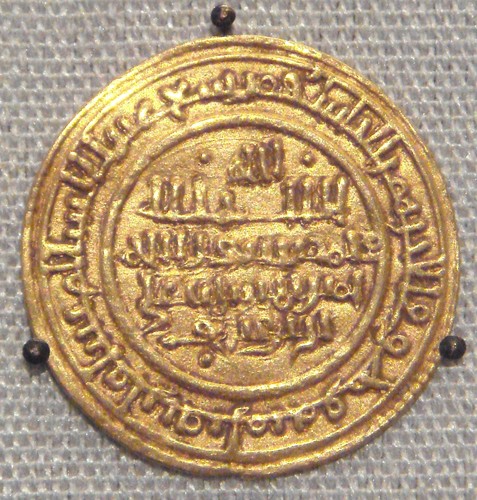
Almoravid Gold Dinar
c. 1087–1147 CE (this type dated AH 510 / 1116 CE)
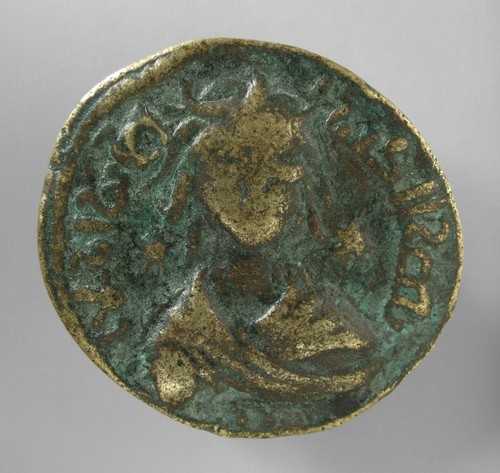
Artuqid Bronze Dirham
12th century (c. 1100s CE)
Dirham of Kamal al-Dawla Gharib
10th century (300s AH)