
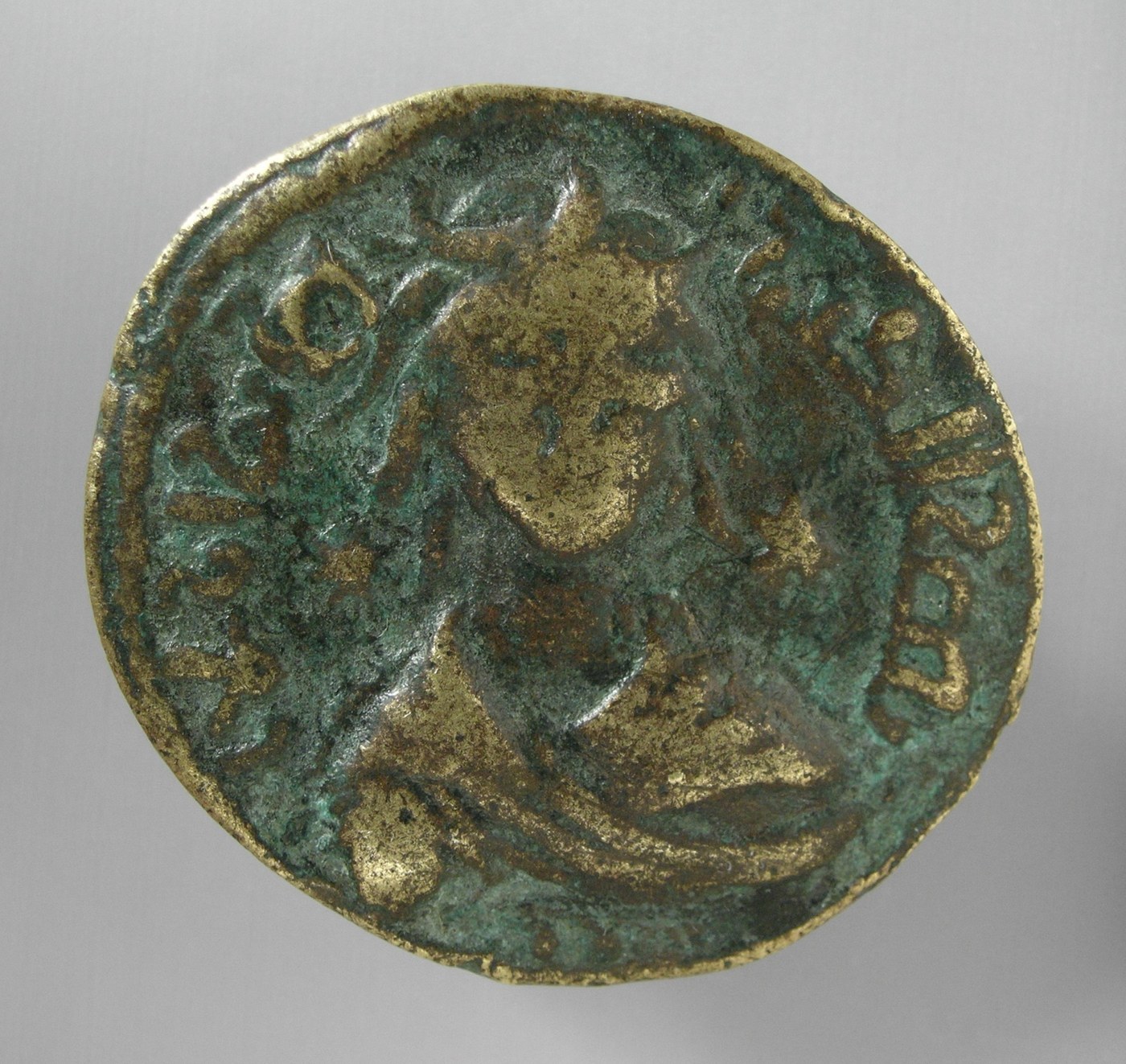
Artuqid Bronze Dirham
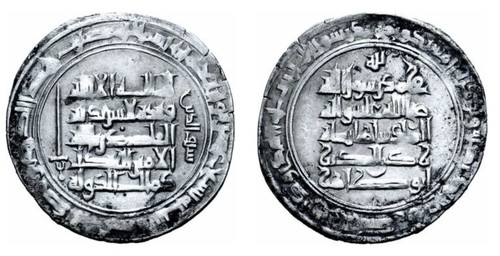
A 12th-century bronze coin of the Artuqid Turkmen dynasty, struck with Arabic inscriptions inside ornamental borders across eastern Anatolia.
- Country
- Artuqids of Mardin and Mayyafariqin
- Denomination
- Dirham
- Metal
- Bronze
Got a coin like this?
Identify any coin from a photo, free.
Overview
The Artuqid Bronze Dirham is a copper-alloy coin issued by the Artuqid dynasty, a Turkmen family that governed parts of the Jazira and eastern Anatolia from the late 11th through the 13th century. Although called a "dirham" in period usage, the piece shown here is struck in bronze rather than silver, reflecting a regional practice of naming large copper coins after the silver standard.
This particular type is epigraphic: both faces carry Arabic inscriptions set within ornamental borders, rather than the figural imagery for which some Artuqid coppers are famous. The heavy brown-green patina visible on the surviving pieces is typical of centuries in the ground and helps distinguish genuine circulated examples from cleaned or modern reproductions.
History & Background
The Artuqids (also spelled Ortoqid or Artukid) descended from Artuq ibn Eksük, a Turkmen commander in Seljuq service. By the early 12th century his heirs had established branches ruling from Mardin and Mayyafariqin (modern Silvan) and from Hisn Kayfa (Hasankeyf), holding a strategic frontier between the Seljuqs, the Crusader states, and later the Zangids and Ayyubids.
Artuqid copper coinage of the 12th century is a distinctive chapter in Islamic numismatics. While Islamic mints generally favored purely calligraphic designs, several Artuqid rulers issued large bronze pieces, some borrowing classical, Byzantine, and astrological images, others—like the inscriptional type described here—keeping to Arabic legends naming the ruler and his overlord. These coins circulated as everyday token money within Artuqid territory and are frequently found today across southeastern Turkey, northern Syria, and northern Iraq.
How to Identify
Look for a thick, irregular bronze flan, typically broad and somewhat uneven, with a dark brown to green patina. Both sides bear Arabic (Kufic or naskh) inscriptions arranged in horizontal lines or circular legends, each enclosed by a decorative border of dots, beads, or linear ornament.
The legends usually record the ruler's name and titles and often acknowledge a nominal overlord (Seljuq sultan or Abbasid caliph). Because dies were hand-cut and the coins struck by hand, expect off-center strikes, weak areas, and legends that run off the flan. Diameter and weight vary considerably from piece to piece, which is normal for this series.
The two ornamental-border faces, dense Arabic script, and bronze fabric together point to an inscriptional Artuqid issue rather than the better-known figural Artuqid bronzes that show human or astrological heads.
Value & Collectibility
Artuqid bronze coins are relatively plentiful, so most circulated inscriptional examples are affordable and sit in the modest-to-moderate range for medieval Islamic bronze. Condition drives price: worn pieces with unclear legends bring less, while sharply struck coins with fully legible inscriptions and attractive patina command a premium.
Figural Artuqid bronzes (with classical or astrological imagery) are generally more sought after than purely epigraphic types, but well-preserved inscriptional coins with clear mint and ruler attributions still attract steady collector interest. Confirmed attribution to a specific ruler and mint, and an even, undamaged patina, add the most value. Treat any single figure as a starting point and verify against recent comparable sales.
Frequently asked questions
Why is a bronze coin called a dirham?
In Artuqid usage the term "dirham" was applied to large copper or bronze pieces even though the classic dirham was a silver coin. The name reflected the coin's role and size rather than its metal.
Who were the Artuqids?
The Artuqids were a Turkmen dynasty that ruled parts of eastern Anatolia and the Jazira (including Mardin, Mayyafariqin, and Hisn Kayfa) from the late 11th to the 13th century, first as Seljuq vassals and later independently.
Does this type show a face or figure?
No. The coin described here is an inscriptional issue with Arabic legends inside ornamental borders on both sides. Some other Artuqid bronzes are famous for figural images, but this particular type is purely calligraphic.
Are Artuqid bronze dirhams rare?
As a class they are fairly common and readily collectible. Rarity depends on the specific ruler, mint, and above all condition, with clearly legible, well-patinated examples being harder to find.
Artuqid Bronze Dirham guides
In-depth guides for identifying, valuing, and collecting Artuqid Bronze Dirham.
Other coins you may enjoy
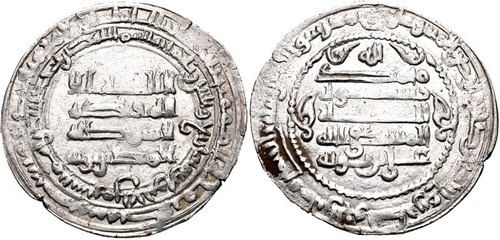
Buyid Silver Dirham
10th century CE (Buyid rule c. 934-1062)
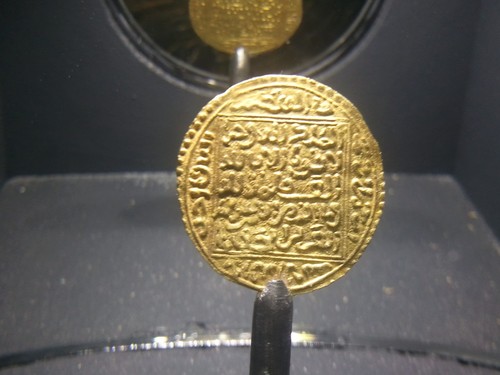
Marinid Gold Dinar
c. 1244–1465 (13th–15th century)
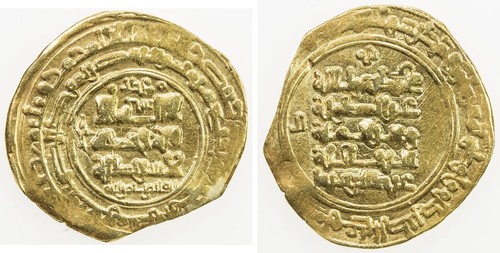
Ghaznavid Dinar
10th–11th century CE
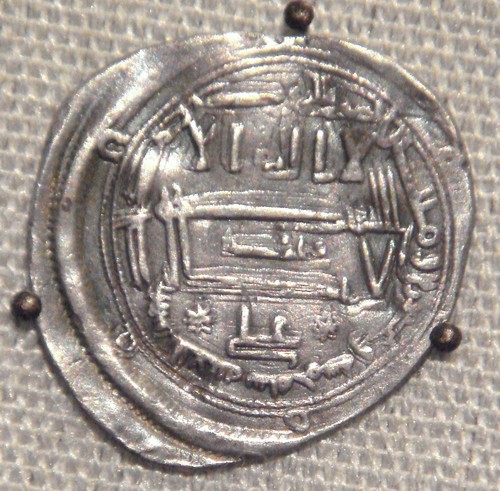
Idrisid Gold Dinar
c. 789-974 CE (example dated 840 CE)
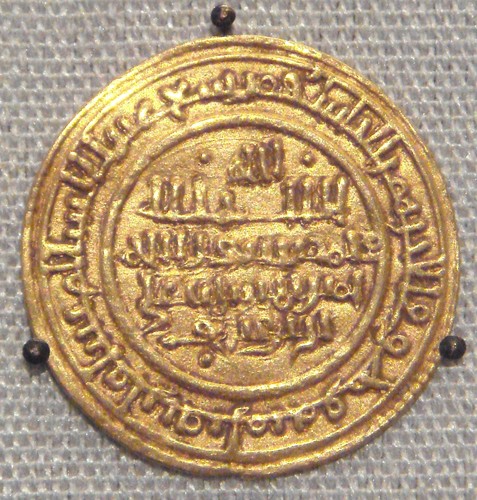
Almoravid Gold Dinar
c. 1087–1147 CE (this type dated AH 510 / 1116 CE)
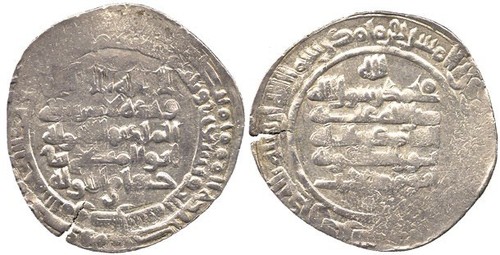
Dirham of Qirwash ibn al-Muqallad
393 AH (1003 CE)
Dirham of Kamal al-Dawla Gharib
10th century (300s AH)