
How to Identify the Marinid Gold Dinar
A collector's guide to recognizing a Marinid gold dinar of medieval Morocco by its all-Arabic inscriptions, geometric border bands, and broad thin gold flan.
Read the full Marinid Gold Dinar encyclopedia entry →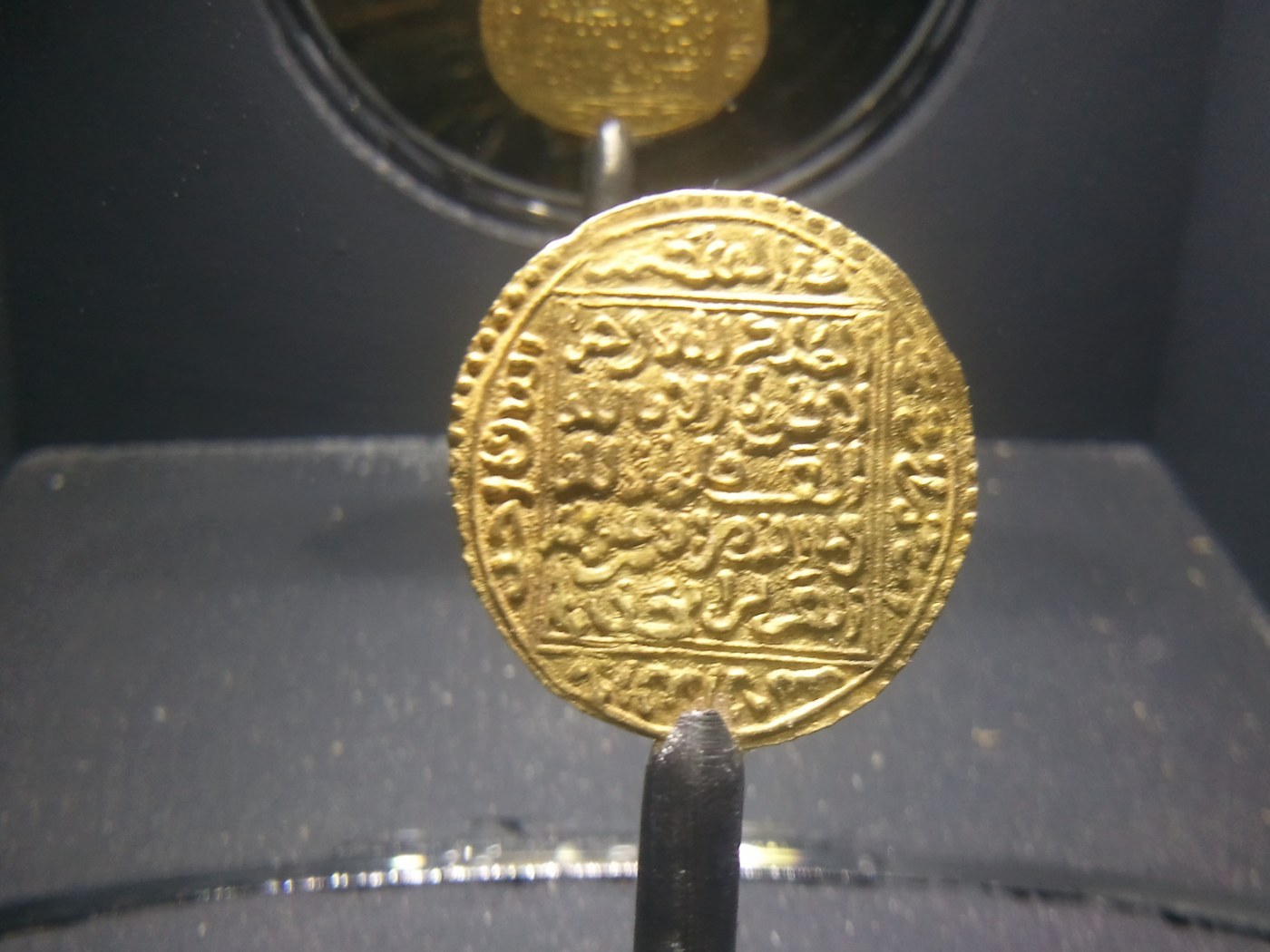
What It Is
The Marinid Gold Dinar is a gold coin of the Marinid (Banu Marin) dynasty that ruled Morocco and the western Maghreb from roughly the mid-13th to mid-15th century. It is entirely aniconic: there is no portrait, animal, or building anywhere on the coin. Recognizing it starts with accepting that everything you see is Arabic text and geometric ornament.
Reading the Faces
Both obverse and reverse are filled with Arabic legends arranged in blocks of lines, surrounded by decorative geometric border bands and marginal ornament. The script is the angular Kufic or rounded Maghrebi style typical of the Islamic west. The inscriptions carry religious formulae plus dynastic and mint information rather than a date-and-denomination layout familiar from modern coins. Look for the framed rectangular or paneled text field ringed by ornamental bands—this geometric framing is the strongest visual clue.
Metal, Size, and Flan
These are struck in gold on broad, thin flans, so genuine pieces often look slightly irregular, wavy, or unevenly struck toward the rim rather than perfectly round and sharp. The warm color and heft of gold, combined with all-Arabic inscription-only design, distinguish these from silver dirhams of the same era, which are smaller and paler.
Mint and Ruler Attribution
There are no Latin letters or mint marks in the modern sense. To pin down mint and ruler you must read the Arabic legends, and many coins are undated or only partly legible from wear or off-center striking. Precise attribution usually requires comparison against specialist references or expert opinion.
Look-Alikes and Authentication
Other Maghrebi and Andalusian gold coins—Almohad, Nasrid, and later Iberian gold—share the same inscription-only, geometric-band aesthetic and are easily confused. Modern forgeries and cast copies of Islamic gold also exist. Favor coins with clear provenance or professional attribution, check that the metal and weight are consistent with gold, and be cautious of pieces with unnaturally sharp, uniform edges or soft, mushy lettering that can signal a cast fake.
Frequently asked questions
How do I tell it apart from a silver Marinid dirham?
The dinar is gold—warmer in color and denser—and is usually a broader, thinner flan. Marinid silver dirhams are smaller, paler, and often struck as squares or with square-in-circle layouts.
There's no date I can read—is that normal?
Yes. Many of these coins are undated, and wear or off-center striking can obscure the legends. Mint and ruler are read from the Arabic text, and attribution often needs a specialist reference.
What are the most common look-alikes?
Almohad, Nasrid, and later Iberian gold coins share the same aniconic, geometric-band style. Careful reading of the Arabic legends is the reliable way to separate them.
How can I guard against fakes?
Prefer coins with documented provenance or expert attribution, confirm the metal and weight are consistent with gold, and be wary of overly crisp modern-looking edges or blurry, soft lettering that suggests a cast copy.