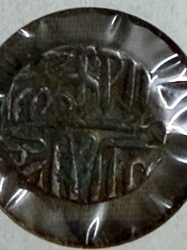
How to Identify the Dirham of Kamal al-Dawla Gharib
A collector's guide to recognizing this 10th-century Mesopotamian silver dirham by its Kufic legends, three-line fields, and reverse margin.
Read the full Dirham of Kamal al-Dawla Gharib encyclopedia entry →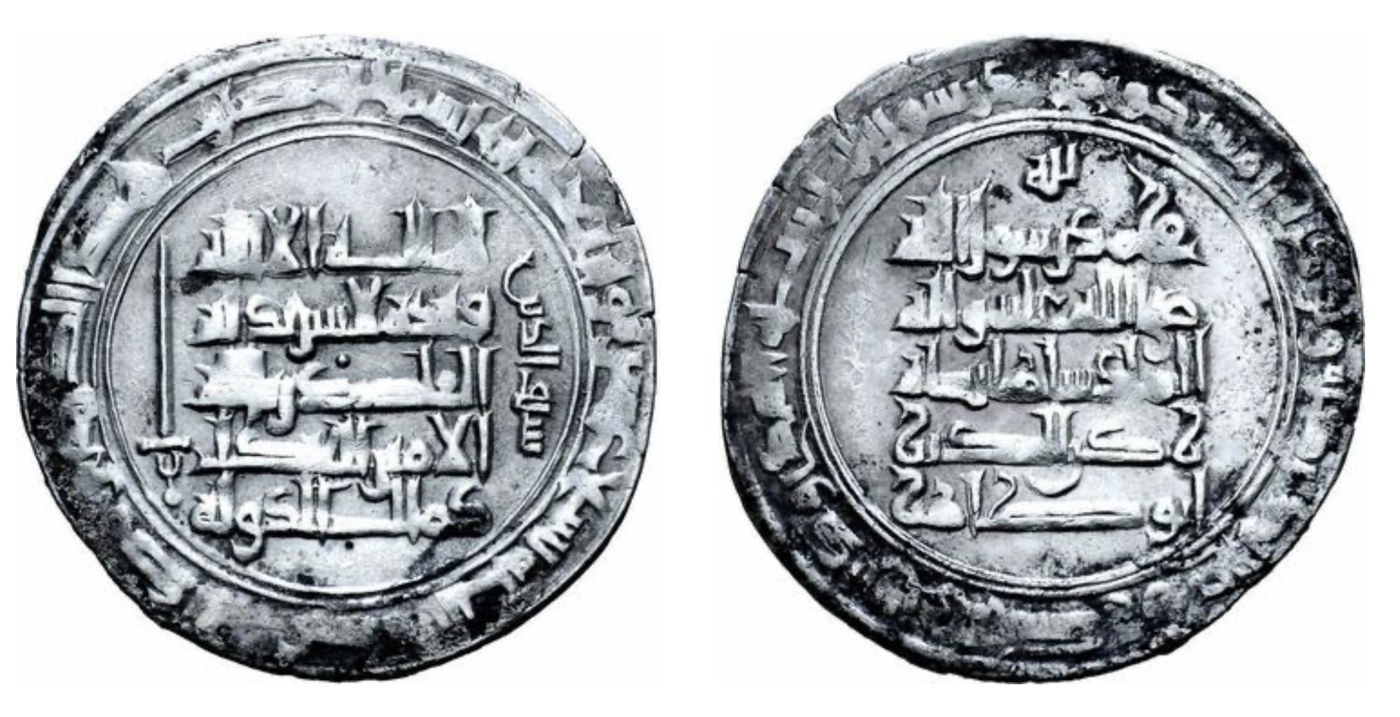
Start with the fabric and format. This is a silver dirham on a broad, thin flan, entirely covered in Arabic text with no portrait or figural design. Both faces carry a central legend arranged in three horizontal lines of angular Kufic script. If you see images, a beaded portrait border, or Latin lettering, you are looking at a different tradition of coin, not an Islamic dirham of this type.
Read the two sides in order. The obverse field usually presents the Islamic profession of faith (the kalima) across its three lines. The reverse field is where attribution happens: it carries the ruler's name, Gharib, together with the honorific Kamal al-Dawla. Confirming that name-plus-title combination in the reverse center is the single most important diagnostic for this specific type.
Check the reverse margin. Unlike the obverse, the reverse of this dirham is ringed by an outer marginal inscription. On classical dirhams this circular legend states the mint city and year of striking, commonly opening with a Quranic phrase. Even when partly off the flan, the presence of that marginal ring on the reverse (and its absence or difference on the obverse) helps confirm the type and, when legible, tells you exactly where and when it was made.
Mind the look-alikes. Many 10th-century Abbasid-era dirhams share the same three-line-plus-margin layout, so superficially similar coins name entirely different rulers and mints. Do not assume attribution from format alone; the differentiator is the specific titulature. Weak strikes, double-striking, and clipped or corroded margins are common and can obscure the crucial name, so examine the reverse center carefully, ideally under magnification.
Authenticate with care. Genuine dirhams show hand-cut die work, natural toning, and a silver surface consistent with a hammered strike; be wary of casting bubbles, seams on the edge, tooled letters, or a suspiciously uniform surface. Because attributions of minor named issuers rest on reading the legends, a coin you cannot read confidently should be checked against reference die combinations or reviewed by a specialist in Islamic numismatics before you rely on the identification.
Frequently asked questions
What is the fastest way to confirm this specific type?
Locate the ruler's name and title in the center of the reverse. The combination Kamal al-Dawla (title) with Gharib (name) is what distinguishes this dirham from the many other three-line Abbasid-era dirhams of the same period.
Which side has the marginal inscription?
On this type the outer marginal legend surrounds the reverse. That margin normally records the mint and date, so it is the place to look to establish where and when the coin was struck.
How do I distinguish it from other 10th-century dirhams?
Format alone is not enough, since most contemporary dirhams share the three-line field and margin. Read the actual legends: the named ruler, the caliphal reference, and the mint-date formula together separate one issue from another.
What are the warning signs of a fake or tooled coin?
Look out for cast surfaces with bubbles or edge seams, lettering that appears re-cut or unnaturally sharp, artificial toning, and inconsistent weight or fabric. When in doubt, have the piece examined by an Islamic coin specialist.
Dirham of Kamal al-Dawla Gharib identified by the community
Recent Dirham of Kamal al-Dawla Gharib coins identified with Coin Identifier.