
Coin Encyclopedia
Search and identify coins from around the world — with country, denomination, metal, mint, history, and how to tell them apart.
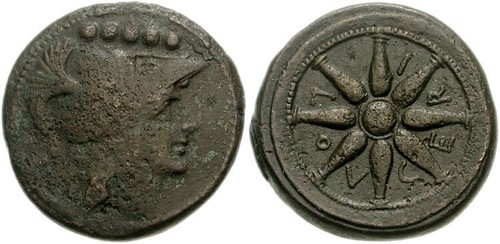
Quincunx of Luceria
A cast bronze quincunx of Luceria in Apulia (3rd century BC), showing a female head and a five-point floral or star device marking five unciae.
Ancient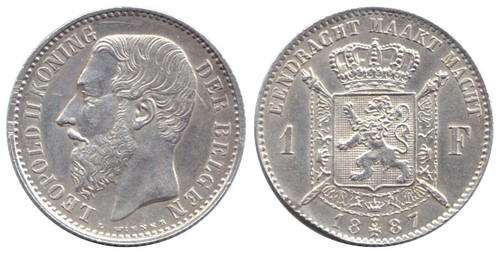
1 Franc (Leopold II)
A late-19th-century Belgian silver franc of King Leopold II, with his left-facing profile on the obverse and a crowned coat of arms on the reverse.
Modern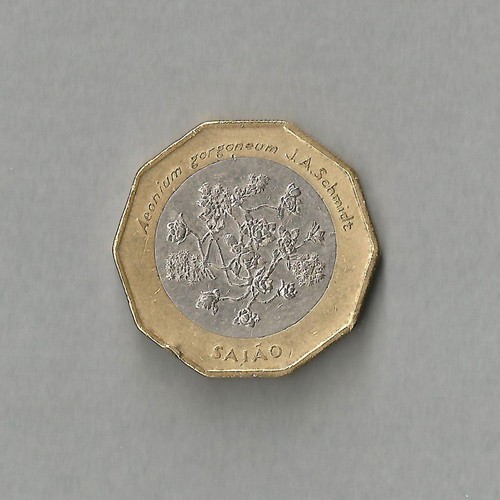
Cape Verde 100 Escudos
A bi-metallic Cape Verde 100 escudos with a botanical theme, its silver-colored center showing the endemic Aeonium gorgoneum plant.
World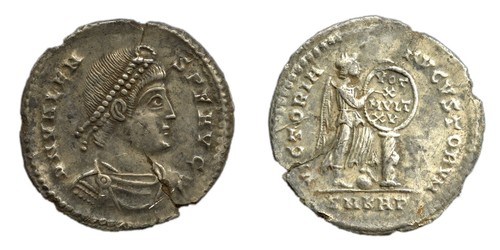
Arles Miliarensis
A late Roman silver miliarensis of the 4th century AD, with a diademed imperial portrait and an armed standing figure holding spear and shield.
Ancient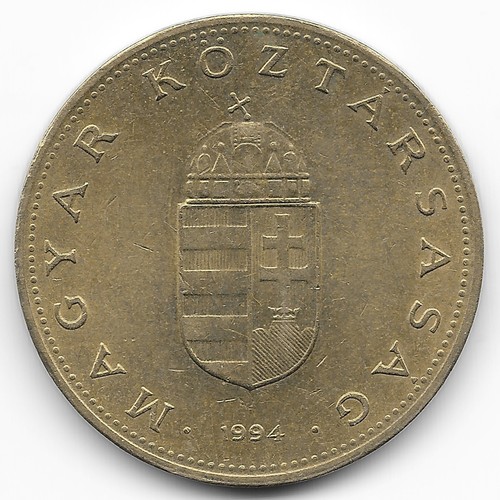
100 Forint (Commemorative)
A Hungarian bi-metallic 100 Forint commemorative pairing the national coat of arms with a bird of prey in flight, struck in a gold-toned ring and pale center.
Commemorative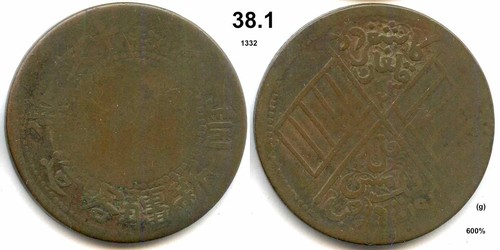
10 Cash (Republic)
A Republic of China bronze 10 Cash: a round machine-struck copper piece with a central ornament and characters on one face and a decorative inscribed reverse.
Cash Coin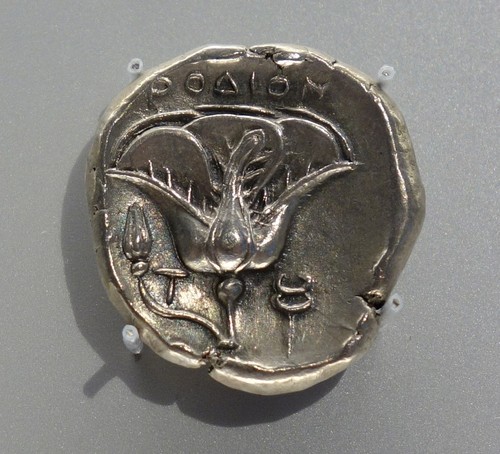
Rhodes Tetradrachm
Silver tetradrachm of the island city of Rhodes, 4th century BC, with the radiate head of the sun-god Helios and a rose, the city's civic emblem.
Ancient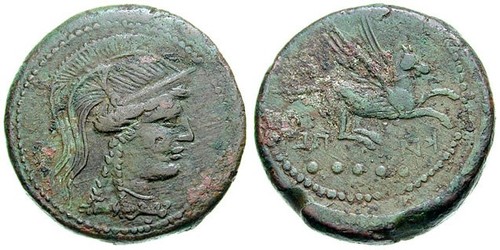
Quincunx of Capua
Bronze quincunx (5 unciae) struck by Capua in Campania in the 3rd century BC, pairing a diademed female head with a lion or griffin and five value pellets.
Ancient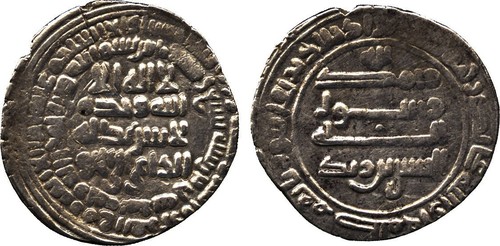
Dirham of Hasan ibn Zayd
A 9th-century Islamic silver dirham struck for Hasan ibn Zayd, the Alid ruler of Tabaristan, bearing concentric Arabic religious and authority legends.
Islamic (Medieval)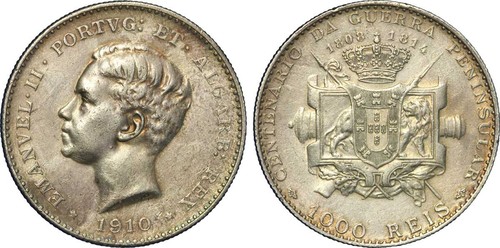
Reis (Peninsular War)
A 1910 Portuguese silver Reis struck under King Manuel II to mark the centenary of the Peninsular War, dated 1808-1814 across the king's bust.
Modern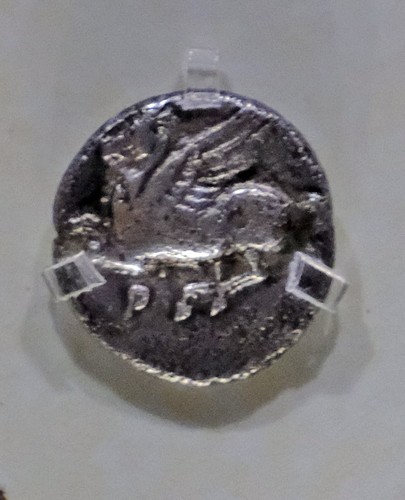
Corinthian Drachm
A silver drachm of ancient Corinth pairing a helmeted head of Athena with the city's emblem, the winged horse Pegasus, struck in the mid-4th century BC.
Ancient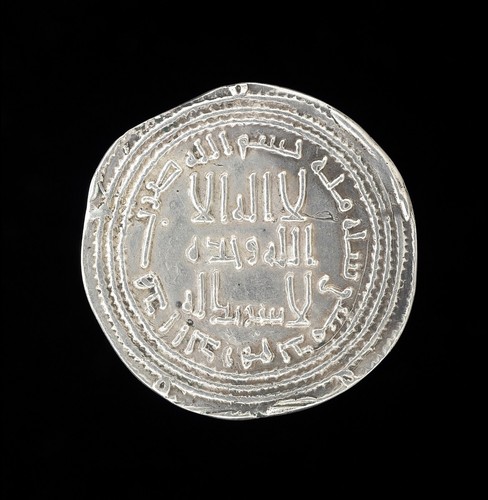
Silver Dirham (LACMA M.2002.1.437)
A thin, broad 8th-century Islamic silver dirham covered in Kufic Arabic inscriptions, with no portrait or image — only religious legends and decorative flourishes.
Islamic (Medieval)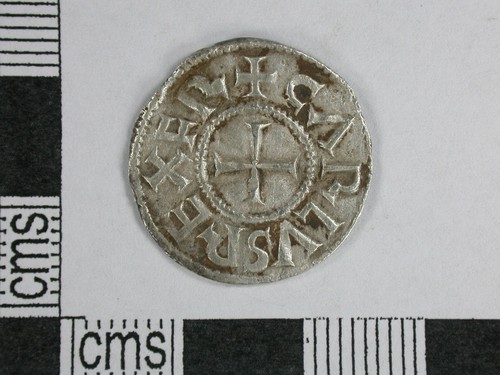
Denier of Charlemagne
A hand-struck silver denier of Charlemagne, king of the Franks: a central cross ringed by the CARLVS REX FR legend, with a royal monogram design on the reverse.
Medieval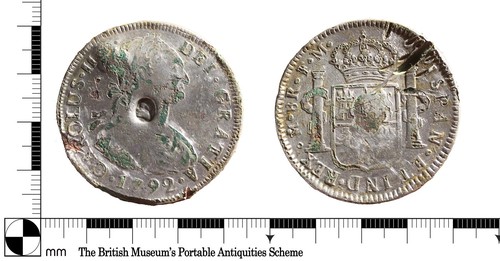
Counterstamped 8 Reales
A Charles IV silver 8 reales later punched with counterstamps and pierced with a central hole, layering a second life onto the classic Spanish dollar.
Colonial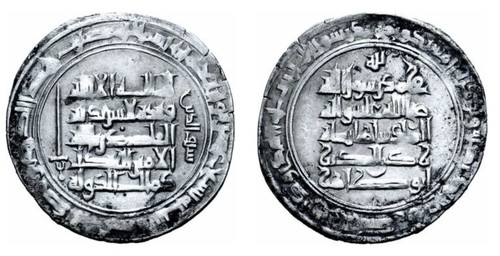
Dirham of Kamal al-Dawla Gharib
Silver dirham from 10th-century Iraq/Mesopotamia naming the ruler Gharib with the honorific Kamal al-Dawla, struck with Kufic Arabic legends.
Medieval Islamic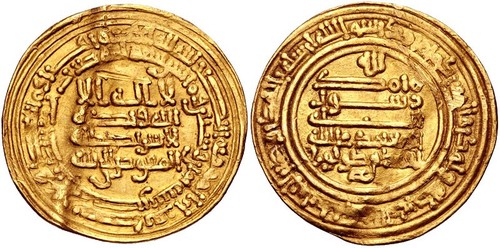
Gold Dinar of Ahmad ibn Tulun
A late-9th-century Islamic gold dinar of the Tulunid ruler Ahmad ibn Tulun, its faces filled with concentric Arabic inscriptions and dated AH 268 (881–882 CE).
Islamic (Medieval)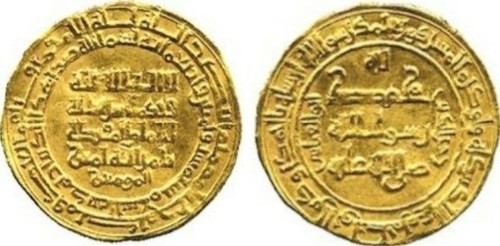
Gold Dinar of al-Muqtadi
An aniconic Abbasid gold dinar of Caliph al-Muqtadi, covered on both faces with Arabic calligraphy and ornamental borders, struck in the later 11th century.
Islamic (Medieval)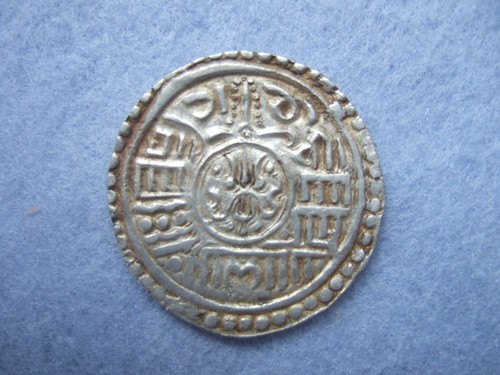
Nepalese Mohar
Silver mohar of the Nepalese Shah kingdom, with ornate Devanagari legends and auspicious symbols arranged around a mandala-style central design on both faces.
Himalayan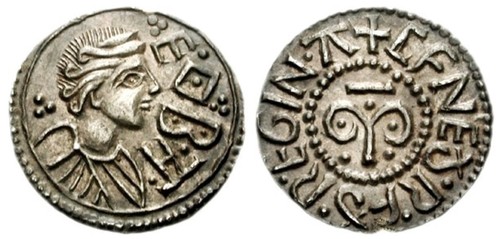
Penny of Cynethryth
Anglo-Saxon silver penny of Cynethryth, queen of Mercia and wife of Offa, and the only Anglo-Saxon queen named on her own coinage.
Medieval Coins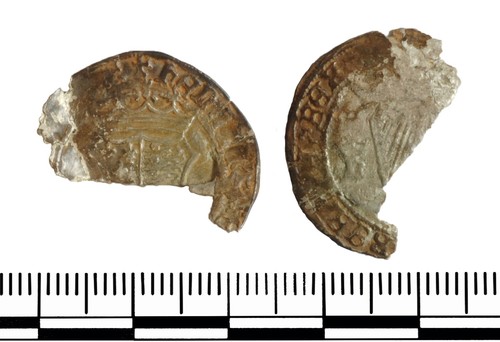
Irish Groat of Henry VIII
A hand-hammered silver fourpence struck for Ireland under Henry VIII, famed for introducing the crowned harp to Irish coinage.
Hammered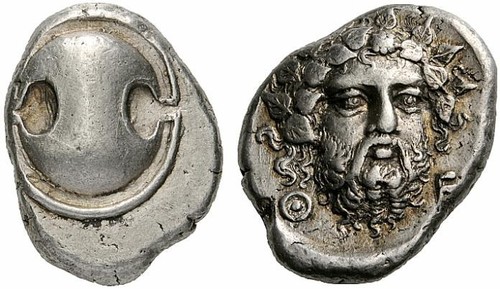
Thebes Stater
Silver stater of Thebes with the Boeotian shield and a bearded head of Dionysos, struck as federal coinage of the Boeotian League, c. 395-338 BC.
Ancient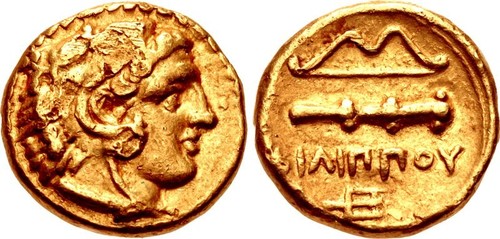
Alexander the Great Gold Quarter Stater
A small gold fraction of the Alexander the Great coinage, showing the head of Heracles and an eagle perched on a thunderbolt, the attributes of Zeus.
Ancient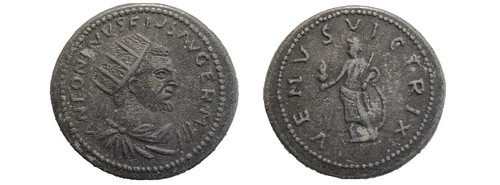
Antoninianus of Caracalla
The antoninianus introduced by Caracalla around AD 215, a radiate-crowned double denarius in debased silver that reshaped Roman coinage.
Ancient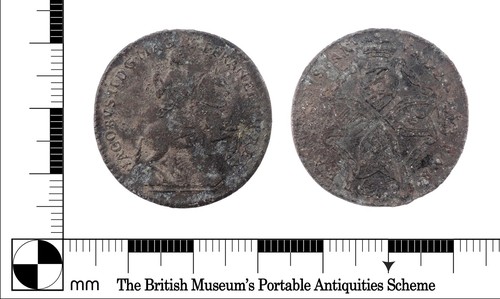
American Plantations Token
A 1688 tin token struck under James II for England's American colonies, valued at 1/24 of a Spanish real — the first regal-authorized coinage for British America.
Colonial