Nepalese Mohar
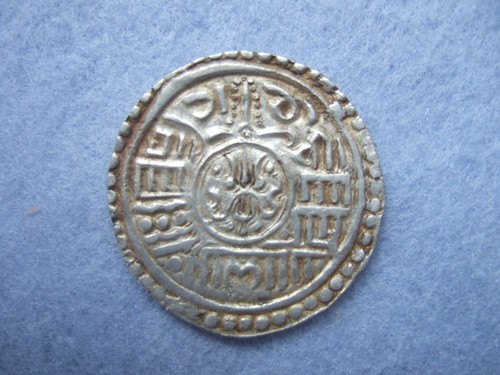
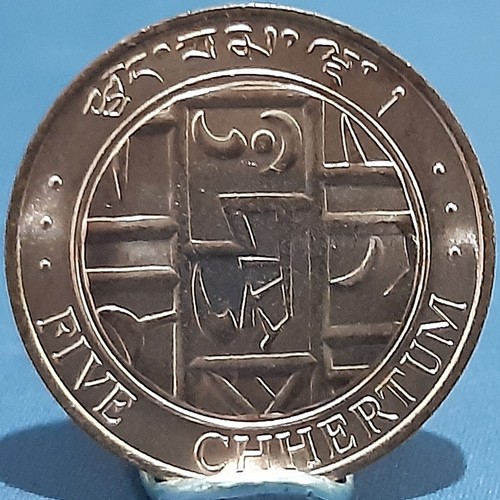
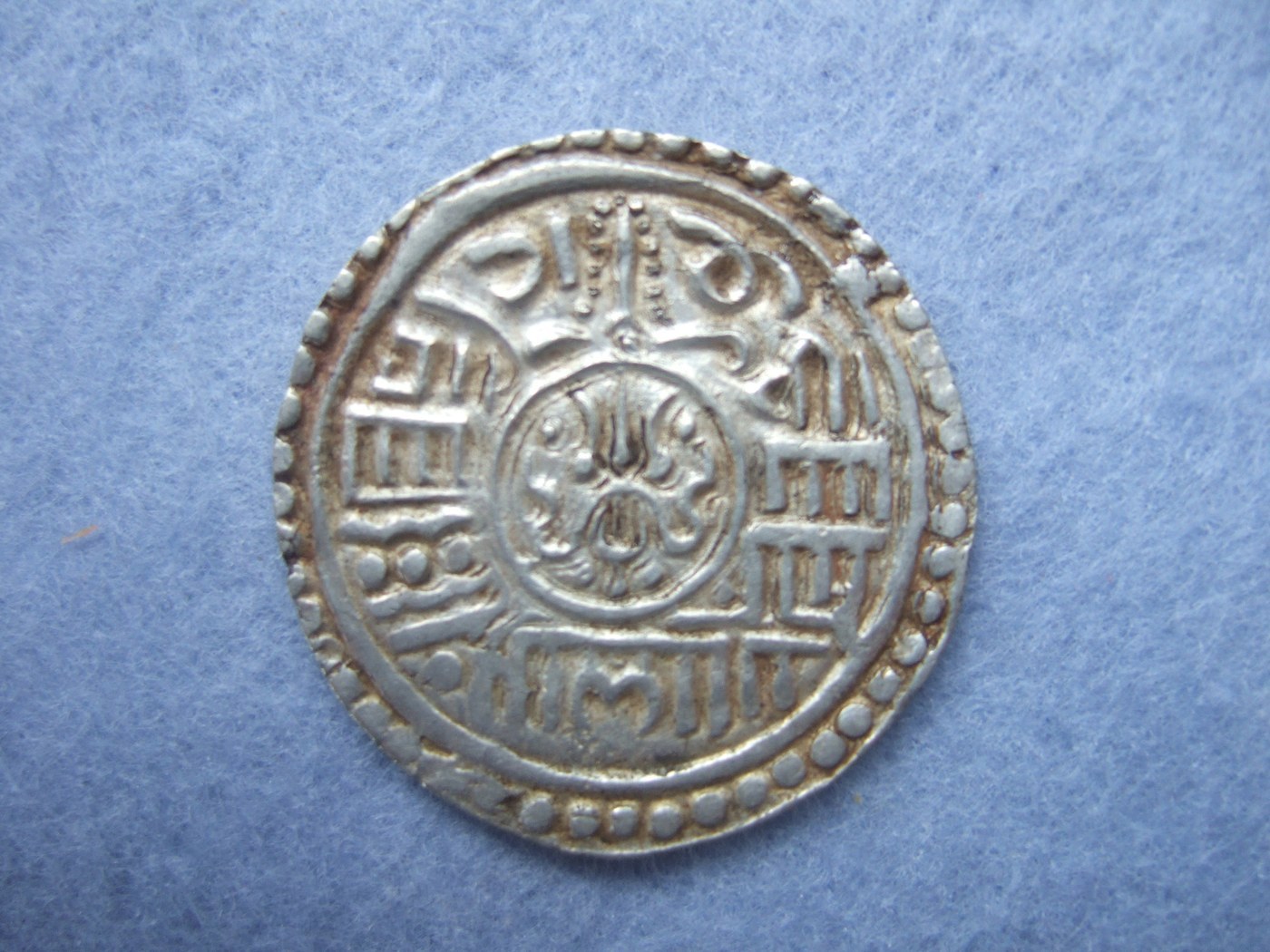
Silver mohar of the Nepalese Shah kingdom, with ornate Devanagari legends and auspicious symbols arranged around a mandala-style central design on both faces.
- Country
- Nepal
- Denomination
- Mohar
- Metal
- Silver
Got a coin like this?
Identify any coin from a photo, free.
Overview
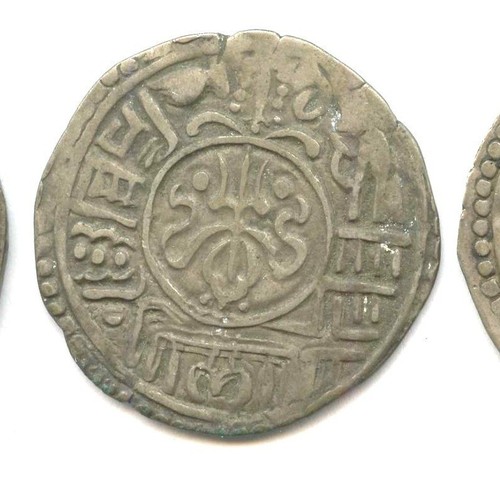
The Nepalese Mohar is the principal silver coin of the Kingdom of Nepal under the Shah dynasty, and the piece shown here is a 19th-century example. Both faces are densely decorated: intricate Devanagari (Nagari) legends naming the king and his titles run around the rim, while the centre carries a geometric, mandala-style arrangement of auspicious Hindu symbols surrounded by dotted and floral borders. There is no portrait — the design relies entirely on script and sacred motifs.
The mohar was Nepal's standard silver denomination for much of the Shah period, sitting at the heart of a system that included fractions such as the half mohar (adha) and smaller pieces. Its small, thick silver flan and crowded symbolic design make it instantly recognisable as a Himalayan coin rather than an Indian rupee or a European trade coin.
Because the legends and dates are rendered in Devanagari and dated in the Saka era, the coin is closely tied to Nepal's Hindu monarchy and its religious culture. Symbols such as the trident, sword (khadga), sun and moon, and lotus-style ornament connect the money directly to the ruling house and to the deities it patronised, making the mohar as much a devotional object as a unit of trade.
History & Background
The Shah dynasty unified the many small states of the Kathmandu Valley and its surroundings into the modern Kingdom of Nepal in the later 18th century, and the silver mohar became the backbone of the unified kingdom's coinage. Through the 19th century a succession of Shah kings continued to strike mohars from the royal mint in the Kathmandu Valley, each ruler placing his own name and titles in the Devanagari legend so that the coins double as a record of the dynasty.
Earlier Nepalese silver had also been struck in large quantities for trade with Tibet, and the Kathmandu Valley's mints had a long tradition of fine, densely engraved silver money before the Shah unification. The Shah mohar continued that Himalayan style of crowded script and auspicious symbolism rather than adopting the plainer, portrait-based designs of contemporary Western and colonial coinage. Dates were expressed in the Saka era, the Indian solar reckoning used across the region, so a Shah mohar's date does not correspond directly to the Western year on its face.
Throughout the 19th century Nepal remained an independent Hindu kingdom, and its coinage reflected that sovereignty at a time when British India dominated the subcontinent. The mohar and its fractions circulated as the everyday silver of Nepal until reforms and decimalisation in the modern era eventually replaced the old denominations, leaving 19th-century mohars as tangible relics of the Shah kingdom.
How to Identify
The Nepalese Mohar is a small, fairly thick silver coin, noticeably smaller than an Indian rupee, with the natural grey tone of old struck silver. Genuine pieces are hand-struck and often slightly irregular in flan shape, with some legend running off the edge — a normal feature of Himalayan minting rather than a defect. It is a struck coin, not a cast piece.
The defining feature is the ornate, all-over decoration in Devanagari (Nagari) script combined with a mandala-style central design. On the coin shown, one face carries an ornate circular arrangement of script and decorative motifs, and the other a symmetrical mandala at the centre ringed by legend and a beaded or floral border. Look for auspicious symbols worked into the design — commonly a trident, a sword, a sun and crescent moon, and lotus or floral ornament — with no royal portrait and no Latin lettering anywhere on the coin.
To confirm an attribution, look for the combination of a small silver flan, dense Devanagari legends, a geometric mandala centre and Hindu symbolism, with the date expressed in Saka-era numerals. The specific king can be read from the Devanagari legend by those familiar with the script, and the diameter and weight distinguish the full mohar from its smaller fractions, which share the same style of design.
Value & Collectibility
The Nepalese Mohar is a collectable 19th-century Himalayan silver coin. Because the flan is small, the intrinsic silver content is modest, so most of a mohar's value comes from collector demand for the type, the reign and the state of preservation rather than from bullion. Common circulated examples sit in a modest-to-moderate collector price range, while sharply struck, well-centred and clearly dated pieces bring higher premiums.
Condition and legibility are the main value drivers. Many surviving mohars are weakly struck or off-centre with parts of the legend missing, which is typical of hand-struck Himalayan silver; coins with full, crisp Devanagari legends, a complete mandala design and clear symbols are markedly more desirable. The identity of the issuing king, scarce dates and die varieties also matter to specialists.
Exact prices depend on ruler, date, variety and grade, so the figures here are general context rather than fixed values. As with most historic silver, originality of surface and completeness of the design count for far more than the small silver weight, and attribution to a specific Shah king or a scarce year can add significantly to a coin's interest and value.
Frequently asked questions
What is a Nepalese Mohar?
It is the principal silver coin of the Kingdom of Nepal under the Shah dynasty. The mohar is a small silver piece covered in Devanagari script and auspicious Hindu symbols arranged around a mandala-style central design, and it served as Nepal's standard silver denomination through the 19th century.
What script and symbols appear on the coin?
The legends are in Devanagari (Nagari) script, naming the king and his titles, with no Latin lettering. The design typically includes auspicious symbols such as a trident, a sword, the sun and crescent moon, and lotus or floral ornament worked around a geometric mandala centre.
How do I read the date on a Nepalese Mohar?
Dates are given in the Saka era in Devanagari numerals, not the Western calendar, so the year on the coin does not match the Western year directly. To convert a Saka date to the Common Era you add roughly 78 years to the Saka number.
Is the Nepalese Mohar the same as an Indian rupee?
No. The mohar is Nepal's own silver unit and is smaller than an Indian rupee, with a distinctive Himalayan style of dense Devanagari script and mandala symbolism. It circulated as the coinage of the independent Shah kingdom rather than as colonial Indian money.
Is a 19th-century Nepalese Mohar valuable?
It is a collectable historic silver coin, though its small size means bullion value is modest and most worth comes from collector demand. Common circulated pieces are inexpensive to moderate, while sharply struck, fully legible examples and scarce reigns or dates command higher prices.
Nepalese Mohar guides
In-depth guides for identifying, valuing, and collecting Nepalese Mohar.