
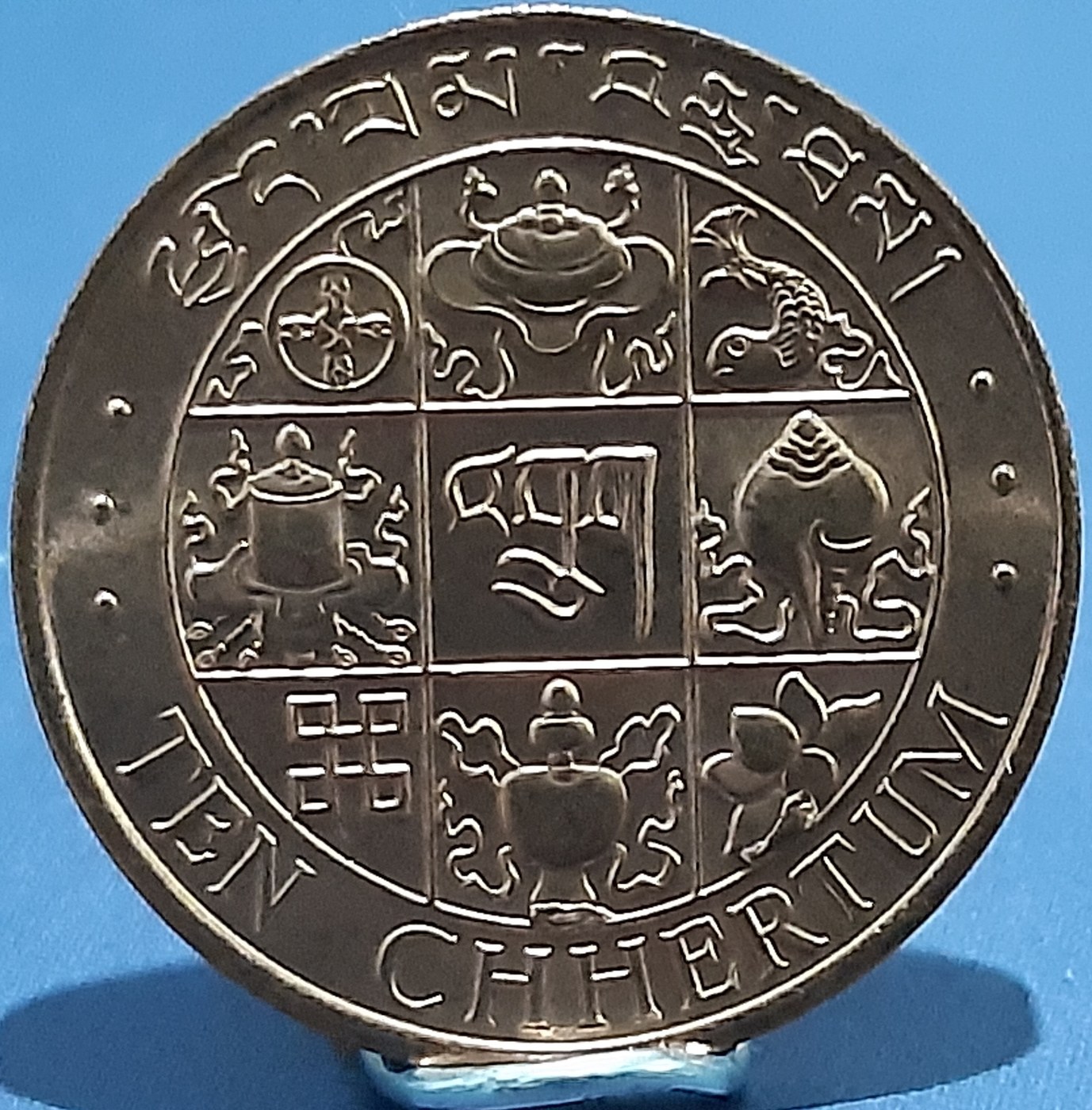
Bhutan 10 Sengtrum
A 1979 cupro-nickel minor coin of the Kingdom of Bhutan, worth one-tenth of a ngultrum, with the national arms on one face and an ornamental gateway on the other.
- Country
- Bhutan
- Denomination
- 0.10 Ngultrum
- Metal
- Cupro-nickel
Got a coin like this?
Identify any coin from a photo, free.
Overview
The Bhutan 10 Sengtrum is a small base-metal coin of the Kingdom of Bhutan dated 1979, a fractional piece equal to one-tenth of the ngultrum. The example photographed here shows the Bhutanese national arms and emblem on the obverse and an ornamental architectural gateway on the reverse, the two faces that define this issue.
Struck in cupro-nickel, it is a low denomination that served as everyday circulating change rather than a commemorative or precious-metal piece. As such it belongs to the decimal small-change series introduced as Bhutan modernized its currency in the 1970s.
Grouped within the wider Himalayan coinage family, the 10 Sengtrum is a compact, affordable coin that pairs Bhutanese state heraldry with the distinctive religious-architectural imagery of the kingdom.
History & Background
For most of its history Bhutan used a limited range of hand-struck and locally produced coins, and only in the 20th century did it move toward a modern decimal currency. The ngultrum was established as the national unit, divided into one hundred subdivisions, with the smaller pieces variously rendered in catalogs as sengtrum or chhertum.
The 1979 coinage, to which this piece belongs, was part of a broader redesign and reissue of Bhutan's circulating money during the reign of the Wangchuck dynasty. New designs carried national and Buddhist symbolism—state arms and emblems on one side and architectural or religious motifs on the other—reflecting Bhutan's identity as a Himalayan Buddhist kingdom.
Because Bhutan had no large mint of its own for such issues, coins of this era were produced abroad on the government's behalf. The 10 Sengtrum is best understood as a minor denomination of this late-1970s decimal reform, when Bhutan was giving its currency a consistent, distinctly national appearance.
How to Identify
Begin with the two faces. The obverse carries the Bhutanese national arms and emblem, a heraldic device combining state and religious symbolism. The reverse shows an ornamental architectural gateway—an entrance framed by decorative elements in the Bhutanese style—together with the denomination and the date 1979. The pairing of state arms with an ornamented gateway is the core diagnostic of this type.
Physically it is a small cupro-nickel coin: a round, light, base-metal piece with a pale silvery-to-grey alloy that can tone darker or take on a warm cast with handling. Its low weight and modest diameter are consistent with a minor circulating denomination rather than a large silver or commemorative coin.
Legends and numerals confirm the attribution. Look for the value expressed as ten of the subdivision (rendered sengtrum or chhertum, equal to 0.10 ngultrum), the name of Bhutan, and the 1979 date. Because the arms-and-gateway design at this small size is specific to Bhutan's decimal small change, that combination is generally enough to attribute the coin.
Value & Collectibility
The Bhutan 10 Sengtrum was a low circulating denomination, so ordinary worn examples are inexpensive and valued more for their history and design than for scarcity. Most collector interest comes from the appeal of Bhutanese and Himalayan coinage rather than from rarity of the common issue.
Condition is the main driver of price. Coins that keep crisp detail in the arms and full clarity in the gateway design, and especially uncirculated pieces with original surfaces, command a premium over heavily worn examples. Minor die or finish varieties within the late-1970s series can be of extra interest to specialists.
Because values depend on grade, eye appeal and demand, any figures are general context rather than fixed quotes. A clean, problem-free coin is an affordable but genuinely collectible piece of Bhutanese monetary history, while well-circulated examples trade for very little above token value.
Frequently asked questions
What is a sengtrum?
It is a subdivision of the ngultrum, Bhutan's national currency unit. Ten sengtrum equal 0.10 ngultrum, or one-tenth of a ngultrum. Catalogs sometimes render the same subdivision as chhertum or chhetrum.
What is shown on the reverse?
The reverse depicts an ornamental architectural gateway framed by decorative elements in the Bhutanese style, shown alongside the denomination and the 1979 date.
Is this coin silver?
No. The 10 Sengtrum is a base-metal cupro-nickel coin. Any silvery look comes from the alloy itself, and handled examples can appear darker or warmer in color.
Was it real circulating money?
Yes. As a low denomination it was everyday change during Bhutan's decimal-currency era, which is why many surviving coins show genuine wear.
Why is it dated 1979?
The 1979 date reflects the late-1970s redesign and reissue of Bhutan's circulating coinage, when the kingdom gave its decimal money a consistent national appearance.
Bhutan 10 Sengtrum guides
In-depth guides for identifying, valuing, and collecting Bhutan 10 Sengtrum.
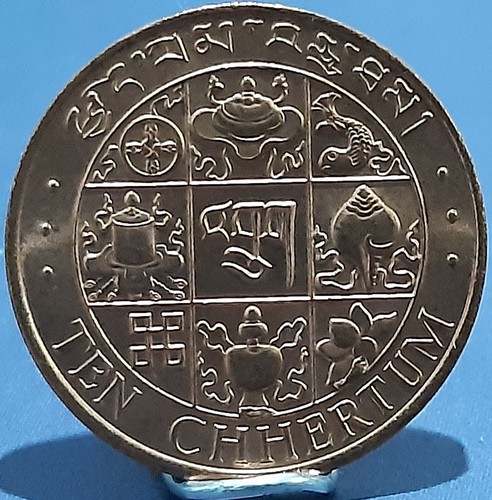
Other coins you may enjoy
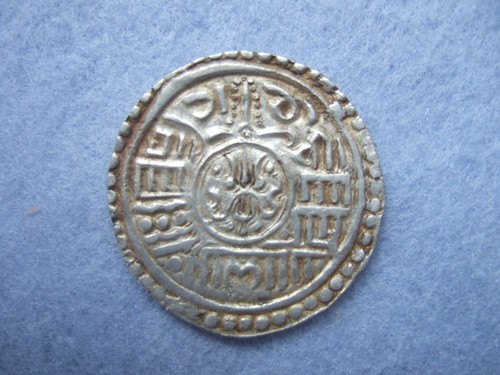
Nepalese Mohar
19th century, struck under the Shah dynasty; dates given in the Saka era rather than the Western calendar
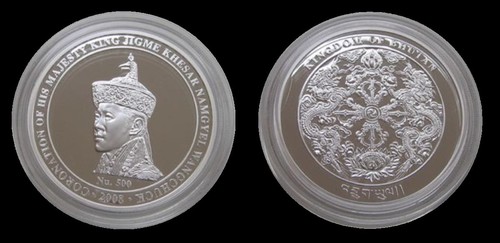
Bhutan 500 Ngultrum Commemorative
Dated 2008, issued under King Jigme Khesar Namgyel Wangchuck
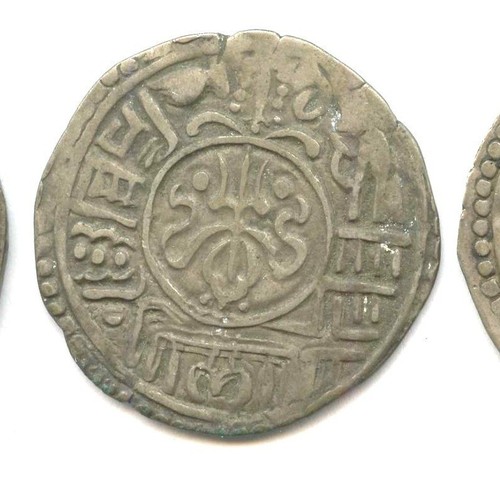
Tibetan Tangka
18th-19th century
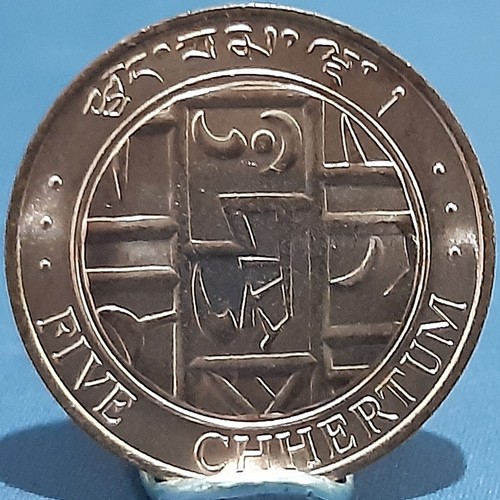
Bhutan 5 Sengtrum
Dated 1979, part of Bhutan's decimal Ngultrum coinage