
How to Identify the Bhutan 10 Sengtrum
A collector's guide to the 1979 Bhutan 10 Sengtrum: the national arms, the ornamental gateway reverse, the cupro-nickel fabric, the date and look-alikes.
Read the full Bhutan 10 Sengtrum encyclopedia entry →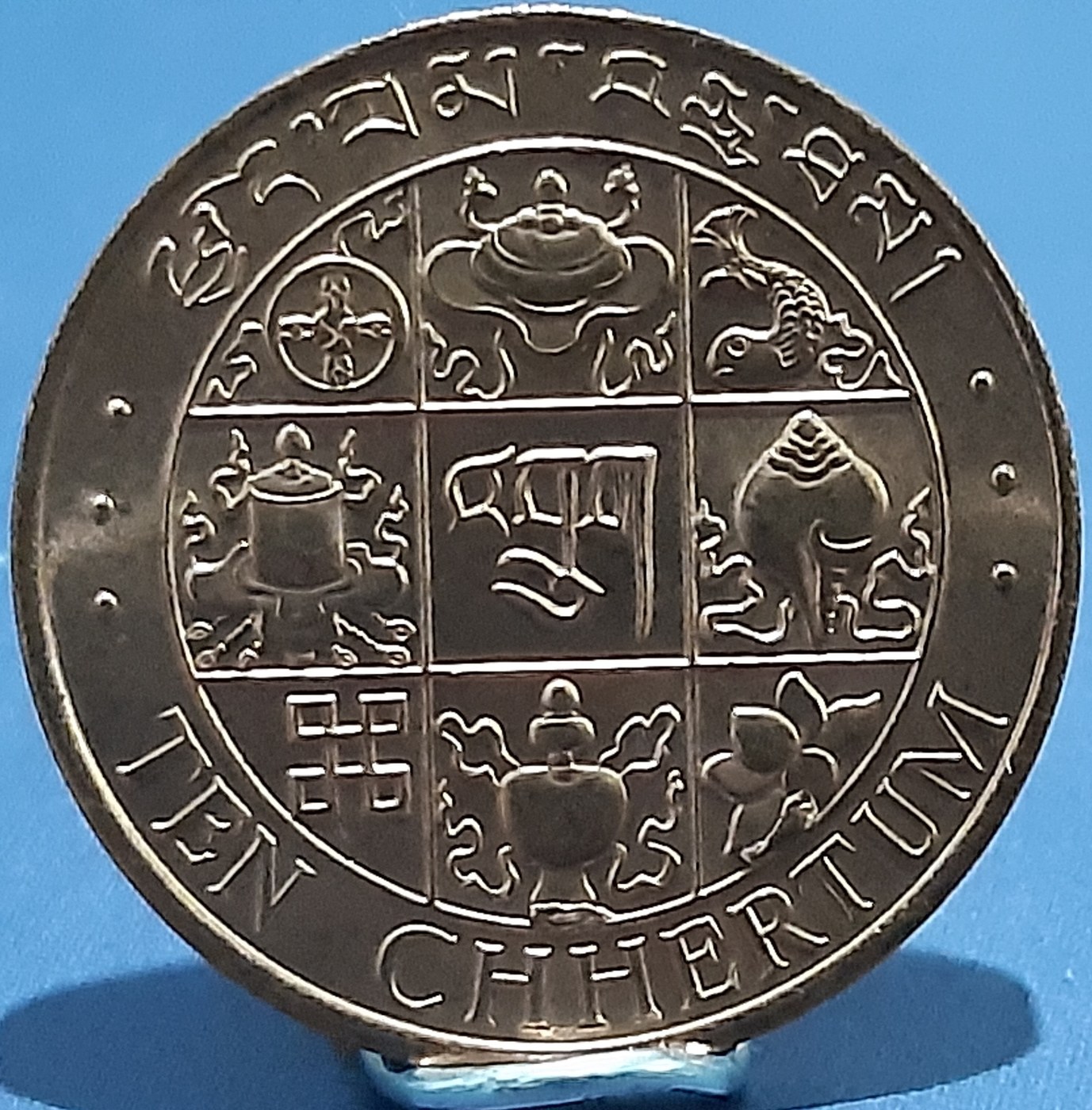
Start with the design pairing, which is the quickest identifier. One face carries the Bhutanese national arms and emblem, a heraldic device blending state and Buddhist symbolism; the other shows an ornamental architectural gateway framed by decorative elements, with the value and the date. State arms on one side and an ornamented gateway on the other, at a small fractional value, point squarely to Bhutan's late-1970s decimal small change.
Confirm the physical coin. This is a small cupro-nickel piece: round, light and base-metal, with a pale silvery-grey alloy that often tones to a darker or warmer shade in circulation. It is not a large silver or commemorative coin and should not weigh or feel like one; a modest diameter and light weight are consistent with a minor denomination. A magnet test and simple weight and diameter checks help separate it from unrelated look-alikes struck in other metals.
Read the legends and date. Look for the value given as ten of the subdivision—rendered sengtrum or chhertum, equal to 0.10 ngultrum—together with the name of Bhutan and the 1979 date. That wording places the coin in the decimal reform of the late 1970s and helps distinguish it from later Bhutanese issues that carry different dates, denominations or imagery.
Watch for look-alikes within the same series. Bhutan's 1979 and neighboring decimal issues span several denominations that share a similar visual language of arms and architectural or religious motifs, so do not rely on the general style alone—check the stated value and the diameter to be sure you have the 10 Sengtrum rather than a related coin. Other Himalayan coinages of the period can also recall this look but differ in legends, denomination and metal.
Apply standard authentication cautions. Genuine coins are struck, with clean lettering and crisp detail in the arms and the gateway. Be wary of cast copies showing soft or blurred detail, seams or surface bubbles, of pieces artificially colored or plated, and of any coin offered as a precious-metal version of a denomination that circulated in base metal. When in doubt, weigh and measure the coin and compare it against a reliable catalog of Bhutanese coinage.
Frequently asked questions
How do I tell the 10 Sengtrum from other Bhutanese decimal coins?
Read the denomination directly: look for the value given as ten of the subdivision (0.10 ngultrum), then confirm the small size and light cupro-nickel weight. Other values in the series share similar arms-and-architecture imagery, so the stated denomination and diameter are what set this coin apart.
Is 'sengtrum' the same as 'chhertum'?
In practice yes—both refer to the hundredth-part subdivision of the ngultrum, and catalogs spell it in several ways, including chhertum and chhetrum. Ten of them equal one-tenth of a ngultrum regardless of spelling.
The coin looks dark or dull—is that a problem?
No. Cupro-nickel tones with age and handling, so circulated coins often appear darker or warmer than a fresh strike. Toning alone does not indicate a fake; judge authenticity from struck detail, correct weight and diameter instead.
How can I spot a counterfeit?
Genuine coins are sharply struck with clean legends and clear detail in the arms and gateway. Watch for casting seams, bubbles, mushy detail, plating meant to imitate precious metal, or an incorrect weight and diameter, and verify against a standard reference for Bhutanese coins when unsure.