
How to Identify the Nepalese Mohar
A collector's guide to the Shah-dynasty silver mohar: small silver flan, dense Devanagari legends, a mandala centre with Hindu symbols, and how to spot fakes.
Read the full Nepalese Mohar encyclopedia entry →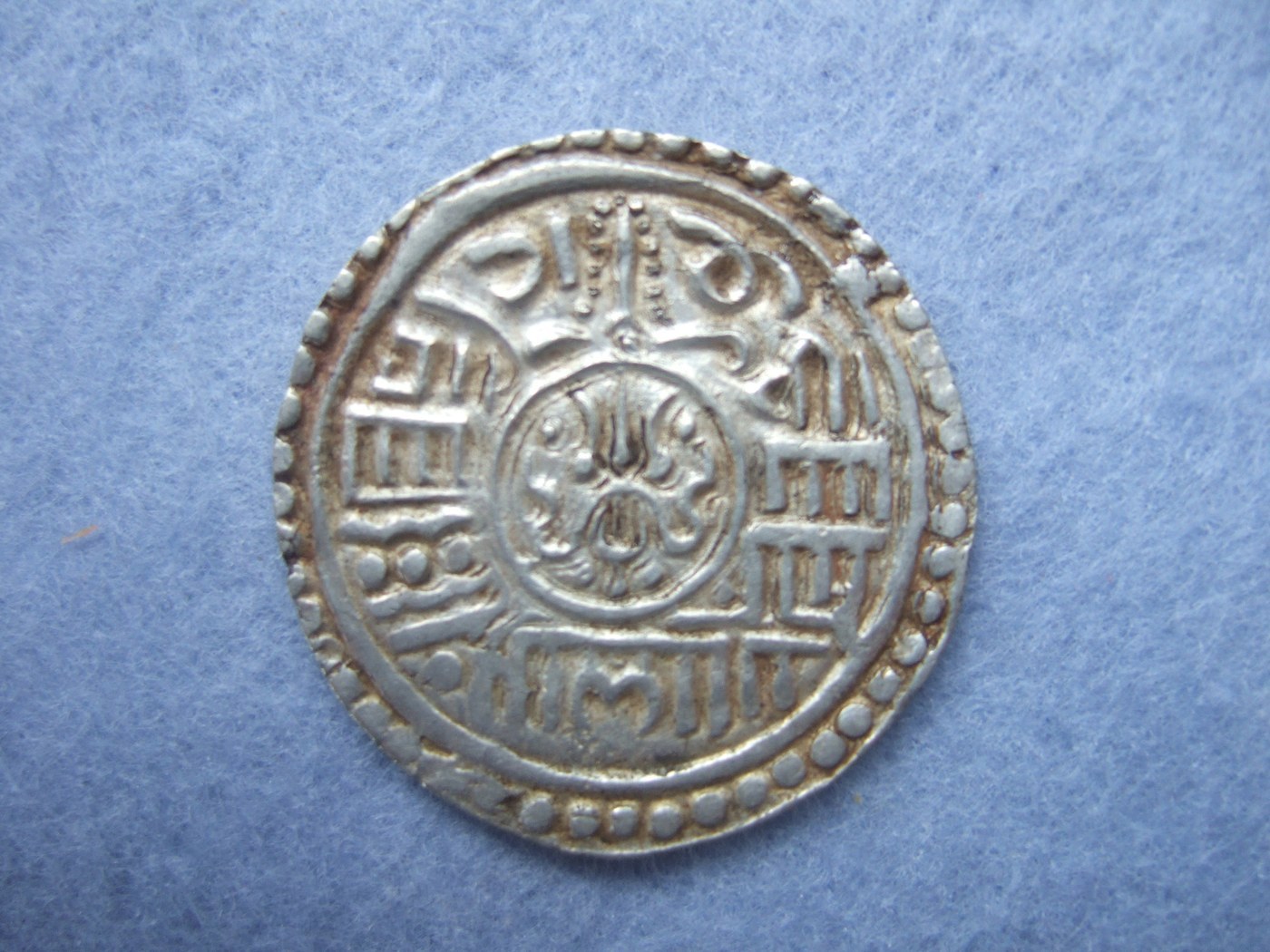
Start with the size and metal. The Nepalese Mohar is a small, relatively thick silver coin, clearly smaller than an Indian rupee or a US quarter. A genuine piece is non-magnetic silver with the soft grey tone of an old struck coin, and the flan is often slightly irregular with some of the legend running off the edge. That irregularity is normal for hand-struck Himalayan silver and is not by itself a sign of a fake; a coin that is magnetic, brassy or perfectly machine-round for its type should be examined more closely.
Read the surface for script and symbols. Both faces are crowded with ornament: expect a ring of Devanagari (Nagari) legend around a geometric, mandala-style central design, with auspicious devices such as a trident, a sword, the sun and crescent moon, and lotus or floral motifs. There is no royal portrait and no Latin lettering anywhere. This combination of dense Nagari script and Hindu mandala symbolism is the single most reliable identifier and immediately separates the mohar from British India rupees, Tibetan tangkas and other regional silver.
Use the date and legend to pin down the coin. The date is given in the Saka era in Devanagari numerals rather than the Western calendar, so it will not match a Western year directly; adding roughly 78 years converts a Saka date to the Common Era. The issuing Shah king can be read from the Devanagari legend by anyone familiar with the script, which is how specialists attribute a mohar to a particular reign. Where the legend is weak or off the flan, attribution may rest on the visible symbols and the surviving portions of the date.
Distinguish the full mohar from its fractions and look-alikes. Nepalese silver was also struck in smaller denominations such as the half mohar (adha) and lesser fractions, all sharing the same style of script and mandala design, so the diameter and weight are what separate a full mohar from a fraction. Be aware that Nepal also produced silver for Tibetan circulation and that Tibetan tangkas of similar size exist; the Devanagari legends and Nepalese symbolism, rather than Tibetan script, mark a coin as a Shah mohar.
For authentication, weigh and measure the coin and compare it with catalogue figures for the mohar, since correct diameter and weight are hard for casual fakes to match. Genuine mohars are struck, so beware of casting seams, bubbles, a mushy or grainy surface, or a dull thud instead of a silver ring, all of which point to a cast copy. Because weak strikes are common, judge authenticity from fabric, weight and metal rather than from a partially missing legend alone, and for higher-value or scarce-reign pieces seek expert opinion or third-party certification.
Frequently asked questions
What is the fastest way to recognise a Nepalese Mohar?
Look for a small, thick silver coin covered in Devanagari script with a geometric mandala centre and Hindu symbols such as a trident, sword, sun and moon, and no portrait or Latin lettering. That crowded Nagari-and-mandala style is the surest sign of a Shah-dynasty mohar.
How do I tell a mohar from a British India rupee?
The mohar is smaller and uses Devanagari legends with mandala symbolism and no English lettering, while British India rupees are larger, carry English legends and often a monarch's name or portrait. Read the script and compare the size to distinguish them.
How can I tell a full mohar from a half mohar?
The fractions share the same script and mandala design, so rely on diameter and weight. The full mohar is the larger, heavier piece; the half mohar (adha) and smaller fractions are noticeably smaller and lighter versions of the same style.
How do I spot a fake or replica?
Genuine mohars are struck silver of the correct diameter and weight and are non-magnetic. Be wary of magnetic, off-weight or off-colour pieces and of casting seams, bubbles or a soft, grainy surface that indicate a cast copy. Weigh and measure the coin, and for valuable examples seek certification.