
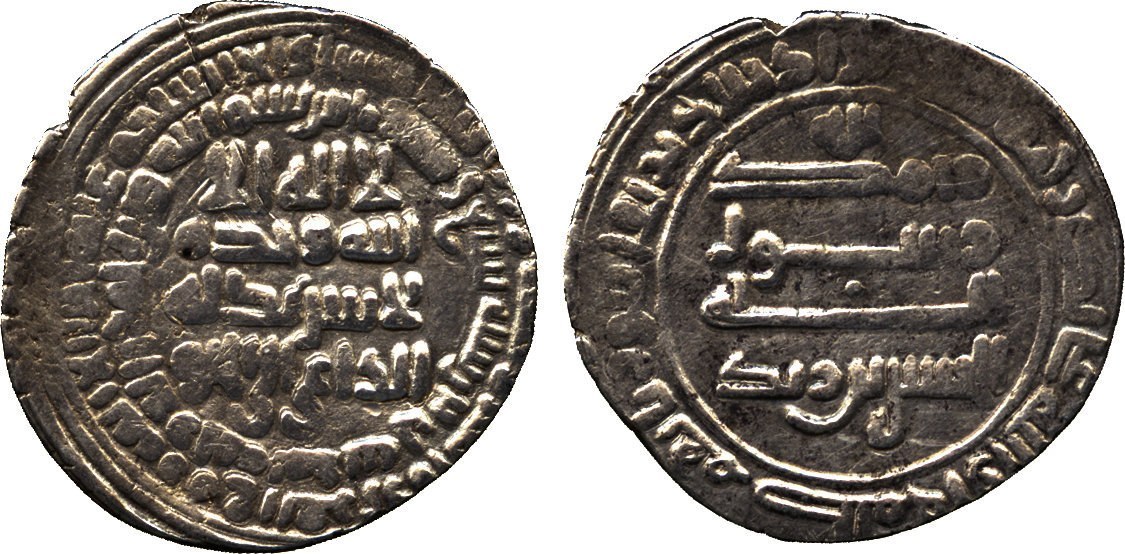
Dirham of Hasan ibn Zayd
A 9th-century Islamic silver dirham struck for Hasan ibn Zayd, the Alid ruler of Tabaristan, bearing concentric Arabic religious and authority legends.
- Country
- Islamic Caliphate
- Denomination
- Dirham
- Metal
- Silver
Got a coin like this?
Identify any coin from a photo, free.
Overview
The Dirham of Hasan ibn Zayd is a medieval Islamic silver coin of the classic epigraphic type, struck in the name of Hasan ibn Zayd, the Alid (Zaydid) ruler who founded an independent Shi'a principality in the Caspian province of Tabaristan in the 860s CE. Rather than a portrait, it carries only Arabic script: the coin shown here has concentric circular inscriptions on the obverse giving religious text and matching concentric inscriptions on the reverse giving the ruling authority, in the standard reform style used across the Islamic world of the period.
As a dirham, it belongs to the principal silver denomination of the early Islamic monetary system, a thin, broad, flan of good silver meant to circulate as everyday high-value coin. The design follows the aniconic pattern established by the Umayyad and Abbasid caliphates: a central legend ringed by one or more marginal legends, repeated on both faces, with no images of people or animals.
Because it names an Alid ruler of Tabaristan rather than simply the reigning Abbasid caliph, this dirham is prized as a tangible record of a short-lived but historically important breakaway state on the southern shore of the Caspian Sea.
History & Background
Hasan ibn Zayd, known by the honorific al-Da'i al-Kabir ("the Great Missionary") or al-Da'i ila'l-Haqq ("he who summons to the truth"), was a descendant of the Prophet Muhammad's family who established Alid rule in Tabaristan around 864 CE (roughly 250 AH). Exploiting local discontent with Abbasid governors, he founded a Zaydi Shi'a state in the mountainous, forested lands south of the Caspian that resisted direct caliphal control for decades.
His reign lasted until about 884 CE (around 270 AH). Striking silver dirhams in his own name was an assertion of sovereignty: in the medieval Islamic world the right to place one's name on the coinage (the sikka) and to be named in the Friday sermon were the two great marks of independent authority. The concentric authority legends on the reverse of these coins therefore carry real political weight, proclaiming an Alid ruler where an Abbasid governor would otherwise have appeared.
The Alid dynasty of Tabaristan continued under later members of the family after Hasan ibn Zayd, and the region's coinage reflects the shifting balance between the Alids, the Abbasids, and neighboring powers. Coins bearing Hasan ibn Zayd's name are among the founding issues of this Caspian Shi'a polity and are studied as evidence of its politics, religious formulas, and mints.
How to Identify
The defining feature is that this coin is entirely epigraphic: both faces carry Arabic inscriptions arranged as a central legend inside concentric circular marginal legends, with no portrait or figural image. On the specimen here the obverse presents religious text and the reverse presents the ruling authority, which is the normal division of an Islamic reform-style dirham. The kalima or profession of faith and Qur'anic phrases typically occupy the fields and margins, while the ruler's name and titles appear on the authority side.
Physically it is a silver dirham: a broad, thin coin, usually somewhere in the region of roughly 25–30 mm across and a couple of grams in weight, struck on a comparatively wide flan so that the outer circular legends have room to run. Surfaces are often lightly toned grey and the strike can be uneven, with parts of the marginal legend off the flan, which is normal for hand-struck medieval issues.
Attribution rests on reading the legends. The mint name and date, when present, are written out in words within the marginal inscription rather than shown as numerals; on Tabaristan-related issues the ruler's name Hasan ibn Zayd and Alid titulature in the authority legend are what separate this coin from an ordinary Abbasid caliphal dirham of the same era. Because so much depends on the script, specialist references and, ideally, an expert reading of the Arabic are the surest route to a firm identification.
Value & Collectibility
Value for a coin like this is driven by the legibility of its inscriptions, its state of preservation, and the specific ruler, mint, and date it records, rather than by any fixed catalog price. Alid dirhams of Tabaristan naming Hasan ibn Zayd are historically desirable, and well-struck examples with clear central and marginal legends command more interest than worn or weakly struck pieces.
As with all early Islamic silver, condition and completeness of the legend matter greatly: a coin where the ruler's name, mint, and date can all be read is far more useful to a collector or historian than one where the outer circles have run off the flan. Toning, cleaning, and any damage or bending of the thin flan also affect desirability.
Because this is a scholarly, script-dependent series, prices vary widely with attribution and demand, and any figure should be treated as general context rather than a quote. A properly attributed, cleanly legible example is a significant piece; illegible or damaged fragments are worth considerably less. Buyers should seek clear photographs and, for higher-value coins, a specialist opinion before purchase.
Frequently asked questions
Who was Hasan ibn Zayd?
He was an Alid (Zaydi Shi'a) leader who founded an independent principality in Tabaristan, on the southern shore of the Caspian Sea, around 864 CE. Known as al-Da'i al-Kabir, he ruled until about 884 CE and struck coins in his own name as a sign of sovereignty.
Why does the coin have no picture?
Islamic coinage of this period was aniconic, avoiding images of people or animals. Instead the dirham carries only Arabic inscriptions, arranged as a central legend inside concentric circular marginal legends on both faces.
What do the two sides say?
On the coin shown here the obverse carries religious text, typically the Islamic profession of faith and Qur'anic phrases, while the reverse carries the ruling authority, including the ruler's name and titles and, when legible, the mint and date.
Is it really silver?
Yes. A dirham is the standard silver denomination of the early Islamic monetary system, struck as a thin, broad coin of good silver. Surfaces often tone to a soft grey with age.
How is the date shown?
The date and mint are spelled out in Arabic words within the marginal legend rather than given as numerals, so reading them requires familiarity with the script or a specialist reference.
Dirham of Hasan ibn Zayd guides
In-depth guides for identifying, valuing, and collecting Dirham of Hasan ibn Zayd.
Other coins you may enjoy
Gold Dinar of Jaqmaq
1438-1453 CE
Ilkhanid Dirham
13th–14th century (Ilkhanate, c. 1256–1335 CE)
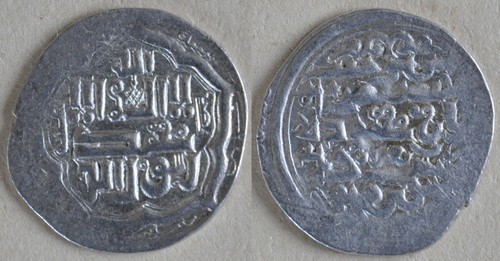
Ilkhanid Dirham of Ghazan
14th century (c. 1295-1304 CE)
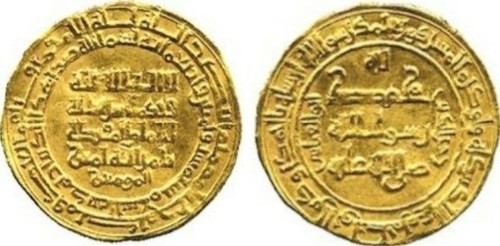
Gold Dinar of al-Muqtadi
c. 467-475 AH (1074-1082 CE)
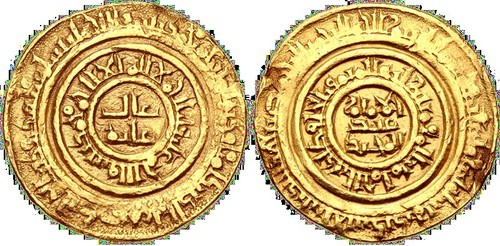
Gold Dinar of al-Hafiz li-Din Allah
AH 544 (AD 1149–1150)
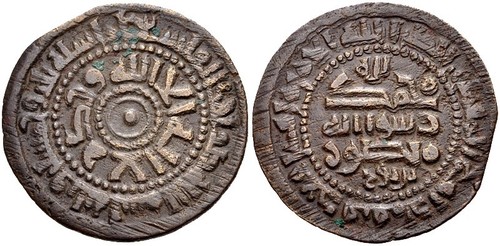
Samanid Dirham
9th–10th century CE (roughly AH 3rd–4th century)
Copper Fals of Barquq
1382–1389 CE (first reign of Barquq)
Copper Fals of as-Salih Salih
Mid-14th century CE (reign of as-Salih Salih, AH 752–755 / 1351–1354 CE)
Gold Dinar of Malik Shah I
AH 465–485 (1072–1092 CE)
Ilkhanid Dirham of Abu Said
c. 1316-1335 CE (AH 716-736)
Silver Dirham of Salm ibn Ziyad
c. 682-683 CE
Silver Dirham (LACMA M.2002.1.437)
8th century CE (roughly AH 80s–190s)