
How to Identify the Dirham of Hasan ibn Zayd
A collector's guide to attributing an Alid Tabaristan silver dirham of Hasan ibn Zayd: legends, layout, metal, size, mints and authentication cautions.
Read the full Dirham of Hasan ibn Zayd encyclopedia entry →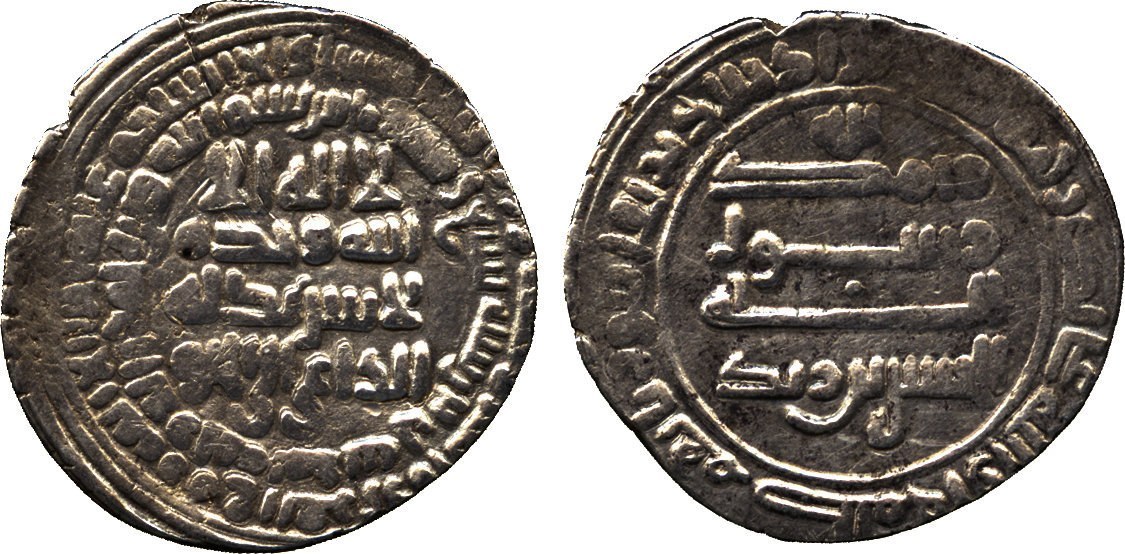
Start by confirming the basic form. This is a purely epigraphic Islamic dirham: both faces are covered in Arabic script with a central legend enclosed by one or more concentric circular marginal legends, and there is no portrait, animal, or figural device anywhere on the coin. If you see a ruler's bust or a fire-altar, you are looking at a different, earlier Sasanian-style issue, not this reform-type dirham.
Sort out the two faces. The religious side (the obverse here) carries devotional text — characteristically the profession of faith, that there is no god but God alone, together with Qur'anic phrasing in the margin. The authority side (the reverse here) is the one that identifies the coin: it names the issuing power, and on this type it is the appearance of Hasan ibn Zayd and Alid titulature, rather than a plain Abbasid caliphal formula, that pins the attribution. Reading, or having someone read, the authority legend is the single most important step.
Check the physical coin against the dirham standard. Expect a broad, thin silver flan, roughly on the order of 25–30 mm in diameter and only a couple of grams in weight, often lightly toned and frequently struck a little off-center so that part of the outer circle runs off the edge. That soft grey silver look and wide flan are normal; a thick, heavy, or yellowish piece is a warning sign that the coin is not what it claims to be.
Locate the mint and date within the margins. On these issues the mint name and year are written out in Arabic words, not as numerals, and they sit in the circular marginal legend rather than the center. Tabaristan-region mints and the Alid ruler's name are the diagnostic combination; an otherwise similar coin naming only the Abbasid caliph, or a different Caspian ruler, is a look-alike from the same tradition rather than this exact type. Because the whole attribution hinges on script, compare the legends carefully against a specialist catalog of Islamic or Tabaristan coinage.
Apply sensible authentication cautions. Genuine coins are hand-struck, so expect slightly irregular flans, uneven relief, and crisp but not machine-perfect lettering; be wary of cast copies with soft, blurry script, seams, or air bubbles, and of tooled pieces where letters have been re-cut to "improve" a weak legend. Weigh and measure the coin, examine the silver surface for casting texture, and for any significant purchase seek an expert reading of the Arabic and, where appropriate, a professional opinion, since so much value and meaning rest on the exact wording.
Frequently asked questions
How do I tell this from an ordinary Abbasid dirham?
Both share the same concentric epigraphic layout, so read the authority legend. This type names Hasan ibn Zayd and carries Alid titulature tied to Tabaristan, whereas a standard Abbasid dirham names the caliph and his officials. When the script is unclear, a specialist reading is the reliable test.
Where are the mint and date on the coin?
They are spelled out in Arabic words within the circular marginal legend, not shown as numbers and not in the center. Worn or off-flan margins often lose part of this information, which is why fully legible examples are prized.
What size and weight should it be?
As a silver dirham it should be a thin, broad coin, roughly 25–30 mm across and only a few grams in weight, typically toned grey. A markedly heavy, thick, or non-silver piece should be treated with suspicion.
How can I spot a fake or altered coin?
Look for signs of casting such as soft, mushy letters, surface bubbles, or a seam around the edge, and for re-cut or tooled lettering meant to sharpen a weak legend. Genuine strikes show crisp, slightly irregular hand-struck detail; verify weight, diameter, and legend against a trusted reference and get an expert opinion for valuable examples.