
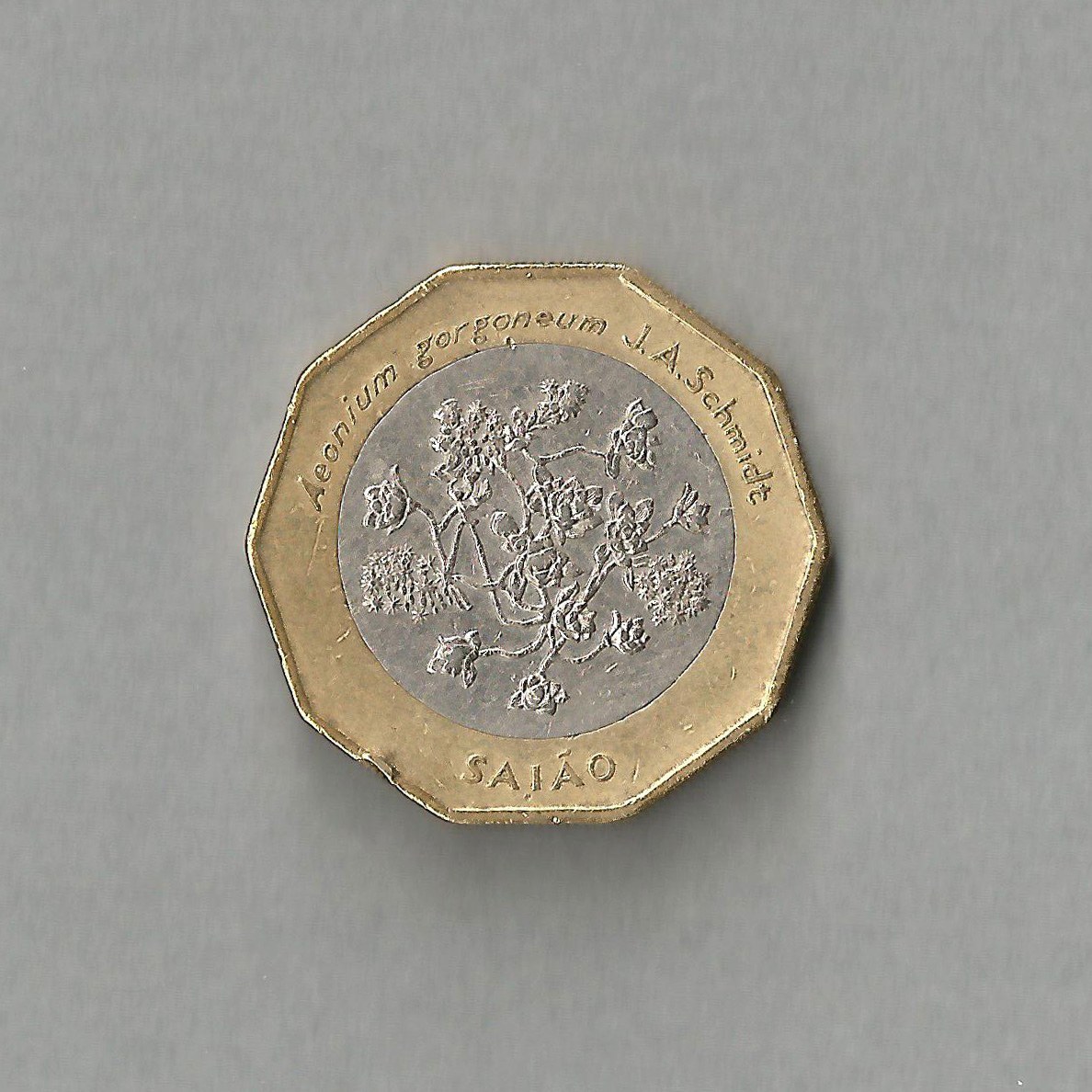
Cape Verde 100 Escudos
A bi-metallic Cape Verde 100 escudos with a botanical theme, its silver-colored center showing the endemic Aeonium gorgoneum plant.
- Country
- Cape Verde
- Denomination
- 100 Escudos
- Metal
- Bi-metallic
Got a coin like this?
Identify any coin from a photo, free.
Overview
The Cape Verde 100 escudos is a modern bi-metallic circulation coin from the Republic of Cape Verde (Cabo Verde), an island nation off the coast of West Africa. It pairs an outer ring of one base-metal color with an inner disc of a contrasting silver color, a two-tone construction typical of higher-value circulation coins of the late 20th century.
As seen on this coin, the central silver-colored disc carries a botanical motif of Aeonium gorgoneum, a succulent plant native to the Cape Verde islands, framed by inscriptions running around the rim. The design belongs to a well-known Cape Verdean series that devoted individual coins to the country's distinctive plants and animals rather than to a single portrait or emblem.
It is a coin meant for everyday commerce, struck in ordinary alloys rather than precious metal, and it circulated as one of the larger everyday denominations of the escudo system.
History & Background
Cape Verde, a former Portuguese territory, became independent in 1975 and adopted the Cape Verdean escudo as its national currency, continuing the escudo unit inherited from the colonial period. Over the following decades the country issued its own distinct coinage in the name of the Republic.
In the mid-1990s Cape Verde released a widely recognized circulation series celebrating the natural heritage of the islands, with different denominations featuring native plants, birds, ships, and marine life. The bi-metallic 100 escudos with the Aeonium gorgoneum plant belongs to this nature-themed program, which gave the country's everyday coins an unusually varied and thematic look.
The escudo remains the currency of Cape Verde and, in the modern era, has been linked at a fixed rate to the Portuguese escudo and subsequently to the euro. Coins of this era were produced for general circulation, so surviving examples are relatively common and were made in substantial numbers rather than as limited collector strikes.
How to Identify
Start with the construction and the plant. This coin is bi-metallic, with a ring of one color surrounding a silver-colored center, and the central disc shows a botanical motif of the succulent Aeonium gorgoneum. Legends run around the rim identifying Cape Verde (Cabo Verde) and the value. The presence of a detailed plant image inside a two-tone coin is the fastest way to place it within the country's nature series.
Confirm the denomination by the numeral 100 and the word ESCUDOS in the inscriptions. Because the same series used bi-metallic and single-metal formats across several values, matching both the number and the plant subject helps separate the 100 escudos from lower denominations that show birds, ships, or other flora.
The reverse is not shown on this example, but Cape Verdean coins of the period typically carry the national name, coat of arms or emblem, and the year of issue on the opposite face. Look there to read the exact date, which fixes the coin within the 1990s series.
Value & Collectibility
The bi-metallic 100 escudos is a modern circulation coin, and ordinary worn examples are worth a modest amount, generally a small multiple of face value as inexpensive world coinage. It is collectible mainly for its attractive botanical design and two-tone construction rather than for scarcity or metal content.
Condition is the main driver of any premium. Uncirculated or lightly handled pieces with full luster and sharp detail on the plant motif bring more than heavily circulated coins, and complete sets of the nature-themed series can appeal to topical and world-coin collectors. Even so, values typically remain in the low single-digit to few-dollar range.
Because these coins are not rare, treat any figure as a general guide. Check the exact year on the reverse and compare against recent world-coin listings, since specific dates and grades can differ modestly in what they command.
Frequently asked questions
What plant is on the Cape Verde 100 escudos?
The central silver-colored disc shows *Aeonium gorgoneum*, a succulent plant native to the Cape Verde islands. It is part of a coin series highlighting the country's distinctive native flora and fauna.
Is the Cape Verde 100 escudos made of silver?
No. Although the center is silver-colored, the coin is bi-metallic base metal, not precious metal. The two tones come from different everyday alloys used for the ring and the center, not from silver content.
When was this coin issued?
It belongs to a Cape Verdean circulation series from the mid-1990s that featured native plants and animals. The exact year appears on the reverse of each coin, which is not shown on this example.
Is my Cape Verde 100 escudos valuable?
Usually only modestly. It is a common modern circulation coin collected mainly for its design. Uncirculated examples and complete series sets bring a small premium, but most stay in the low single-dollar range.
What currency does Cape Verde use?
The Cape Verdean escudo, divided into 100 centavos. Cape Verde adopted its own escudo after independence from Portugal in 1975, and the escudo remains the national currency today.
Cape Verde 100 Escudos guides
In-depth guides for identifying, valuing, and collecting Cape Verde 100 Escudos.
Other coins you may enjoy
5 Aurar
1926-1942
20 Kronor
1925 (denomination struck 1873-1925)
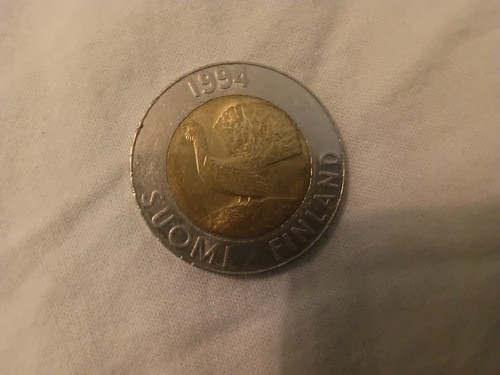
10 Markka
1993–2001
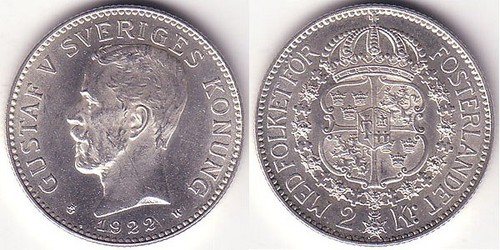
2 Kronor
1910-1940 (this example dated 1922)
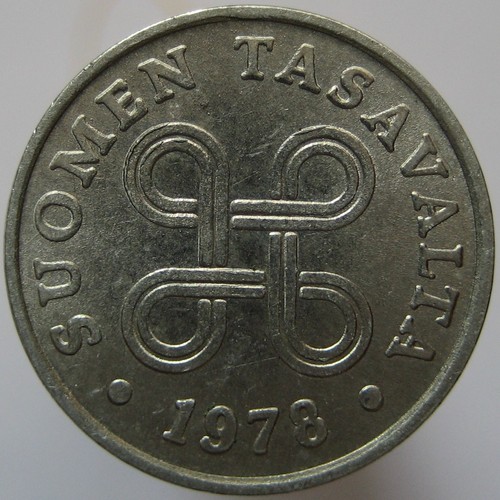
1 Penni
1969–1979
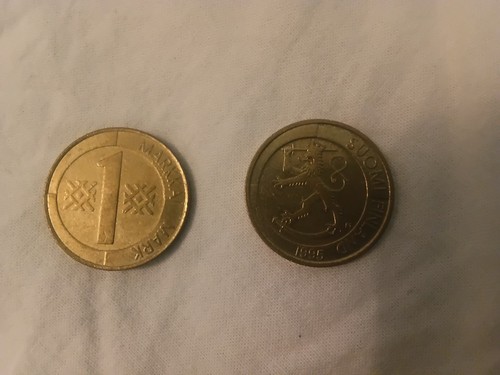
1 Markka
1993–2001
Kenya 5 Shillings
Bimetallic issues (2005–2010)
Kenya 20 Shillings
Modern issue (late 1990s–2000s)
South Africa Farthing
1923-1960
Kenya 10 Shillings
Republic of Kenya, bimetallic issues (mid-1990s to c. 2010)
Gold Sovereign
1817–present
Henri V Five Francs
1831