
How to Identify the Cape Verde 100 Escudos
A collector's guide to recognizing Cape Verde's bi-metallic 100 escudos by its two-tone build, Aeonium gorgoneum plant, and inscriptions.
Read the full Cape Verde 100 Escudos encyclopedia entry →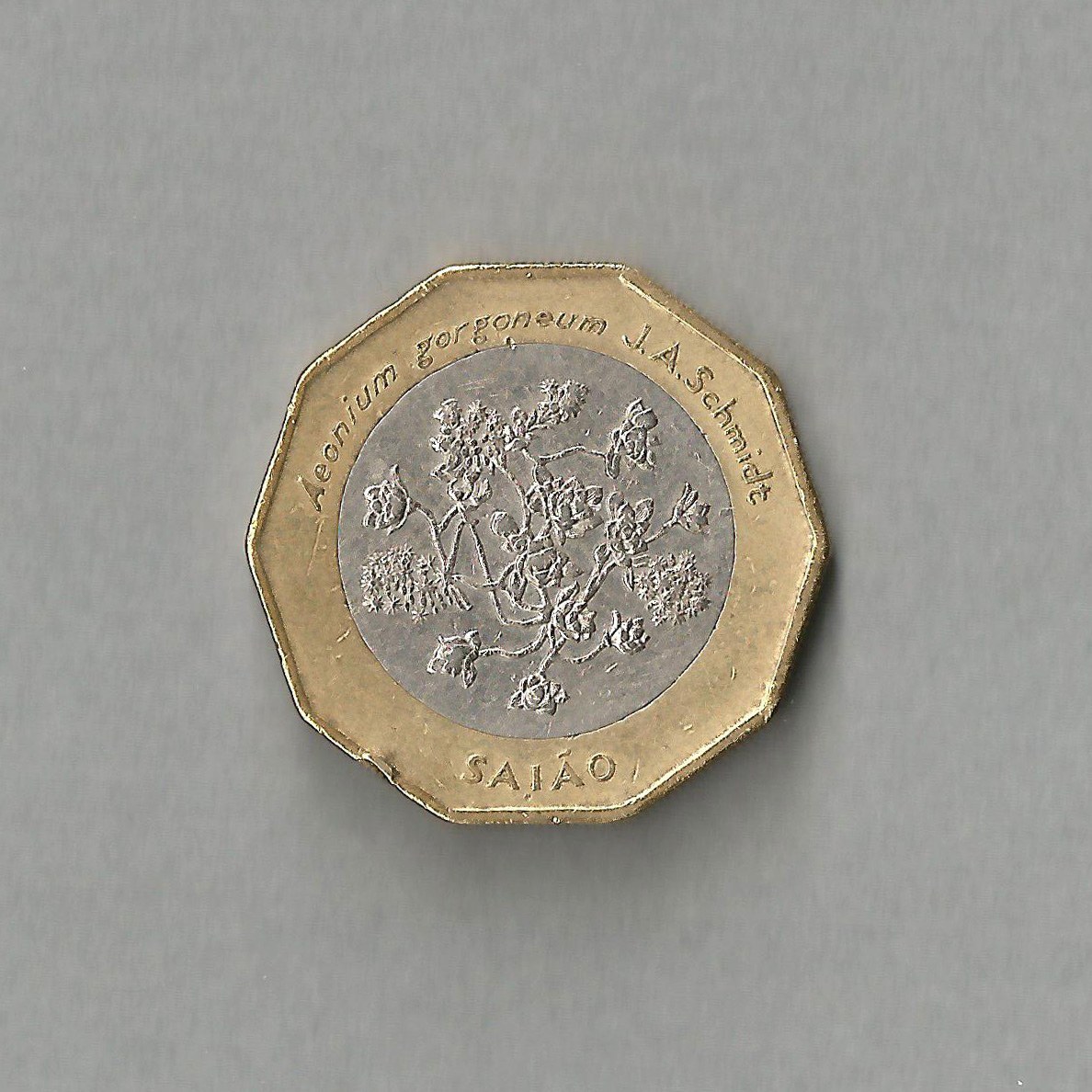
Begin with the two-tone construction. The 100 escudos is bi-metallic: an outer ring of one base-metal color surrounds an inner disc of a contrasting silver color. If your coin is a single solid color throughout, it is a different denomination or a different coin altogether, so confirm the ring-and-center layout first.
Read the central motif. The silver-colored disc carries a botanical image of the succulent Aeonium gorgoneum, a plant endemic to the Cape Verde islands. This nature theme, rather than a portrait, is a hallmark of Cape Verde's 1990s series; identifying the specific plant helps separate the 100 escudos from sister coins that show birds, ships, or other flora on similar-looking blanks.
Confirm the country and value from the inscriptions. Legends around the rim name Cabo Verde (Cape Verde) and carry the numeral 100 with the word ESCUDOS. Matching both the country name and the denomination number guards against mistaking it for other African or Portuguese-language escudo coins of comparable size.
Use size, weight, and the reverse to finalize the attribution. Bi-metallic 100 escudos coins are mid-sized and moderately heavy for a circulation piece; measure the diameter and weight and compare to catalog specifications. The reverse, not shown here, typically bears the national emblem and the year, so turn the coin over to read the exact date and confirm the issue.
Authentication is a minor concern for such a low-value coin. Focus instead on distinguishing genuine wear and toning from cleaning, and beware of confusing it with unrelated bi-metallic world coins of similar diameter; the endemic-plant design and Cabo Verde legend are the decisive tells.
Frequently asked questions
How do I know it is the 100 escudos and not another value?
Read the rim legends. A genuine coin shows the numeral 100 with the word ESCUDOS and the name Cabo Verde. Lower denominations in the same nature series carry different numbers and often different plant or animal motifs.
What is the plant in the center, and why does it matter?
It is *Aeonium gorgoneum*, a succulent endemic to Cape Verde. The specific plant identifies the exact coin within a series where each denomination features a different native species, so the motif is a key diagnostic.
Where do I find the date on this coin?
On the reverse, which is not pictured on this example. Cape Verdean coins of this era place the national emblem and the year of issue on the opposite face from the plant motif.
Could it be confused with another bi-metallic coin?
Yes, several countries issued similar two-tone coins in the 1990s. Use the Cabo Verde legend, the ESCUDOS denomination, and the endemic-plant design together to confirm the attribution rather than relying on shape alone.