
Tunisia 20 Francs (Brass)
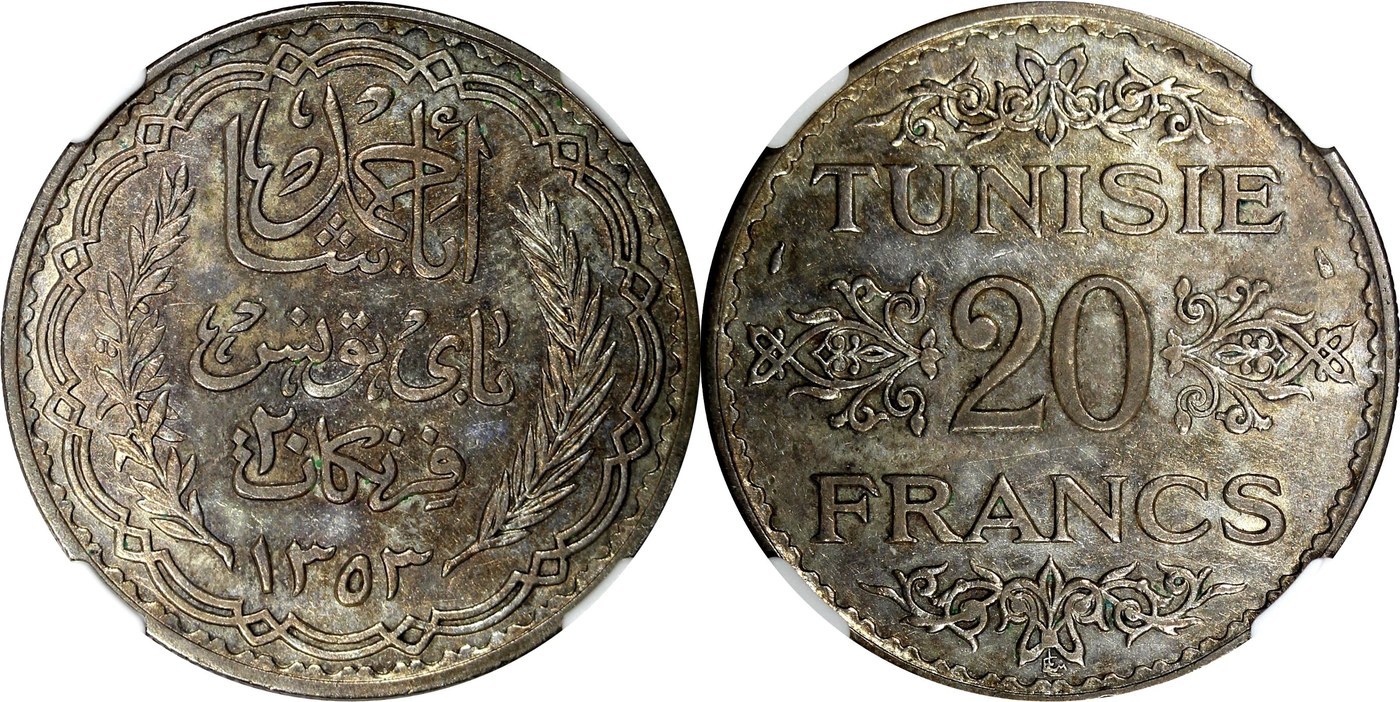
A brass 20 francs of French-protectorate Tunisia dated 1950, with Arabic script and geometric design on one face and 'TUNISIE / 20 FRANCS' on the other.
- Country
- Tunisia
- Denomination
- 20 Francs
- Metal
- Brass
Got a coin like this?
Identify any coin from a photo, free.
Overview
The Tunisia 20 francs shown here is a brass circulating coin dated 1950, struck for Tunisia during the period of the French protectorate. One face carries Arabic script within a decorative, geometric arrangement, while the other bears the value '20 FRANCS', the name 'TUNISIE', and the date 1950.
At this time Tunisia used a franc-based currency parallel to the French system, and the 20 francs was one of the larger everyday denominations. The brass (yellow copper-alloy) composition gives the coin a golden-brown tone rather than the white of a silver or nickel piece.
As a bilingual issue naming Tunisia in Latin letters and carrying Arabic legends, the coin is a compact record of the protectorate era and is widely collected within North African and French colonial numismatics.
History & Background
During the late nineteenth and first half of the twentieth centuries Tunisia was a French protectorate, governed in the name of the reigning Bey of Tunis while France directed external and financial affairs. Coinage of the period reflects this dual character, combining the French franc denomination and the French spelling 'TUNISIE' with Arabic legends appropriate to the Beylik.
A coin dated 1950 falls in the reign of Muhammad al-Amin Bey (Lamine Bey), the last Bey of Tunis, and belongs to a mid-century series of franc denominations issued for circulation in Tunisia. The Gregorian date 1950 corresponds to the Islamic year AH 1370, and coins of this era are commonly found carrying dating in both systems.
Within a few years of this issue Tunisia moved toward independence, achieved in 1956, after which the franc coinage was replaced by a new national currency. The 1950 20 francs therefore sits near the close of the protectorate coinage.
How to Identify
Identify this type by its brass, yellow-toned metal and its bilingual design. One face shows Arabic script set within a geometric or ornamental frame; the opposite face carries the Latin value '20 FRANCS', the country name 'TUNISIE', and the date 1950. The pairing of Arabic legends with the French denomination and spelling is the key attribution feature.
The coin is a mid-size base-metal piece, heavier and broader than the smaller franc fractions of the same series but not a large crown-size coin. Its color is golden-brown brass rather than the grey-white of silver or the paler tone of nickel, which helps separate it at a glance from silver Tunisian issues.
Confirm the reading of the value '20 FRANCS' and the country name 'TUNISIE', and check that the date reads 1950; where present, an accompanying Islamic (AH) date should correspond to the same period. Matching the design to a standard catalogue of French-protectorate Tunisian coinage is the surest way to attribute the exact type rather than relying on color alone.
Value & Collectibility
The Tunisia 20 francs is a base-metal (brass) coin, so it carries no precious-metal value; its worth is driven by condition and collector demand for French-protectorate North African coinage. Most circulated examples trade at modest collector levels.
Well-preserved coins with full, sharp detail in the Arabic script and geometric design, original brass surfaces, and minimal wear command more than heavily circulated, cleaned, or damaged pieces. As with most single-date base-metal issues, high grade and good eye appeal are the main factors that lift value above common levels.
Exact prices vary by grade and marketplace, so figures are best treated as ranges rather than fixed values. For a coin in unusually high grade, an expert opinion or third-party grading can help confirm quality and place it accurately in the market.
Frequently asked questions
What is the Tunisia 20 francs?
It is a brass circulating coin of French-protectorate Tunisia, with Arabic script and a geometric design on one face and 'TUNISIE / 20 FRANCS' and the date on the other; the example shown is dated 1950.
What is the coin made of?
This type is a brass (yellow copper-alloy) coin, giving it a golden-brown tone rather than the white color of silver or nickel. It contains no precious metal.
What does 'TUNISIE' mean on the coin?
'TUNISIE' is simply the French spelling of Tunisia. Its presence alongside Arabic legends reflects the French protectorate period, when the franc denomination and French country name appeared with Arabic script.
Why does the coin have both Arabic and French writing?
Tunisia was a French protectorate governed in the name of the Bey of Tunis, so its coinage combined Arabic legends with the French franc denomination and the French spelling 'TUNISIE'.
Is the 1950 20 francs valuable?
It is a base-metal coin with no bullion value, so it carries modest collector value; price depends mainly on grade and eye appeal, with well-preserved examples bringing premiums over worn ones.
Tunisia 20 Francs (Brass) guides
In-depth guides for identifying, valuing, and collecting Tunisia 20 Francs (Brass).
Other coins you may enjoy
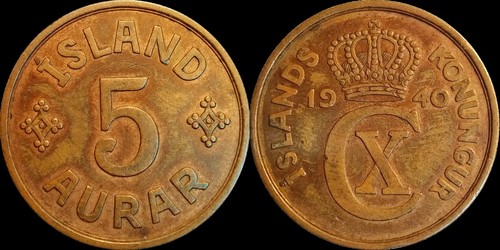
5 Aurar
1926-1942
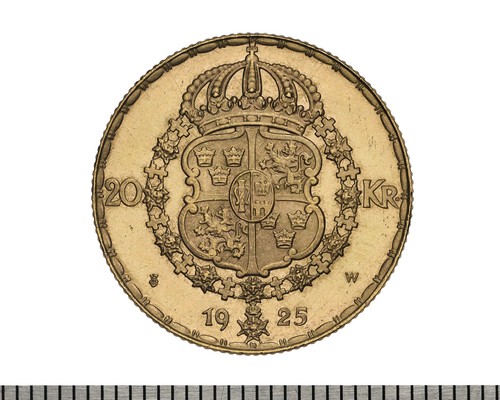
20 Kronor
1925 (denomination struck 1873-1925)
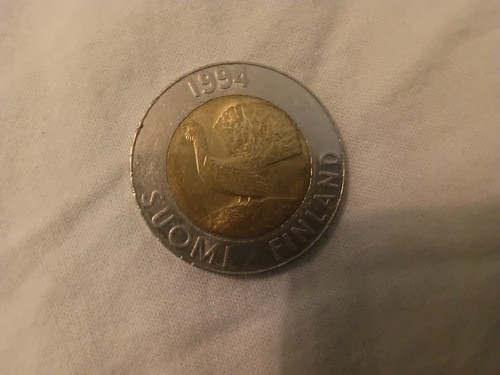
10 Markka
1993–2001
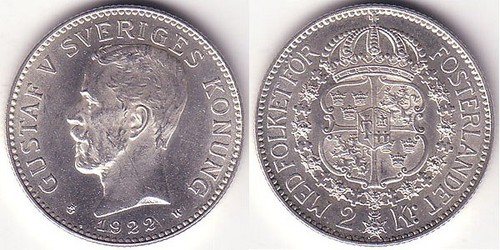
2 Kronor
1910-1940 (this example dated 1922)
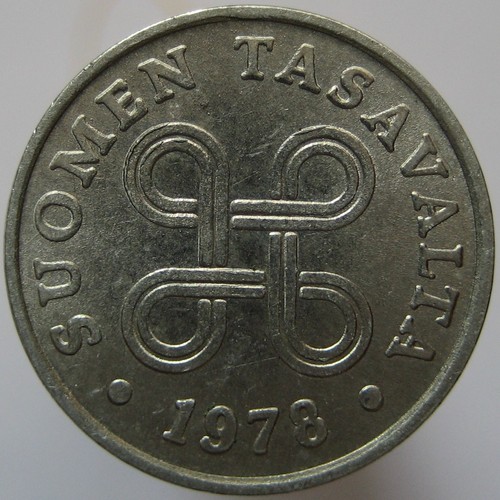
1 Penni
1969–1979
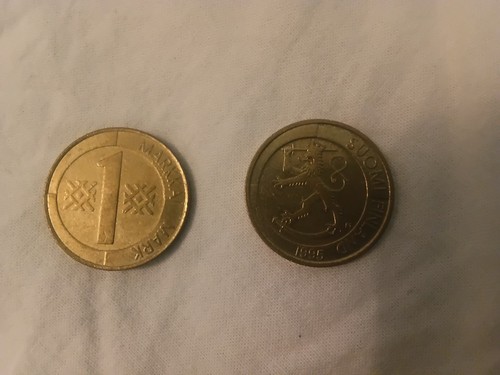
1 Markka
1993–2001
Kenya 5 Shillings
Bimetallic issues (2005–2010)
Kenya 20 Shillings
Modern issue (late 1990s–2000s)
South Africa Farthing
1923-1960
Kenya 10 Shillings
Republic of Kenya, bimetallic issues (mid-1990s to c. 2010)
Gold Sovereign
1817–present
Henri V Five Francs
1831