
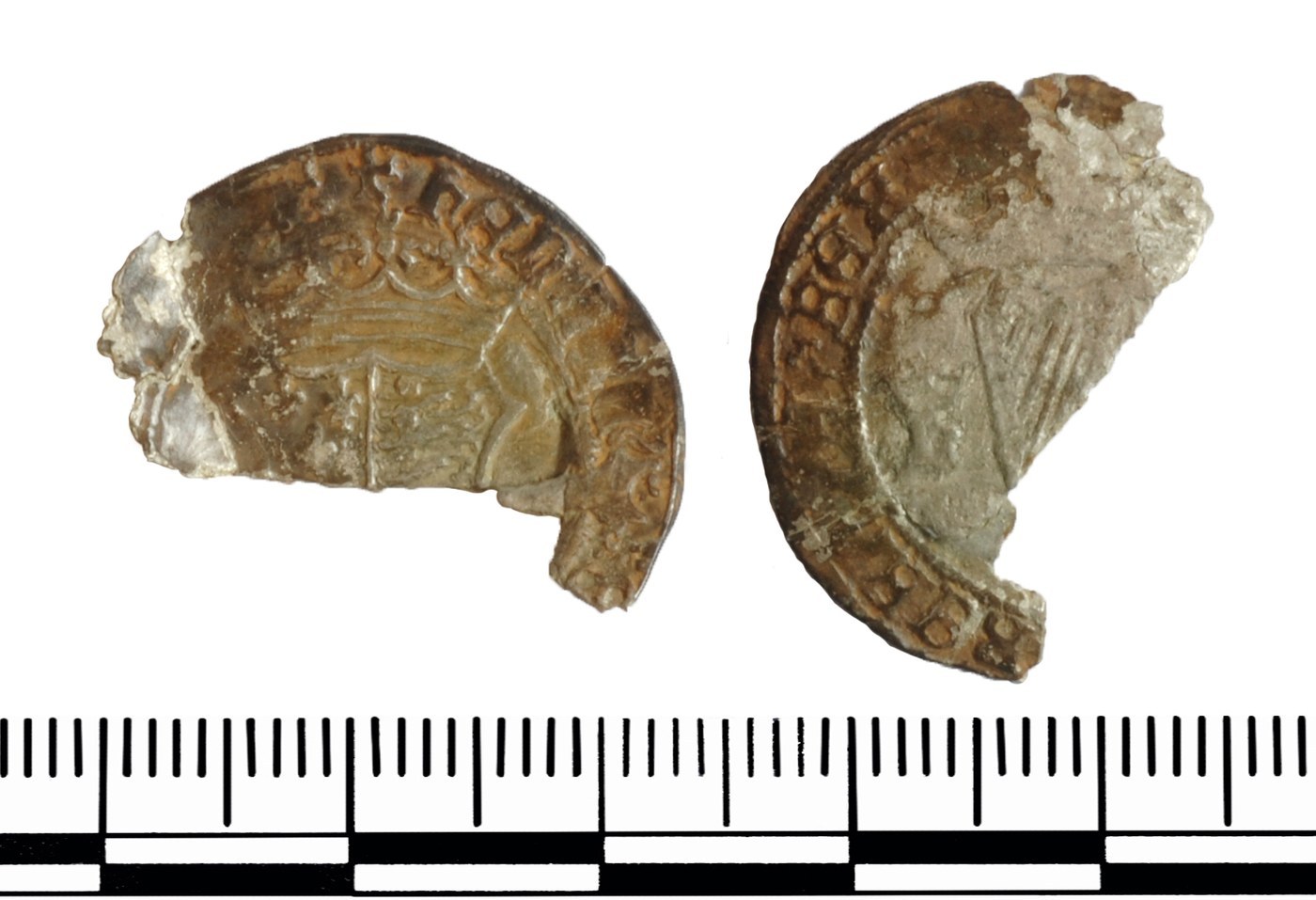
Irish Groat of Henry VIII
A hand-hammered silver fourpence struck for Ireland under Henry VIII, famed for introducing the crowned harp to Irish coinage.
- Country
- Ireland
- Denomination
- Groat (fourpence)
- Metal
- Silver
Got a coin like this?
Identify any coin from a photo, free.
Overview
The Irish groat of Henry VIII is a hammered silver coin worth four pence, produced for use in Ireland during the reign of Henry VIII (1509–1547). It belongs to the wider English royal coinage tradition but was struck specifically for the Lordship, and later Kingdom, of Ireland, and it carries distinctly Irish devices in its design.
The type is best known for the crowned Irish harp that appears on the coinage of the 1530s and 1540s, which is why many examples are nicknamed "harp groats." This series marks the first sustained use of the harp as a national emblem on Irish money, a symbol that has remained on Irish coinage in various forms ever since.
Because the coins were struck by hand from silver of varying and often declining fineness, surviving pieces range from sharp and well-centred to weak, clipped, or discoloured. This variety, combined with the historical resonance of Henry VIII, makes the groat a popular entry point into Irish hammered coinage.
History & Background
Henry VIII inherited the English and Irish thrones in 1509 and ruled until 1547. For most of his reign he held Ireland as "Lord of Ireland," a title reflected in the Latin legends of the earlier coinage; in 1541 the Irish Parliament recognised him as "King of Ireland," and coin inscriptions were updated to reflect the new royal style. This shift in title is a useful anchor for dating pieces within the reign.
The harp coinage was introduced in the 1530s and struck in silver at the Dublin mint, with some issues also produced in London for Irish circulation. Reverse designs commonly pair a crowned harp with crowned initials, and legends often name the issuing authority or city. Coins of this era were a deliberate assertion of Tudor authority over Ireland during a period of political consolidation.
Like Henry VIII's English coinage, the later Irish issues were progressively debased as the crown reduced the silver content to raise revenue. As a result, groats struck near the end of the reign, and posthumous pieces issued in Henry's name shortly after his death, tend to contain less fine silver and can show a duller, baser surface than earlier strikings.
How to Identify
Look first for a hand-struck silver disc roughly the size of a modern small coin, typically in the region of 25–26 mm across, with slightly irregular edges and the uneven relief characteristic of hammered striking. The metal should read as silver, though later and debased examples can appear grey or faintly coppery in tone.
The obverse of a portrait issue shows a crowned bust of Henry VIII surrounded by a Latin legend naming the king. The reverse carries heraldic devices: a crowned harp is the signature Irish emblem, frequently flanked by crowned letters, while related issues show a crowned royal shield of arms. Legends typically include the king's titles for Ireland — an earlier "Lord of Ireland" style (Dominus Hibernie) versus the post-1541 "King of Ireland" (Rex Hibernie) — and sometimes a mint or city name.
Study the small letters flanking the harp closely. On harp groats these initials commonly combine an H for Henry with a second letter linked to a queen consort, and the specific pairing helps place a coin within the series. Weak strike, off-centring, and legend gaps are normal for the type, so identification usually rests on the combination of harp, crowned bust or shield, and the surviving portions of the Latin inscription.
Value & Collectibility
Values depend heavily on grade, silver quality, legibility of the legend, and the specific variety. Well-worn but identifiable groats generally sit at the affordable end of hammered Irish coinage, while sharp, well-centred examples with clear busts, harps, and readable initials command substantial premiums.
Certain varieties are more sought after than others, particularly harp groats whose flanking initials can be tied to a specific queen consort. Because these coins were struck by hand and often debased, condition and eye appeal vary enormously, so two coins of the same nominal type can differ greatly in price.
As a general guide rather than a quotation, common circulated pieces trade at modest collector prices, while scarce varieties or high-grade survivors can reach into the higher collector tiers. Authentication and accurate variety attribution are the main drivers of value, so specialist references or expert opinion are worthwhile before buying or selling.
Frequently asked questions
What is an Irish groat of Henry VIII worth?
A groat is a fourpence, so its historic face value was four pennies. Today its worth is as a collectible and depends on grade, silver quality, and variety, ranging from modest sums for worn pieces to much higher figures for sharp, rare examples.
Why does the coin have a harp on it?
The crowned harp was introduced on Irish coinage under Henry VIII in the 1530s and became the enduring national emblem of Ireland, which is why many of these coins are called harp groats.
Is the coin made of real silver?
Yes, the groat was struck in silver, though the fineness declined over the reign as the coinage was debased, so later examples contain less pure silver and can look duller or greyer.
How can I tell an earlier issue from a later one?
The Latin legend helps: earlier coins style Henry as Lord of Ireland (Dominus Hibernie), while pieces from 1541 onward use King of Ireland (Rex Hibernie), reflecting his change of title.
Irish Groat of Henry VIII guides
In-depth guides for identifying, valuing, and collecting Irish Groat of Henry VIII.
Other coins you may enjoy
English Sixpence
Early 1600s (James I, 1603-1625)
Sixpence of James I
1603-1625
Thistle Merk
1567–1625
James VI Ryal
1567–1571
Quarter Merk
c. 1580–1691
Sixpence of Elizabeth I
1560–1603
Quarter Angel of Elizabeth I
1581-1583
Laurel
1619-1625
Mary I Groat
1553-1558
Medieval Coin
c. 500–1500 (Medieval)
Half Thistle Merk
1567-1625
Irish Pistole
1640s (17th century)