
Thistle Merk
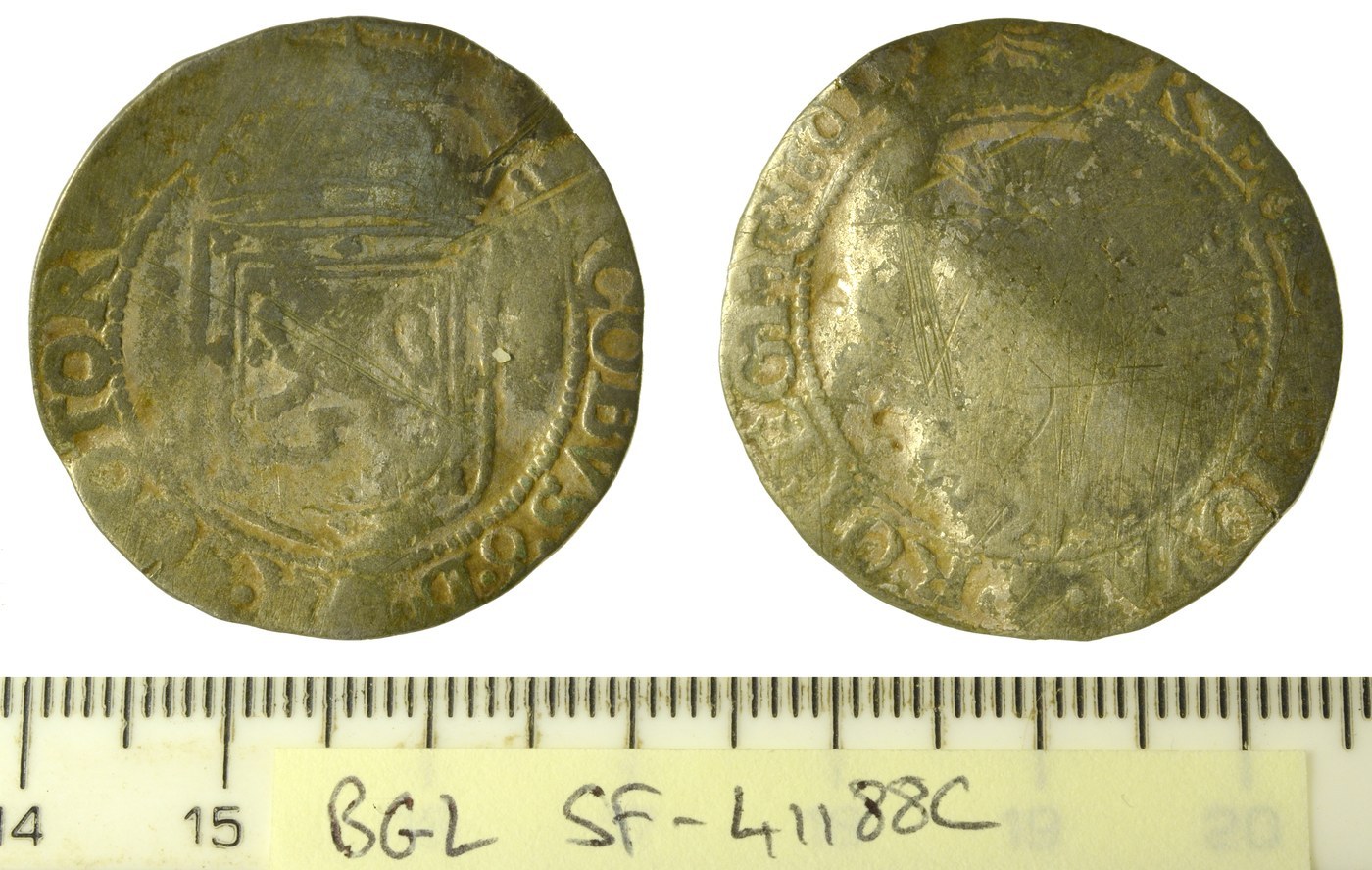
A hammered silver Scottish merk of James VI, showing a crowned heraldic shield of Scotland and a crowned thistle with a Latin legend.
- Country
- Scotland
- Denomination
- Merk
- Metal
- Silver
Got a coin like this?
Identify any coin from a photo, free.
Overview
The Thistle Merk is a hammered silver coin of the Kingdom of Scotland struck during the reign of James VI (1567–1625). Valued at one merk — thirteen shillings and fourpence in the money of Scots — it takes its collector name from the prominent thistle, the national emblem of Scotland, that dominates one face.
One side carries a crowned heraldic shield bearing the Scottish arms within a decorative border, while the other shows a crowned thistle sprig encircled by a Latin legend. Like all coinage of its era it was struck by hand between two dies, so each surviving piece has a slightly irregular, out-of-round flan and its own individual character.
The photographed example belongs to the long span of James VI's Scottish reign (1567–1625), the era before the Union of the Crowns brought James to the English throne as James I in 1603. The merk was part of a related family of denominations that also included half, quarter, and smaller thistle-marked pieces.
History & Background
James VI became King of Scots as an infant in 1567 and reigned until his death in 1625, from 1603 also ruling England and Ireland as James I after the Union of the Crowns. His long Scottish coinage passed through numerous phases and reforms, and silver denominations were repeatedly restruck and revalued as the Scottish money system evolved and as its value diverged sharply from English sterling.
The merk — worth thirteen shillings and fourpence Scots — was a major silver denomination of the period, and the thistle-marked issues gave the coin its enduring name. The thistle had by this time become firmly established as Scotland's royal and national emblem, and its appearance on the coinage, crowned and surrounded by a pious Latin motto, projected both national identity and the authority of the crown.
Because these coins were produced entirely by the hammered method at the Scottish mint in Edinburgh, before mechanized minting became standard, they are hand-made survivors of a distinct chapter in Scotland's separate monetary history — one that ended when Scottish and English coinage was assimilated following the Union.
How to Identify
One face shows a crowned heraldic shield bearing the arms of Scotland, set within a decorative border, with a Latin legend giving the king's titles running around the rim. The crowned shield and the surrounding royal legend are core diagnostics of the type.
The other face displays a crowned thistle sprig — the coin's namesake emblem — encircled by a Latin legend. This crowned-thistle design is the single most distinctive feature of the merk and immediately separates it from other Scottish silver of the reign that use different reverse devices.
The coin is hammered silver, so expect a slightly uneven, out-of-round flan, hand-cut lettering, and the soft or occasionally doubled relief of hand-struck work rather than the crisp, uniform edges of machine-made coins. Because a whole family of related denominations shares the thistle motif at different sizes, the actual diameter and weight must be measured against published specifications to confirm the piece is a full merk rather than a fraction.
Value & Collectibility
As a genuine hammered silver coin of James VI roughly four centuries old, the Thistle Merk is a collectable survivor of Scotland's independent coinage that trades well above its silver content. Value is driven by grade, strength of strike, centering, and overall eye appeal rather than by any single fixed figure.
Worn but authentic examples typically change hands for solid sums in the mid range for period Scottish hammered silver, while sharp, well-centered coins with clear legends and attractive toning can command considerably more at specialist auction. Scarcer die varieties and exceptional preservation add further premiums.
Because the type is old, hand-struck, and occasionally faked or clipped, condition and verified attribution heavily influence what a given coin realizes. Anyone valuing a specific piece should consult recent auction records for matching Scottish merks and treat any single quoted price as context rather than a guarantee.
Frequently asked questions
What was a merk worth?
A merk equalled thirteen shillings and fourpence in the money of Scots. It was a major silver denomination during the reign of James VI, and related half- and quarter-merk coins also circulated.
Why is it called a Thistle Merk?
The name comes from the crowned thistle — Scotland's national emblem — that features prominently on one face of the coin, distinguishing it from other Scottish silver of the reign.
Which king issued the Thistle Merk?
It was struck under James VI, King of Scots from 1567 to 1625, who from 1603 also became James I of England following the Union of the Crowns.
Why does the coin look uneven and hand-made?
It was struck by hand between two dies, the hammered method used before mechanized minting reached Britain, which gives each coin a slightly irregular flan and hand-cut lettering.
Thistle Merk guides
In-depth guides for identifying, valuing, and collecting Thistle Merk.
Other coins you may enjoy
English Sixpence
Early 1600s (James I, 1603-1625)
Sixpence of James I
1603-1625
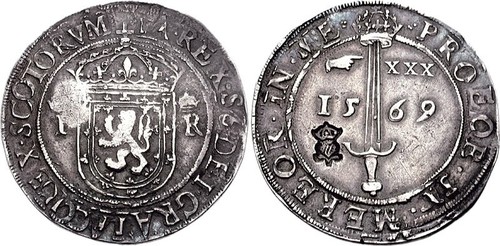
James VI Ryal
1567–1571
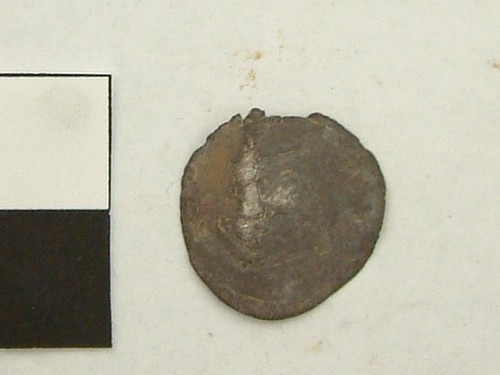
Quarter Merk
c. 1580–1691
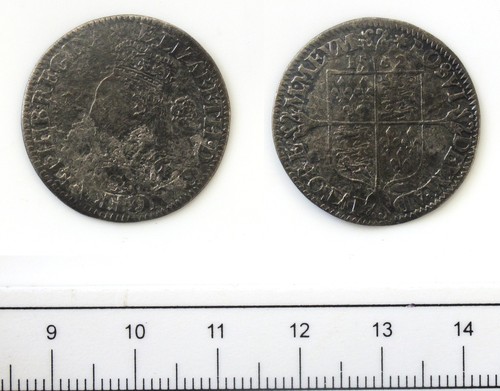
Sixpence of Elizabeth I
1560–1603
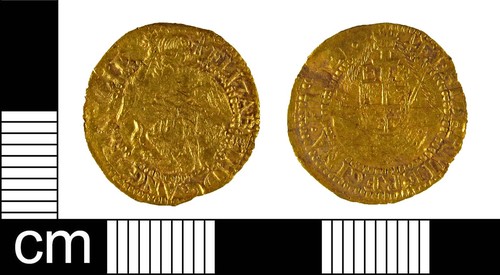
Quarter Angel of Elizabeth I
1581-1583
Laurel
1619-1625
Mary I Groat
1553-1558
Medieval Coin
c. 500–1500 (Medieval)
Half Thistle Merk
1567-1625
Irish Pistole
1640s (17th century)
Scottish Coin (Uncertain)
1625-1649