
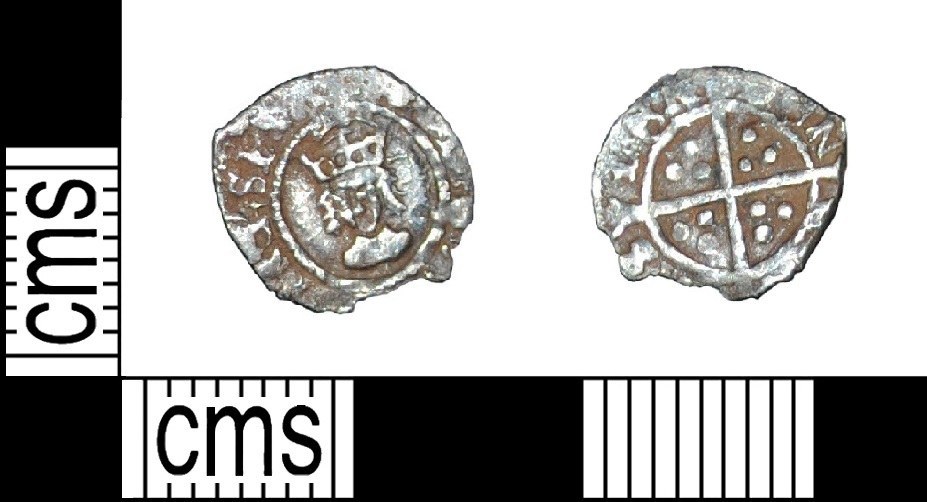
Halfpenny of Henry VIII
A tiny hand-struck Tudor silver halfpenny of Henry VIII, showing a crowned facing bust on the obverse and a long cross over a shield of arms on the reverse.
- Country
- England
- Denomination
- 1/2 Penny
- Metal
- Silver
Got a coin like this?
Identify any coin from a photo, free.
Overview
The halfpenny of Henry VIII is one of the smallest English silver coins of the Tudor period, worth half of a penny and struck by hand rather than by machine. On the example shown here the obverse carries a crowned facing bust of the king set within a beaded inner circle, while the reverse displays a long cross with a shield of the royal arms, a layout consistent with the King's second coinage of roughly 1526 to 1544.
Because the coin is so small, only a few millimetres across, its details are shallow and often softly struck, and much of the surrounding legend is frequently weak, crowded, or off the flan. Collectors value these little coins as affordable, tangible relics of Henry VIII's long reign rather than as high-grade rarities, and well-centred pieces with a clear portrait are prized.
The halfpenny circulated as everyday small change alongside the penny, groat, and larger silver, handling the minor transactions of ordinary Tudor life.
History & Background
Henry VIII ruled England from 1509 to 1547, and his coinage is usually divided into three phases. The first coinage (about 1509 to 1526) closely copied the style of his father Henry VII. The second coinage (about 1526 to 1544), the period represented by this halfpenny, introduced revised standards and continued the small facing-bust design used for the lowest silver denominations.
During the second coinage the halfpenny was struck in good sterling-standard silver at the royal mint in the Tower of London and, at various times, at the ecclesiastical mints of Canterbury and York, which operated under royal licence for the archbishops. From 1544 onward Henry's later, heavily debased issues drastically reduced the silver content of the coinage, so pieces struck in the closing years of the reign differ in fabric and appearance from the earlier second-coinage halfpennies.
As a denomination the halfpenny had a long life in England reaching back to the medieval hammered series, and Henry VIII's tiny silver halfpennies represent one of the last generations of the coin before Tudor and later reforms reshaped English small change.
How to Identify
Look first for the crowned facing bust of the king inside a beaded inner circle on the obverse; this front-facing portrait, rather than a profile, is typical of the small silver denominations of the second coinage. The reverse shows a long cross whose arms reach to the edge, combined with a shield bearing the royal arms, matching the cross-and-shield design seen on the photographed coin.
Size and metal are strong clues: the halfpenny is a very small, thin silver disc, roughly 10 to 12 millimetres across and light in weight, noticeably smaller than the penny and far smaller than the groat. Any surviving legend is in Latin and abbreviated, and on such a small flan it is commonly incomplete. Small symbols known as mint marks (initial marks) at the start of the legend, together with mint-specific initials, can help attribute a piece to the Tower, Canterbury, or York mint.
Because these coins were individually hammered, expect slightly irregular, non-circular flans, off-centre striking, and uneven detail. Genuine wear should be soft and consistent with age rather than cast-looking or tooled.
Value & Collectibility
As small, widely produced silver coins, Henry VIII halfpennies are generally among the more affordable Tudor pieces, and value is driven mainly by the clarity of the portrait, how much of the legend and mint mark survives, and overall eye appeal rather than by precious-metal content. Well-centred examples with a bold facing bust and identifiable mint attribution command a clear premium over worn, chipped, or badly off-centre coins.
Because the flans are tiny and the strikes shallow, high-grade survivors are proportionally scarce, so condition matters a great deal for these coins. Ranges vary widely with the market and with the specific mint and mint mark; a heavily worn piece is modest in value, while a sharp, attractively toned example is worth substantially more.
For any purchase or valuation, attribution to mint and coinage phase by a specialist in English hammered coinage is worthwhile, as it materially affects desirability.
Frequently asked questions
How big is a Henry VIII halfpenny?
It is very small, typically only about 10 to 12 millimetres across and thin, making it one of the tiniest English silver coins of the Tudor period.
Why does the king face forward instead of in profile?
The small silver denominations of Henry VIII's second coinage used a crowned facing bust, unlike the profile portraits seen on some larger coins, so a front-facing portrait is normal for the halfpenny.
What is on the reverse of the coin?
The reverse shows a long cross whose arms extend to the edge combined with a shield of the royal arms, the cross-and-shield layout visible on this example.
Is it made of real silver?
Second-coinage halfpennies of roughly 1526 to 1544 were struck in sterling-standard silver; Henry VIII's later issues from 1544 onward were heavily debased, so fabric can differ on the latest coins of the reign.
Why is the lettering so hard to read?
The flan is tiny and the coins were struck by hand, so the abbreviated Latin legend is often crowded, weakly struck, or partly off the edge of the coin.
Halfpenny of Henry VIII guides
In-depth guides for identifying, valuing, and collecting Halfpenny of Henry VIII.
Other coins you may enjoy
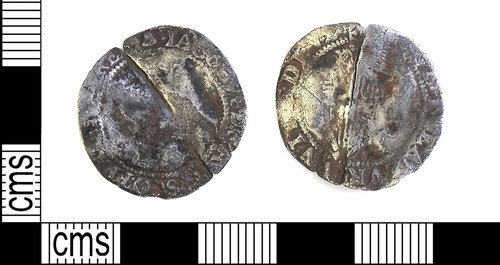
English Sixpence
Early 1600s (James I, 1603-1625)
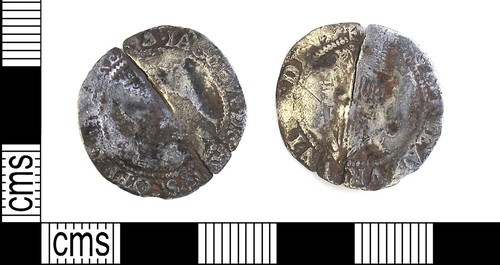
Sixpence of James I
1603-1625
Thistle Merk
1567–1625
James VI Ryal
1567–1571
Quarter Merk
c. 1580–1691
Sixpence of Elizabeth I
1560–1603
Quarter Angel of Elizabeth I
1581-1583
Laurel
1619-1625
Mary I Groat
1553-1558
Medieval Coin
c. 500–1500 (Medieval)
Half Thistle Merk
1567-1625
Irish Pistole
1640s (17th century)