
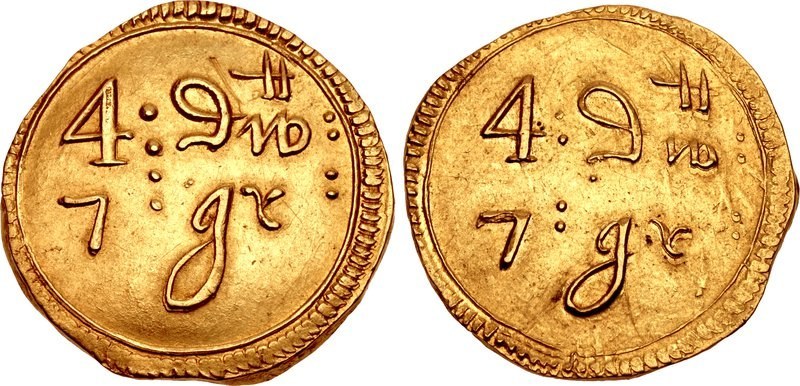
Irish Pistole
A rare hammered gold emergency coin of 1640s Ireland, marked with its weight in pennyweights and grains rather than a portrait, and rated as a pistole.
- Country
- Ireland
- Denomination
- Pistole
- Metal
- Gold
Got a coin like this?
Identify any coin from a photo, free.
Overview
The Irish Pistole is a rare hammered gold emergency coin associated with Ireland in the 1640s, a decade of war and coin shortage. Rather than a royal portrait, it carries stamped denominal specifications — a weight value expressed in pennyweights and grains — on the face, so that its worth could be judged directly from its gold content. The photographed example shows these weight-based markings rather than a heraldic or portrait design.
The name "pistole" is borrowed from the widely circulated Spanish gold coin of the period, used across Europe as a convenient unit for a small gold piece of roughly this size. In Ireland the term was applied to locally produced emergency gold rated at a comparable value, alongside a heavier double pistole.
Because it was struck by hand under wartime conditions, each surviving piece is individual: an irregular flan, hand-punched value marks, and simple utilitarian design are all characteristic. These are austere, bullion-style coins made for necessity rather than display, which is exactly what the observed weight markings reflect.
History & Background
The 1640s were a period of upheaval in Ireland, encompassing the Irish Rebellion of 1641 and the Confederate Wars that followed. With normal coin supplies disrupted and regular royal minting interrupted, local authorities produced emergency money — including gold pieces — to pay soldiers and settle debts. The Irish gold pistole belongs to this body of emergency and privately authorised coinage.
These gold issues are traditionally linked to the crisis administration in Munster and are among the rarest of all Irish coins. Unlike ordinary regal coinage, they bear no monarch's effigy or full coat of arms; instead each piece was validated by its stamped weight, allowing it to pass at a value fixed by its gold content in an environment where trust in issued coin had broken down.
Only a very small number of these gold pistoles and double pistoles are known today, and they were produced over a short span within the war years rather than as a continuing regular series. This gives them a status closer to historical relics of a specific emergency than to everyday circulating money.
How to Identify
The most telling feature is the absence of a portrait. Both faces present denominal specifications — a stamped weight in pennyweights and grains — rather than a royal bust or a full heraldic shield. A small hammered gold coin whose design is essentially a punched weight statement is the core signature of the Irish emergency pistole.
The flan is irregular and the value marks are individually punched, consistent with hand production under wartime pressure. The gold is high in color and the piece is small but noticeably heavy for its size, as befits a coin rated by bullion weight. There is typically no elaborate legend, no dated inscription in the modern sense, and no machine-made uniformity.
Size and weight are the key confirmations: the pistole is the lighter denomination and the double pistole is roughly twice its weight. Because the design carries so little imagery, attribution rests heavily on measured weight, metal, fabric, and provenance rather than on reading a legend, and comparison against documented specimens is essential.
Value & Collectibility
The Irish gold pistole is exceptionally rare and, when genuine, a major numismatic rarity rather than an ordinary collector coin. Its value combines real gold content with the high premium attached to scarce 17th-century Irish emergency issues, and authenticated examples change hands at levels far above their bullion worth. Any figure should be treated as broad context, since so few pieces exist and each sale is effectively an individual event.
Condition, weight, completeness of the value marks, and above all documented provenance drive the price. Because pieces this rare and this valuable are heavily reproduced and faked, an undocumented "pistole" should be regarded with strong caution until proven.
Anyone assessing a specific piece should look to specialist auction records for the Irish emergency gold series and obtain expert examination before attaching any value. Given the rarity and the sums involved, professional authentication is not optional but essential.
Frequently asked questions
What is an Irish Pistole?
It is a rare hammered gold emergency coin associated with Ireland in the 1640s. Instead of a portrait it carries stamped weight marks (in pennyweights and grains) and was rated as a pistole, a term borrowed from the Spanish gold coin.
Why does it show weight marks instead of a king's portrait?
It was emergency money made during wartime coin shortage. With normal regal coinage disrupted, each piece was validated by its stamped gold weight so it could pass at a value set by its metal content.
Why is it called a pistole?
"Pistole" was a common European name for a small Spanish gold coin of about this size and value. Irish emergency gold of comparable weight was rated using the same familiar term, alongside a heavier double pistole.
How rare is the Irish gold pistole?
Very rare. Only a small number survive, and they are among the scarcest of all Irish coins, produced over a short span during the war years of the 1640s rather than as a continuing series.
Is my old gold coin an Irish pistole?
It is unlikely without expert confirmation. Because these are so rare and valuable, reproductions and misattributions are common; measured weight, metal, fabric, provenance, and specialist examination are needed to confirm the type.
Irish Pistole guides
In-depth guides for identifying, valuing, and collecting Irish Pistole.
Other coins you may enjoy
English Sixpence
Early 1600s (James I, 1603-1625)
Sixpence of James I
1603-1625
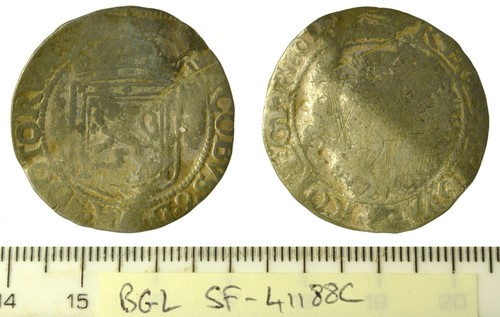
Thistle Merk
1567–1625
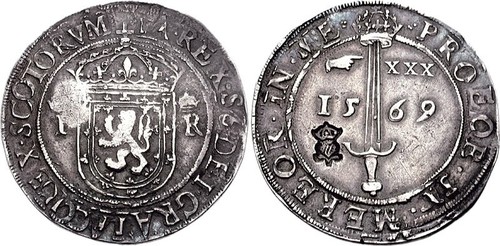
James VI Ryal
1567–1571
Quarter Merk
c. 1580–1691
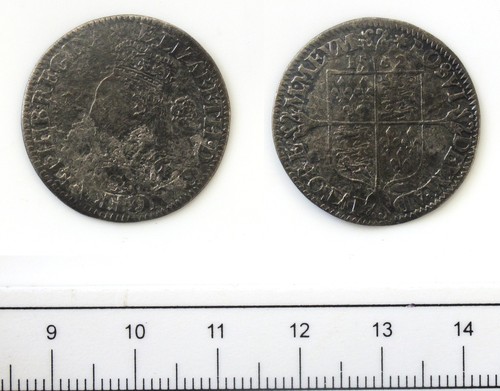
Sixpence of Elizabeth I
1560–1603
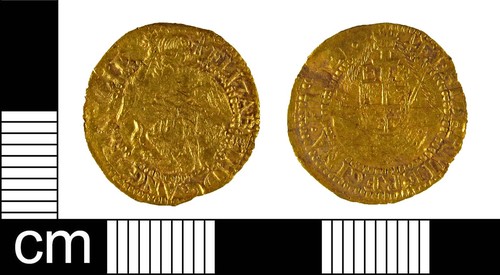
Quarter Angel of Elizabeth I
1581-1583
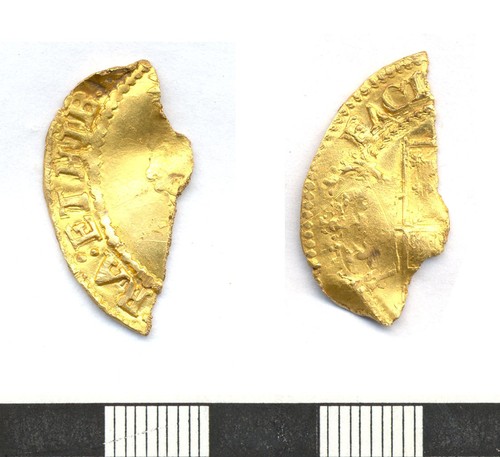
Laurel
1619-1625
Mary I Groat
1553-1558
Medieval Coin
c. 500–1500 (Medieval)
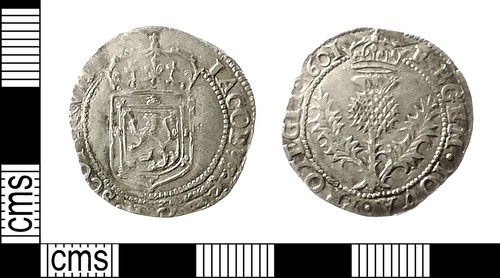
Half Thistle Merk
1567-1625
Scottish Coin (Uncertain)
1625-1649