
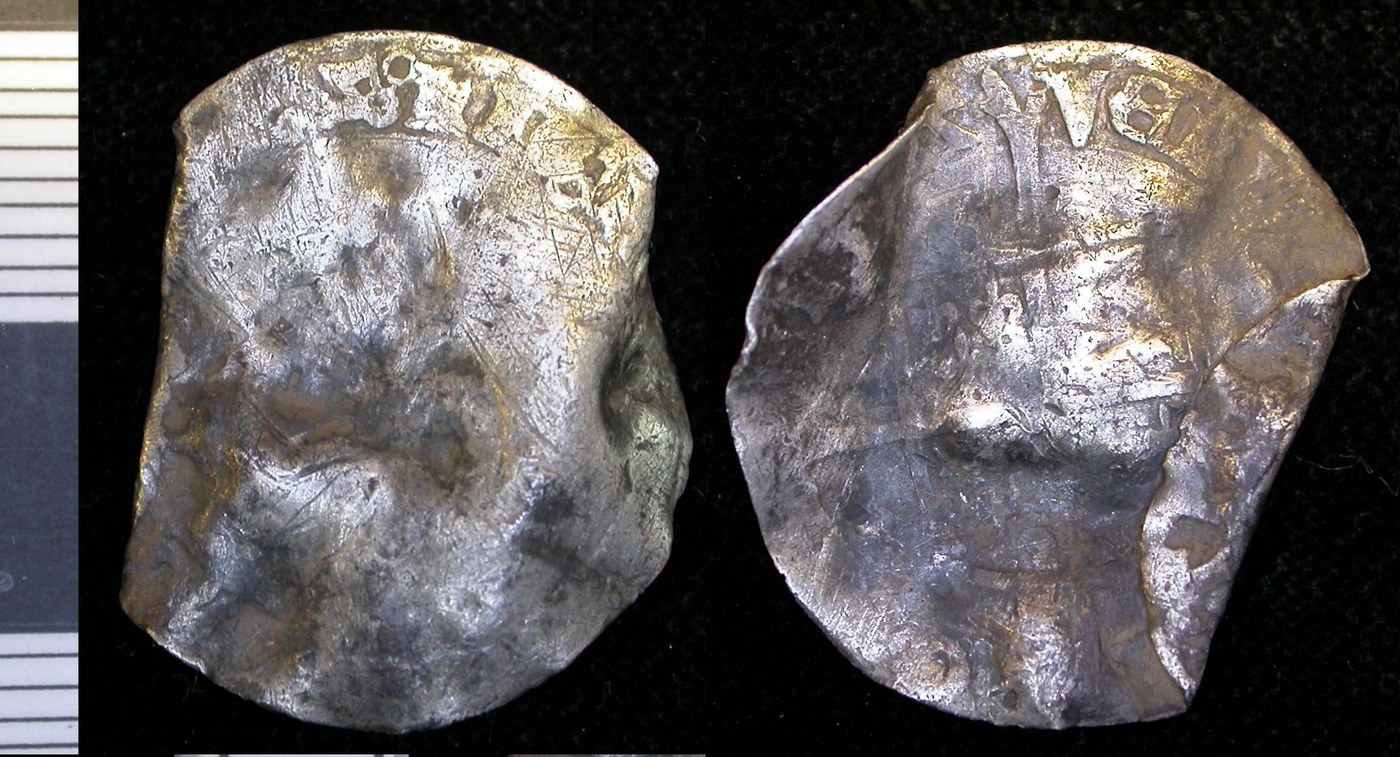
Mary I Groat
Hammered silver fourpence of Mary I (1553-1558), with her crowned bust left and the royal arms over a cross on the reverse.
- Country
- England
- Denomination
- Groat
- Metal
- Silver
Got a coin like this?
Identify any coin from a photo, free.
Overview
The Mary I Groat is a hammered silver coin worth four pence (a groat), struck during the sole reign of Mary Tudor, Queen of England, between 1553 and 1558. Unlike the shilling and sixpence of the period, which show the joint busts of Philip and Mary, the groat carries only the queen's own portrait, making it a distinctly "Mary alone" issue.
The obverse presents a crowned bust of Mary facing left within a beaded border, surrounded by a Latin royal legend. The reverse shows the long-familiar long-cross-and-shield arrangement of the English groat, with the quartered royal arms on a shield over a cross fourchée. The coin was produced by hand at the Tower Mint in London using hammered striking, so no two examples are identical in centring or strength.
History & Background
Mary I came to the throne in 1553 as the first undisputed queen regnant of England. Her short reign followed decades of coinage debasement under Henry VIII and Edward VI, and her groats were struck on a comparatively good silver standard as part of the wider effort to restore confidence in the currency.
The groat had been a workhorse denomination of English coinage since the fourteenth century, and Mary's version continued that tradition largely unchanged in form. Her marriage to Philip of Spain in 1554 reshaped the higher silver denominations, but the smaller coins - groat, half-groat, and penny - kept the queen's sole portrait throughout the reign. Production was centred on the Tower Mint in London.
How to Identify
Look first at the obverse: a crowned female bust facing left is the key identifier, distinguishing this from the joint Philip-and-Mary coins. The legend typically reads a form of MARIA D G ANG FR Z HIB REGINA ("Mary by the grace of God Queen of England, France and Ireland"). The reverse legend commonly carries Mary's motto VERITAS TEMPORIS FILIA ("Truth, the daughter of Time"), which is a strong diagnostic feature.
The reverse design is a shield of the quartered royal arms set over a long cross that divides the legend. A pomegranate mint mark - a badge inherited from her mother, Catherine of Aragon - is frequently seen and helps confirm the attribution. The coin is a small silver piece, roughly 23-25 mm across and around 2 grams, struck by hand so the flan is often slightly irregular or off-centre.
Value & Collectibility
Value depends heavily on grade, strike quality, and how much of the legend and portrait detail survives. As a genuinely Tudor, single-reign issue of a short-lived monarch, the Mary I groat is a sought-after collector coin, and well-centred examples with a clear portrait command a solid premium over worn, clipped, or weakly struck pieces.
Most circulated examples trade in the moderate collector range typical of mid-sixteenth-century English hammered silver, while sharp, well-preserved specimens with full legends sit considerably higher. Because condition and eye appeal vary enormously on hammered coins, treat any single figure with caution and compare recent auction results for coins in similar grade rather than relying on a fixed price.
Frequently asked questions
How much was a Mary I groat worth when it was in use?
A groat was worth four pence (fourpence), a mid-level everyday silver denomination in Tudor England.
Why does the groat show only Mary and not Philip?
The smaller silver coins - groat, half-groat and penny - kept Mary's sole portrait, while the shilling and sixpence carried the joint busts of Philip and Mary after their 1554 marriage.
What does the reverse motto mean?
The reverse legend VERITAS TEMPORIS FILIA translates as "Truth, the daughter of Time," which was Mary I's personal motto and a useful identifying feature.
What metal is the Mary I groat made of?
It is a hammered silver coin, struck on a restored silver standard after the debasements of the preceding reigns.
Where were Mary I groats made?
They were struck by hand at the Tower Mint in London during her reign, 1553 to 1558.
Mary I Groat guides
In-depth guides for identifying, valuing, and collecting Mary I Groat.
Other coins you may enjoy
English Sixpence
Early 1600s (James I, 1603-1625)
Sixpence of James I
1603-1625
Thistle Merk
1567–1625
James VI Ryal
1567–1571
Quarter Merk
c. 1580–1691
Sixpence of Elizabeth I
1560–1603
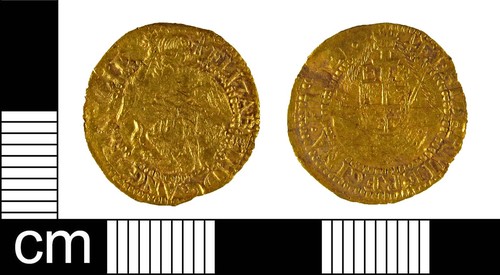
Quarter Angel of Elizabeth I
1581-1583
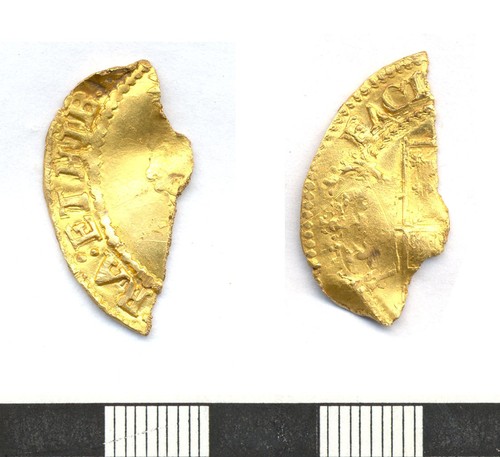
Laurel
1619-1625
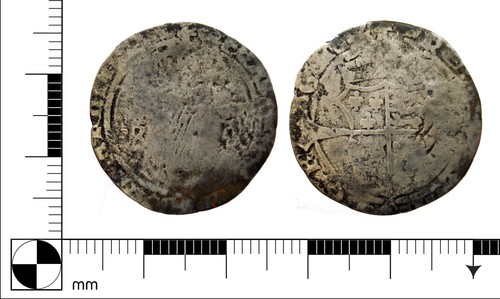
Medieval Coin
c. 500–1500 (Medieval)
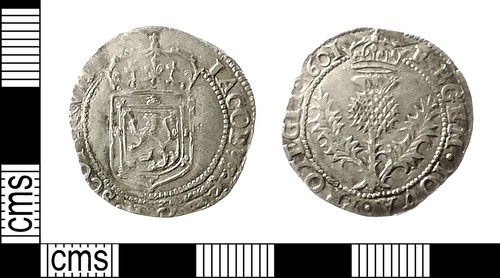
Half Thistle Merk
1567-1625
Irish Pistole
1640s (17th century)
Scottish Coin (Uncertain)
1625-1649