
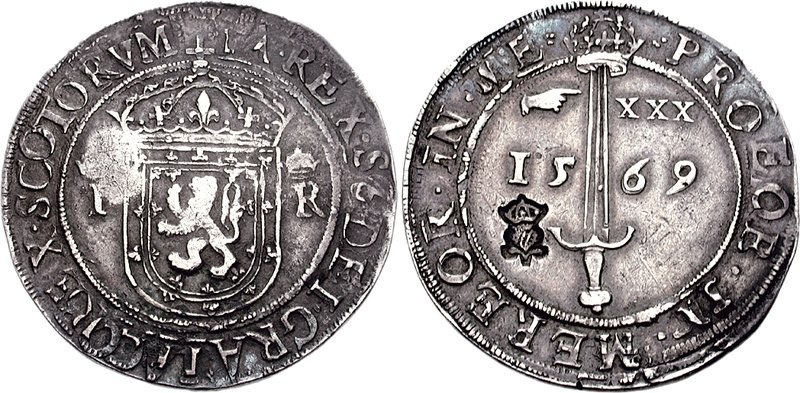
James VI Ryal
A large hammered silver Scottish ryal of James VI, showing a crowned lion-rampant shield and a mailed swordhand grasping an upright sword, dated 1569.
- Country
- Scotland
- Denomination
- Ryal
- Metal
- Silver
Got a coin like this?
Identify any coin from a photo, free.
Overview
The James VI Ryal is a large hammered silver coin of the Kingdom of Scotland, struck early in the reign of James VI. Because of its striking reverse it is popularly known as the "Sword Dollar." It was a substantial piece of currency in its day, valued at thirty shillings Scots when first issued.
One side carries a crowned heraldic shield charged with the Scottish lion rampant; the other shows a mailed hand emerging to grasp an upright sword, with a date in the field. The photographed example is dated 1569, placing it within the short 1567–1571 run in which this type was produced.
As a hand-struck coin of the sixteenth century, each ryal is slightly irregular in shape and individual in detail. It represents Scottish coinage as a distinct national series, separate from the contemporary English money of Elizabeth I.
History & Background
James VI came to the Scottish throne in 1567 as an infant, following the forced abdication of his mother, Mary, Queen of Scots. The ryal, or sword dollar, was among the coinage issued in the opening years of his long reign, during a period when Scotland was governed through a series of regents.
The denomination was struck in silver at a large module and circulated as a major trade and store-of-value coin. It was accompanied by fractional pieces — the two-thirds ryal and one-third ryal — sharing the same swordhand design. The type was produced across a span of dated years, with 1569 being one of them.
Because the metal value of coins shifted over time, examples of this ryal were later officially countermarked with a small stamp to revalue them upward, a practice that reflects the monetary pressures of the late sixteenth century. Coins bearing such a countermark carry an additional layer of Scottish numismatic history.
How to Identify
The obverse (as observed on the coin) shows a crowned shield bearing the Scottish lion rampant within a tressure, surrounded by a Latin legend naming James as king of Scots. The crowned lion-shield is the immediate identifier of a Scottish royal coin of this era.
The reverse is the type's signature: a mailed (armored) hand issuing from the field and grasping an upright sword, with the date — here 1569 — placed in the field beside it. The accompanying motto refers to the sword, expressing that it is drawn for the deserving and against the unworthy. This swordhand design is what earns the coin its "Sword Dollar" nickname.
The piece is hammered silver and large for the period, so expect a broad, slightly out-of-round flan, hand-cut lettering, and the soft or occasionally doubled relief of hand-struck work. Some surviving ryals also bear a small later countermark applied to revalue the coin; its presence or absence is a useful diagnostic when attributing a specific example.
Value & Collectibility
As a genuine large hammered silver coin of sixteenth-century Scotland, roughly 450 years old, the James VI Ryal is a desirable collector piece that trades well above its silver content. Value depends heavily on grade, strength of strike, centering, the date, and whether the coin carries an official countermark.
Honestly worn but authentic examples occupy a solid mid-range for early Scottish hammered silver, while sharply struck, well-centered, and attractively toned coins can command substantially more at specialist auction. Scottish hammered silver of this size and eye appeal is actively sought, so premium examples are prized.
Because the type is old, hand-struck, and occasionally faked or clipped, verified authenticity and accurate attribution strongly influence what a given coin realizes. Anyone valuing a specific piece should consult recent auction records for the matching date and countermark status, treating any single quoted figure as context rather than a fixed price.
Frequently asked questions
Why is it called a "Sword Dollar"?
The nickname comes from the reverse design, which shows a mailed hand grasping an upright sword. As a large silver coin of dollar size, it became known to collectors as the sword dollar.
What was the coin worth when issued?
The ryal was valued at thirty shillings Scots when first struck. Scottish shillings were worth far less than English ones, so this reflected Scottish, not English, money of the period.
What does the date 1569 tell me?
It places the coin within the 1567–1571 run of the type, struck early in James VI's reign while Scotland was governed by regents. The date appears in the field beside the sword.
Why do some examples have a small stamp on them?
Certain ryals were officially countermarked later in the century to revalue them upward as metal prices changed. A genuine countermark adds historical interest and can affect value.
Is this an English or Scottish coin?
It is Scottish. The Kingdom of Scotland had its own coinage under James VI, separate from the English coinage of Elizabeth I, though James later also became James I of England in 1603.
James VI Ryal guides
In-depth guides for identifying, valuing, and collecting James VI Ryal.
Other coins you may enjoy
English Sixpence
Early 1600s (James I, 1603-1625)
Sixpence of James I
1603-1625
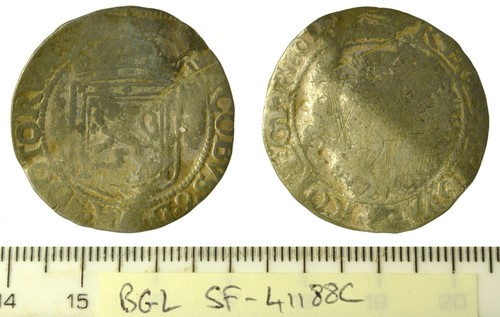
Thistle Merk
1567–1625
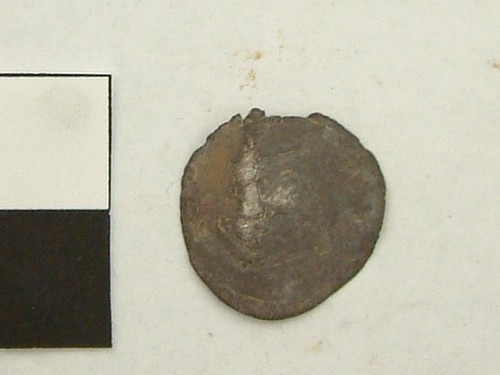
Quarter Merk
c. 1580–1691
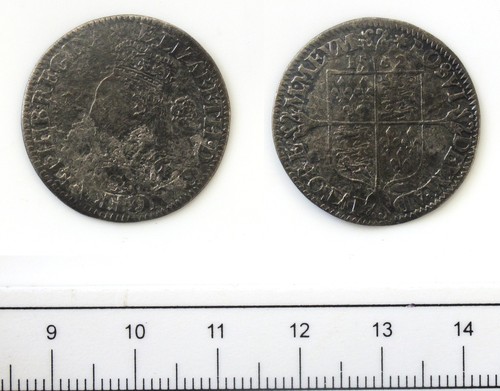
Sixpence of Elizabeth I
1560–1603
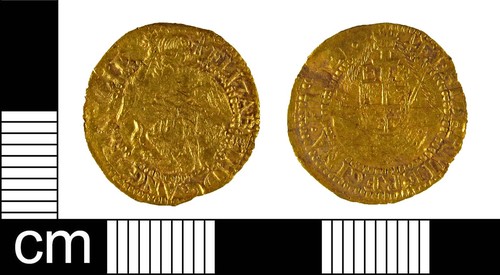
Quarter Angel of Elizabeth I
1581-1583
Laurel
1619-1625
Mary I Groat
1553-1558
Medieval Coin
c. 500–1500 (Medieval)
Half Thistle Merk
1567-1625
Irish Pistole
1640s (17th century)
Scottish Coin (Uncertain)
1625-1649