
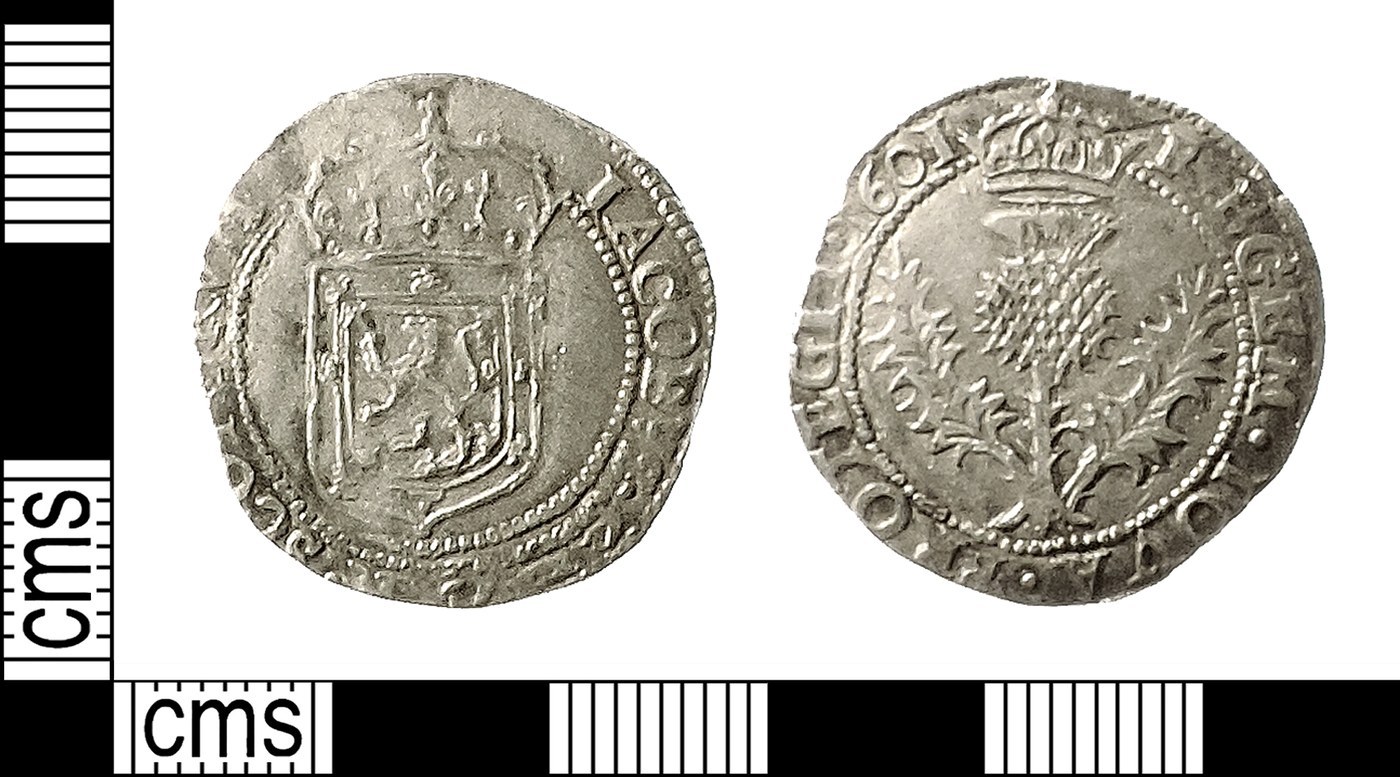
Half Thistle Merk
A hammered Scottish silver half merk of James VI, showing a crowned coat of arms on one side and a crowned thistle on the other.
- Country
- Scotland
- Denomination
- Half Merk
- Metal
- Silver
Got a coin like this?
Identify any coin from a photo, free.
Overview
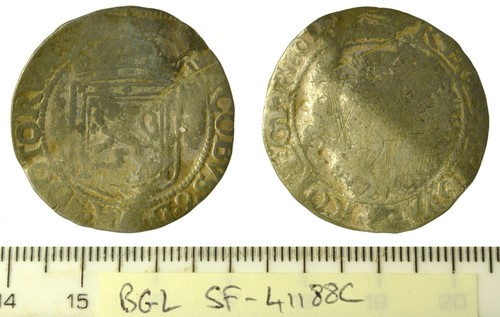
The Half Thistle Merk is a hammered silver coin of Scotland struck during the reign of James VI (1567-1625). It belongs to the "thistle merk" coinage, so called because the reverse is dominated by a Scottish thistle, the national emblem, usually shown crowned and within a decorative border. The obverse carries the royal coat of arms on a heraldic shield, surrounded by an abbreviated Latin legend naming the king.
As its name states, the coin is a half of the thistle merk, the merk being a Scottish money-of-account worth thirteen shillings and fourpence Scots. The half merk was therefore valued at six shillings and eightpence Scots, a modest but useful piece in everyday Scottish circulation of the period.
Because it is a hammered coin, each example was struck by hand between two dies on a slightly irregular flan, so surviving pieces vary in centering, sharpness, and how much of the legend is visible. The combination of a heraldic shield and a bold thistle makes the type immediately recognizable and popular with collectors of Scottish and hammered coinage.
History & Background
James VI came to the Scottish throne as an infant in 1567 and reigned until his death in 1625, from 1603 also ruling England as James I after the Union of the Crowns. His long Scottish reign saw a series of silver coinages, and the thistle merk series belongs to the later part of that reign, when the merk and its fractions were issued in silver of the Scottish standard.
The half merk fitted into a Scottish money system that was by this date considerably weaker than the English pound: the Scottish pound was worth far less than the pound sterling, so denominations such as the merk and half merk represented comparatively small amounts of English money. Coins were produced at the royal mint in Edinburgh, and dies changed over time, producing minor variations in the arms, the thistle, and the surrounding legends.
The thistle became a deliberate statement of Scottish identity on the coinage, and its prominent use on the reverse of this series ties the money directly to the national emblem. After the Union of the Crowns in 1603 Scottish coinage continued under James, but the half thistle merk remains associated with his reign and with the distinct Scottish currency that persisted alongside the English system.
How to Identify
Identify the Half Thistle Merk by its two main devices. The obverse shows a heraldic shield bearing the royal arms of Scotland, surrounded by an abbreviated Latin legend that names James as king. The reverse is the key feature: a thistle, typically crowned, set within a decorative circular border, again with a Latin legend around the edge.
The legends are in abbreviated Latin and, because the coin is hammered, are often weak or partly off the flan. Look for the king's name and title on the obverse and, on some issues, a mark of value indicating the denomination. The coin is struck in silver on a fairly broad, thin flan, smaller and lighter than the full thistle merk, which is the main way to separate the half from the whole merk of the same design.
Genuine pieces show hand-struck irregularities such as uneven centering, slightly oval flans, and legends that run off the edge. Precise attribution within the series depends on matching the exact style of the shield and thistle, the legends, and any date or value mark to published references on Scottish coins of James VI, since dies and details changed over the course of the coinage.
Value & Collectibility
Value depends on which coin within the series it is, the strength of strike, how much of the legend and design is clear, and overall condition. Heavily worn examples with soft detail are the most affordable and are an accessible route into genuine Scottish hammered silver, while sharply struck coins with a full crowned thistle, clear shield, and readable legends command significantly more.
As with all hammered coinage, eye appeal matters as much as technical grade. A well-centered coin with a bold thistle and legible legends is worth considerably more than a weakly struck, clipped, or corroded piece of the same type. Attractive toning and problem-free silver surfaces add to desirability.
Because this is a genuinely old Scottish coin, prices span a wide range depending on condition and the specific variety. For any purchase of consequence, confirm authenticity and grade through a specialist in Scottish or hammered coinage or a reputable auction record rather than relying on a single listing or a rough visual match.
Frequently asked questions
What was a Half Thistle Merk worth?
The merk was a Scottish unit worth thirteen shillings and fourpence Scots, so the half merk was valued at six shillings and eightpence Scots. In English terms this was a small sum, because the Scottish pound was worth much less than the pound sterling.
Why does the coin have a thistle on it?
The thistle is the national emblem of Scotland, and the whole series is named the "thistle merk" because of the prominent crowned thistle on the reverse. Its use was a deliberate statement of Scottish identity on the coinage of James VI.
How do I tell a half merk from a full thistle merk?
They share the same shield-and-thistle design, so the main difference is size and weight: the half merk is on a smaller, lighter flan. Any mark of value and comparison of diameter against published figures help confirm which denomination you have.
Why is my coin off-center and unevenly struck?
It is a hammered coin, struck by hand between two dies. Irregular flans, weak areas, and legends that run off the edge are completely normal for this type and are not on their own signs of damage or forgery.
Half Thistle Merk guides
In-depth guides for identifying, valuing, and collecting Half Thistle Merk.
Other coins you may enjoy
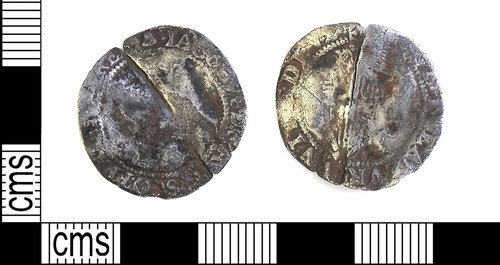
English Sixpence
Early 1600s (James I, 1603-1625)
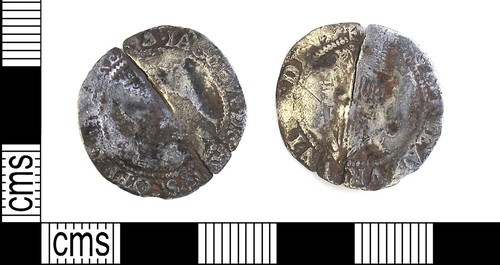
Sixpence of James I
1603-1625
Thistle Merk
1567–1625
James VI Ryal
1567–1571
Quarter Merk
c. 1580–1691
Sixpence of Elizabeth I
1560–1603
Quarter Angel of Elizabeth I
1581-1583
Laurel
1619-1625
Mary I Groat
1553-1558
Medieval Coin
c. 500–1500 (Medieval)
Irish Pistole
1640s (17th century)
Scottish Coin (Uncertain)
1625-1649