
How to Identify the Halfpenny of Henry VIII
A collector's guide to identifying a Henry VIII silver halfpenny by its crowned facing bust, cross-and-shield reverse, tiny size, mint marks, and authenticity cues.
Read the full Halfpenny of Henry VIII encyclopedia entry →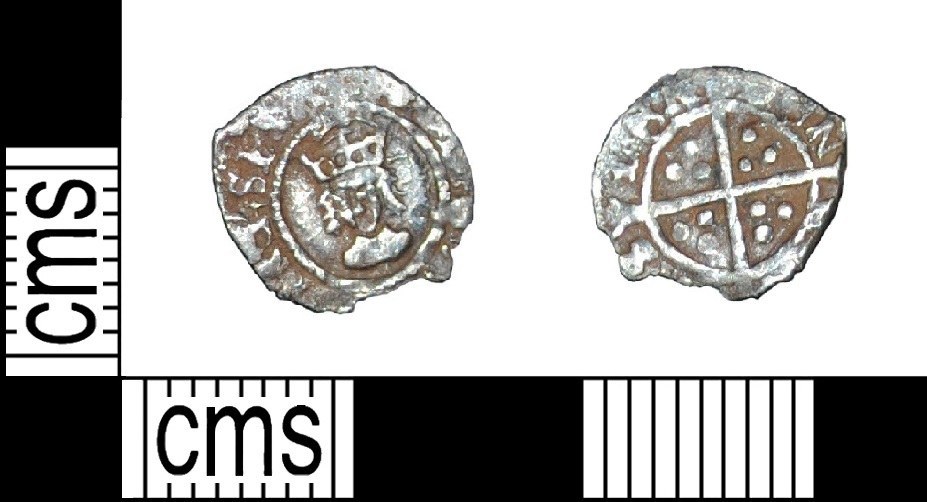
What It Is
The halfpenny of Henry VIII is a hand-struck Tudor silver coin worth half of a penny, produced during a reign that ran from 1509 to 1547. The design shown here, with a crowned facing bust and a long cross over a shield of arms, points to the second coinage of about 1526 to 1544. Its defining feature is its very small size, so identification rests on reading shallow detail on a tiny flan.
Obverse (Front)
The front should show a crowned bust of the king facing forward, set inside a beaded or linear inner circle. This facing portrait, rather than a side profile, is the key diagnostic for the small silver denominations of this period. Around the bust runs an abbreviated Latin royal legend that is frequently weak or partly off the flan; do not expect it to be fully legible.
Reverse (Back)
The reverse carries a long cross whose arms reach to the coin's edge, combined with a shield bearing the royal arms, the cross-and-shield motif. On genuine hammered pieces the cross and any surrounding legend line up with the flan somewhat unevenly because each coin was struck individually by hand.
Size, Weight, Metal, and Mint Marks
Confirm the denomination by scale: the halfpenny is a thin silver disc only about 10 to 12 millimetres across and light in the hand, clearly smaller than a penny and much smaller than a groat. The metal should be silver, sterling standard for the second coinage. Check the very start of the legend for a small symbol, the mint mark or initial mark, and for mint-specific initials that can attribute the coin to the Tower of London, Canterbury, or York mint and help narrow its date.
Look-Alikes and Authentication Cautions
The tiny facing-bust halfpennies of Henry VIII can resemble the small silver of neighbouring reigns, including late issues of Henry VII and later Tudor monarchs, so compare the portrait style, legend, and mint marks carefully before attributing a piece. Beware of cast copies, which show mushy detail, seams, or a granular surface, and of tooled or re-engraved coins. Because so many of these coins are worn and off-centre, attribution can be genuinely difficult, and confirmation by a specialist in English hammered coinage is recommended before you rely on any identification or valuation.
Frequently asked questions
What is the single best clue that a coin is a Henry VIII halfpenny?
The combination of a crowned facing bust on a very small silver flan with a long-cross-and-shield reverse is the strongest indicator, especially when a mint mark can be read at the start of the legend.
How can I tell it apart from a penny of the same king?
Size and weight are the quickest guide: the halfpenny is distinctly smaller and lighter than the penny, even though both can share the facing-bust and cross designs.
How do I attribute it to a specific mint?
Look for the initial mark and any mint-specific initials in the legend; these can point to the Tower of London, Canterbury, or York, though on worn coins they are often hard to make out.
How do I avoid buying a fake?
Favour coins with hand-struck, slightly irregular flans and soft, natural wear, avoid pieces with cast seams or granular surfaces, and seek confirmation from a specialist in English hammered coinage.