
How to Identify the Thistle Merk
A collector's guide to attributing James VI's hammered silver Scottish merk by its crowned shield, crowned thistle, legends, size, and fabric.
Read the full Thistle Merk encyclopedia entry →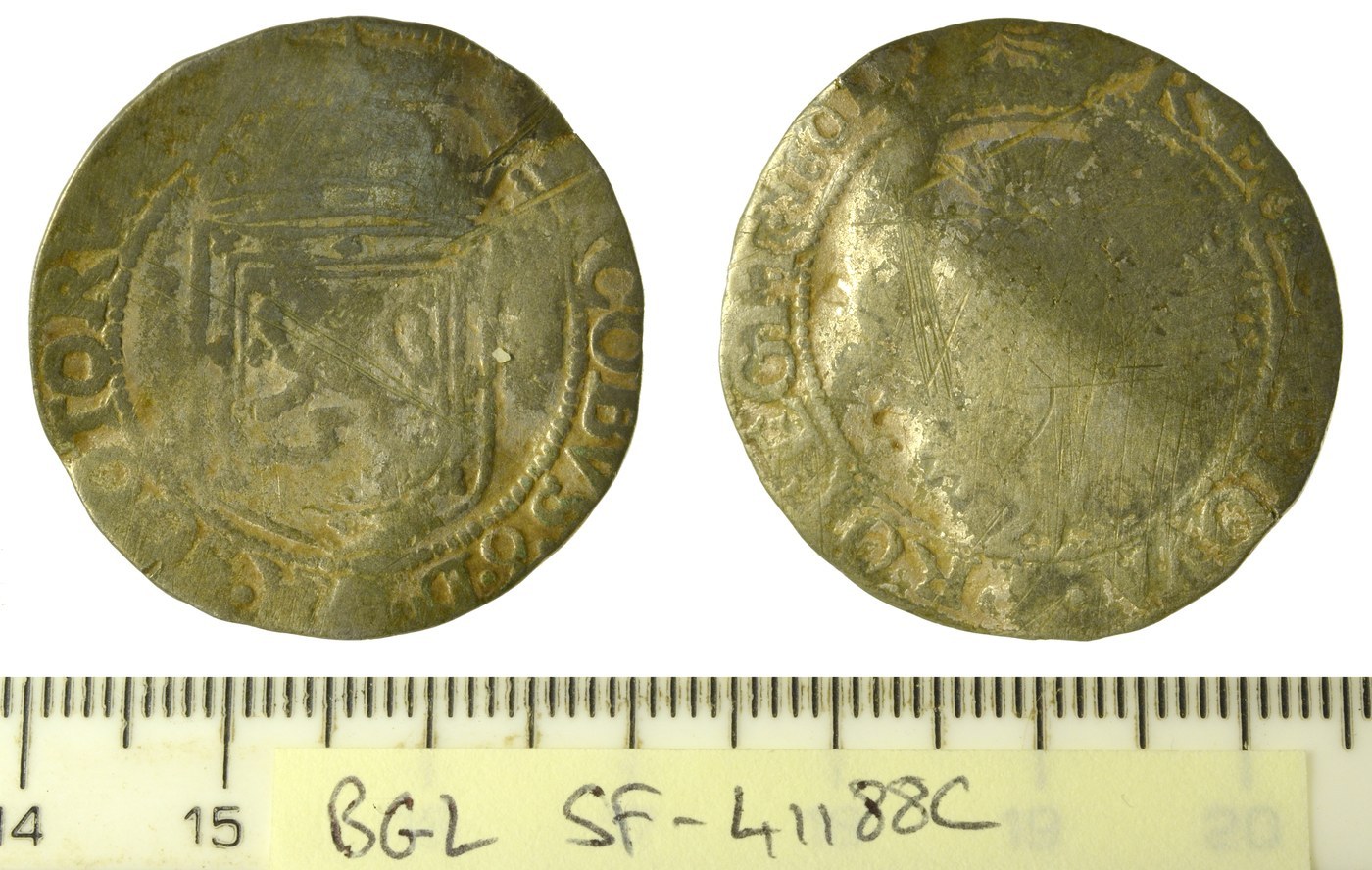
Start with the thistle. The coin's namesake face shows a crowned thistle sprig encircled by a Latin legend — this crowned-thistle device is the type's single most distinctive feature and the quickest confirmation that you are looking at a thistle-marked Scottish coin of James VI rather than another denomination or reign.
Turn to the shield side. It should show a crowned heraldic shield bearing the arms of Scotland within a decorative border, ringed by a Latin legend giving the king's royal titles. Read the lettering carefully: hand-cut legends with the king's Scottish titles help confirm both the ruler and that the piece is a Scottish rather than English issue, which matters because James's coinage spans both kingdoms.
Check fabric, size, and metal. This is a hand-hammered silver coin, so expect a slightly out-of-round flan, uneven rims, and the soft or occasionally doubled relief typical of hammered striking. Critically, weigh and measure the coin and compare against the published specifications for a full merk — the thistle emblem also appears on half, quarter, and smaller pieces, so diameter and weight are what separate a merk from its fractions. A markedly underweight coin may be clipped.
Watch for look-alikes and read any privy or mint detail. Because a whole family of thistle-marked denominations shares the same motifs at different sizes, do not judge the denomination from a photograph alone. Cross-reference the legend spelling, the arrangement of the shield, and any small marks in the legends against a standard reference for James VI Scottish silver to pin down the exact issue.
Be cautious about authentication. Early Scottish hammered silver is sometimes faked, and cast copies, tooled surfaces, and modern replicas exist. Watch for casting seams, air bubbles, unnaturally smooth fields, or lettering that lacks hand-cut variation. For any coin of significant value, seek an opinion from a specialist in Scottish hammered coinage or a reputable grading service.
Frequently asked questions
How do I tell a merk from a half or quarter merk?
They share the crowned-thistle and crowned-shield design, so denomination is confirmed by size and weight, not the design alone. Measure the diameter and weigh the coin, then compare against published specifications for the full merk.
Which side is the obverse?
The crowned heraldic shield of Scotland with the king's titles is generally treated as the obverse; the crowned thistle with its Latin legend is the reverse. Both should be present to confirm the type.
How can I be sure it isn't a cast copy?
Genuine coins are hand-struck, showing uneven flans and hand-cut lettering. Watch for casting seams, air bubbles, mushy detail, or incorrect weight. For a coin of this value, professional authentication is strongly advised.