
Scottish Coin (Uncertain)
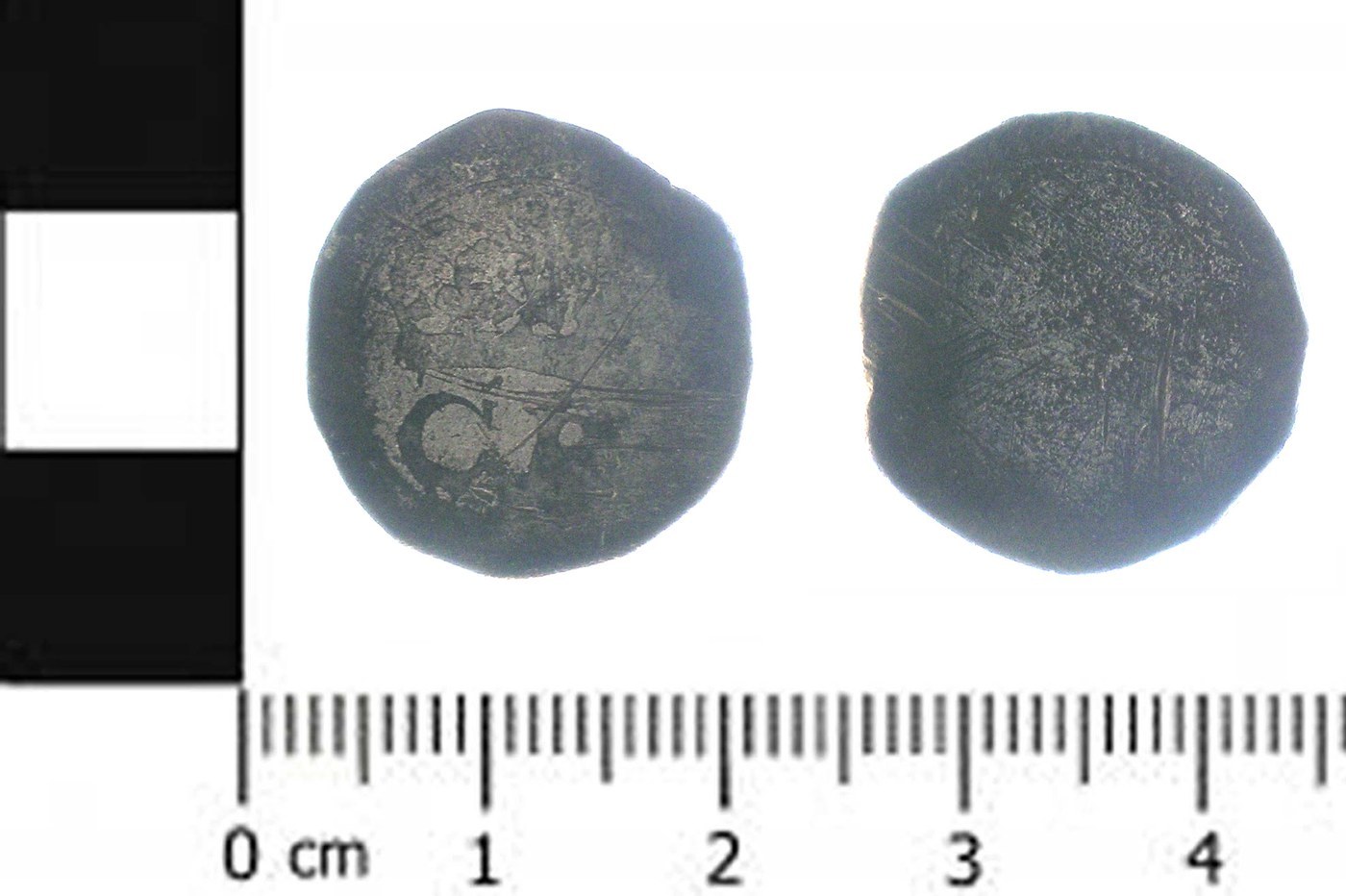
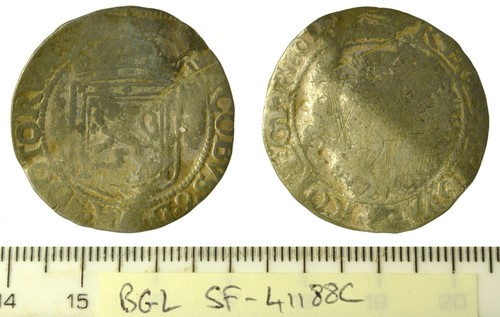
A worn hammered copper-alloy Scottish coin, apparently of the reign of Charles I, showing a bearded profile and a heraldic reverse with lettering.
- Country
- Scotland
- Denomination
- Uncertain
- Metal
- Copper alloy
Got a coin like this?
Identify any coin from a photo, free.
Overview
This is a small hammered coin in a copper alloy, apparently struck in Scotland during the reign of Charles I (1625-1649). Its exact denomination cannot be confirmed from the images alone, which is why it is catalogued as uncertain. The obverse shows a bearded profile and the reverse a heraldic design accompanied by lettering, features that are consistent with the low-value Scottish base-metal coinage of the second quarter of the seventeenth century.
Small copper and billon coins of this period were the everyday small change of Scotland, handled heavily in daily trade and rarely well preserved. Wear, corrosion, and weak striking commonly leave the legends and heraldry only partly legible, so many surviving examples can be dated to a reign and region without a firm attribution to a single named denomination.
Treated here as a representative worn Scottish copper-alloy piece of the Charles I era, the coin is of modest intrinsic value but genuine historical interest as ordinary circulating money of early Stuart Scotland.
History & Background
Charles I ruled Scotland as well as England and Ireland from 1625 until 1649. During his reign the Scottish mint at Edinburgh continued to issue base-metal small change alongside silver and gold, including copper and billon pieces intended for low-value everyday transactions. These small coins circulated widely and were struck in large quantities, which is one reason worn survivors are relatively common today.
Scotland kept its own currency system in this period, with the Scots pound valued well below the English pound, so Scottish denominations and their names differ from their English contemporaries. Base-metal issues of the Charles I era were produced by hammering blanks between engraved dies, a hand process that could yield uneven flans and variable strike quality.
The coinage of Charles I in Scotland ended with the political upheavals of the late 1640s and his execution in 1649. Because so much of this small change saw hard use before being lost or discarded, individual pieces often reach collectors in worn, corroded condition that obscures the finer detail needed for precise identification.
How to Identify
The observed obverse shows a bearded profile, consistent with the portrait style used for Charles I and his royal predecessors on Scottish coinage. The reverse carries a heraldic design together with lettering, which on Scottish base-metal coins of this era typically takes the form of a crown, thistle, or shield with an accompanying Latin legend. On this example the details are worn, so the full inscription and the precise emblem cannot be read with certainty.
The piece is struck in a copper alloy and is small and hand-made, so expect an irregular flan, off-center striking, and softened relief. These are normal characteristics of hammered small change rather than signs of a problem. The combination of a bearded bust, a heraldic reverse with text, and a base-metal fabric points to a low-denomination Scottish coin of roughly the 1625-1649 window.
Because the surviving detail is limited, this coin should be regarded as an uncertain attribution: correctly placed to Scotland and the Charles I era by style and fabric, but not confidently assigned to one specific named denomination without clearer legends, weight, and diameter measurements.
Value & Collectibility
Worn base-metal Scottish coins of the early Stuart period are generally of modest monetary value. As common, low-denomination circulating pieces that survive in large numbers, most changing hands in the low tens of dollars, with better-preserved or clearly attributed examples worth more and heavily corroded or illegible pieces worth less.
Condition and legibility drive value more than anything else for coins like this. A piece with readable legends, a clear heraldic reverse, and identifiable mint marks can be attributed to a specific denomination and commands a premium over an anonymous worn example that can only be placed to a reign.
Because the identification here is uncertain, any valuation should be treated as broad context only. For a specific coin, an in-hand examination by a dealer or specialist in Scottish hammered coinage, together with weight and diameter measurements, is the reliable route to both an attribution and a price.
Frequently asked questions
Why is this coin labelled uncertain?
The visible detail is worn, so while the bearded profile, heraldic reverse with lettering, and copper-alloy fabric point to a low-value Scottish coin of the Charles I era, the exact denomination cannot be confirmed from the images alone.
What is it made of?
It is a copper alloy, the kind of base metal used for Scotland's everyday small change in the early seventeenth century. Such coins corrode and wear easily, which often obscures their legends and heraldry.
Who is shown on the coin?
The bearded profile is consistent with the royal portrait style of Charles I, who ruled Scotland from 1625 to 1649. Without clearer legends the identification rests on style and fabric rather than a readable inscription.
Is it valuable?
Generally no. Worn Scottish base-metal coins of this period are common and typically modest in value, though clearer, better-preserved, or firmly attributed examples are worth more. Treat any figure as broad context.
How can I find out exactly what it is?
Have it examined in hand by a specialist in Scottish hammered coinage, along with its weight and diameter. Those measurements plus any legible lettering are usually what pins down a specific denomination.
Scottish Coin (Uncertain) guides
In-depth guides for identifying, valuing, and collecting Scottish Coin (Uncertain).
Other coins you may enjoy
English Sixpence
Early 1600s (James I, 1603-1625)
Sixpence of James I
1603-1625
Thistle Merk
1567–1625
James VI Ryal
1567–1571
Quarter Merk
c. 1580–1691
Sixpence of Elizabeth I
1560–1603
Quarter Angel of Elizabeth I
1581-1583
Laurel
1619-1625
Mary I Groat
1553-1558
Medieval Coin
c. 500–1500 (Medieval)
Half Thistle Merk
1567-1625
Irish Pistole
1640s (17th century)