
How to Identify the Scottish Coin (Uncertain)
A collector's guide to placing a worn Scottish copper-alloy coin to the Charles I era and narrowing its likely denomination.
Read the full Scottish Coin (Uncertain) encyclopedia entry →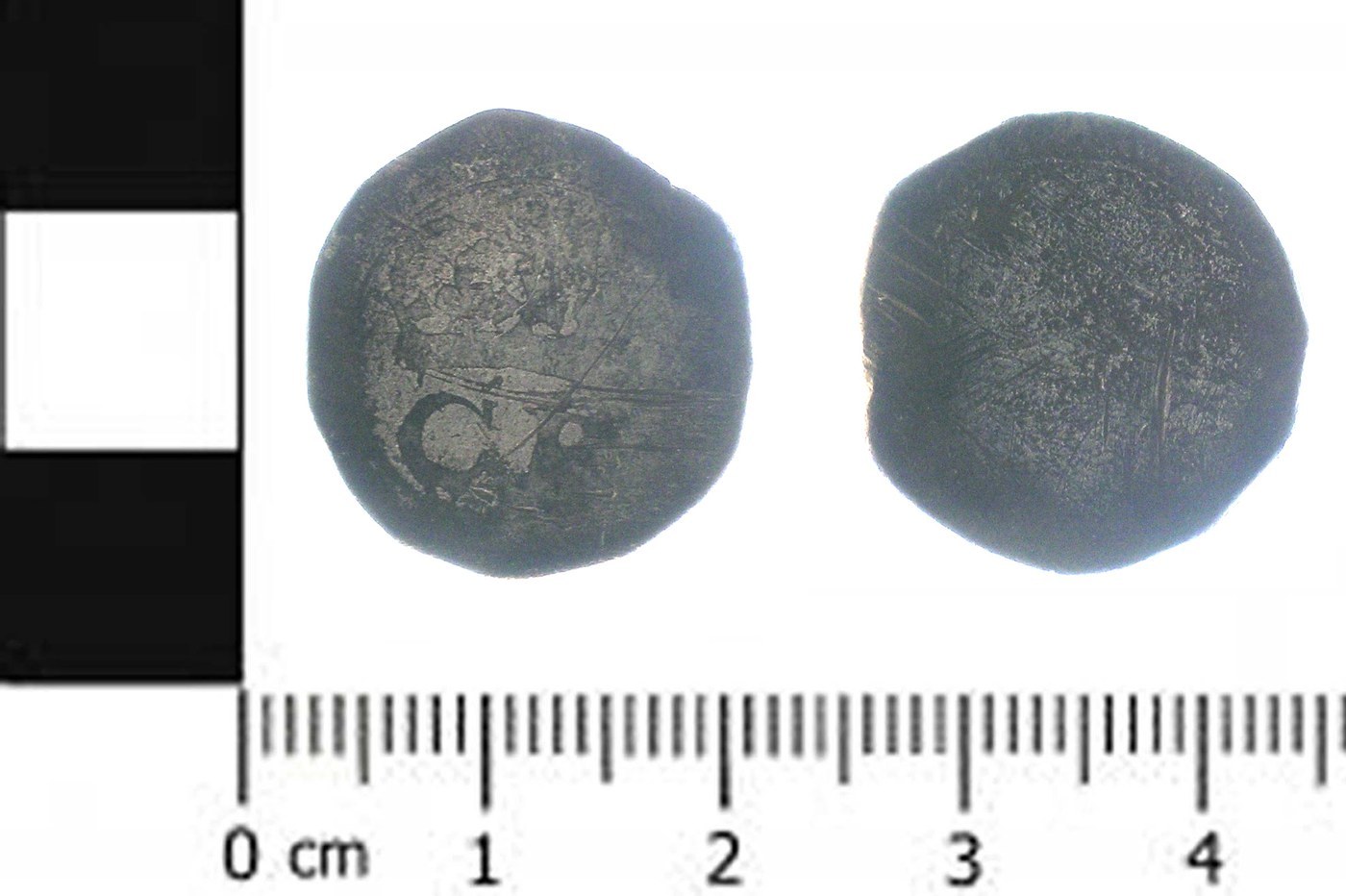
Begin with fabric and size. This is a small, hand-struck coin in a copper alloy, so expect an irregular flan, uneven thickness, and possible off-center striking. Weigh it on a jeweller's scale and measure the diameter in millimetres; these two figures are the single most useful step in narrowing a base-metal Scottish coin to a specific denomination, since worn legends often cannot do the job alone.
Read the obverse portrait. A bearded profile facing sideways is consistent with the royal busts used on Scottish coinage of Charles I and earlier Stuart kings. Note the direction the bust faces and any surviving letters around the rim, which on Scottish coins are usually a Latin royal legend. Even a few legible characters can help confirm the ruler and reign.
Study the reverse heraldry and lettering. Look for a crown, a thistle, a shield, or crossed sceptres, each of which appears on different Scottish base-metal denominations of this era, along with an accompanying legend. The specific emblem and how it is arranged is often the key to the exact denomination, so record it carefully even where it is faint. On a heavily worn coin the emblem may be only a raised outline.
Be alert to look-alikes. Small worn copper coins of the seventeenth century can be confused across reigns and even between Scottish, English, and Irish issues, as well as with contemporary tokens and continental small change of similar size. Do not rely on the bearded profile alone; confirm the attribution with the reverse emblem, the legend, and the measurements taken together.
Authenticate with care but keep it in proportion. Because coins like this are of modest value they are rarely faked, but corrosion, tooling, and modern cleaning can create misleading surfaces. Avoid harsh cleaning, which destroys detail and value, and if the identification matters, take the coin to a dealer or specialist in Scottish hammered coinage for an in-hand opinion.
Frequently asked questions
Which measurements should I record first?
Weight in grams and diameter in millimetres. For worn base-metal Scottish coins these two figures, combined with any legible legend and the reverse emblem, are usually what allows a specific denomination to be identified.
How do I tell the obverse from the reverse?
The side with the bearded royal profile is the obverse. The side showing a heraldic device such as a crown, thistle, or shield with a surrounding legend is the reverse.
Could this be English or Irish rather than Scottish?
It can be hard to tell when worn, since small copper coins of the era look alike across the three kingdoms. Use the reverse heraldry and any legible legend, not the portrait alone, and confirm with a specialist if it matters.
Should I clean it to read the detail?
No. Cleaning a corroded hammered copper coin removes original surface and detail and reduces both legibility and value. Leave it as found and seek an expert opinion for a firm attribution.