
How to Identify the Irish Groat of Henry VIII
A collector's checklist for recognising Henry VIII's Irish silver groat by its harp reverse, bust, legends, and hammered fabric.
Read the full Irish Groat of Henry VIII encyclopedia entry →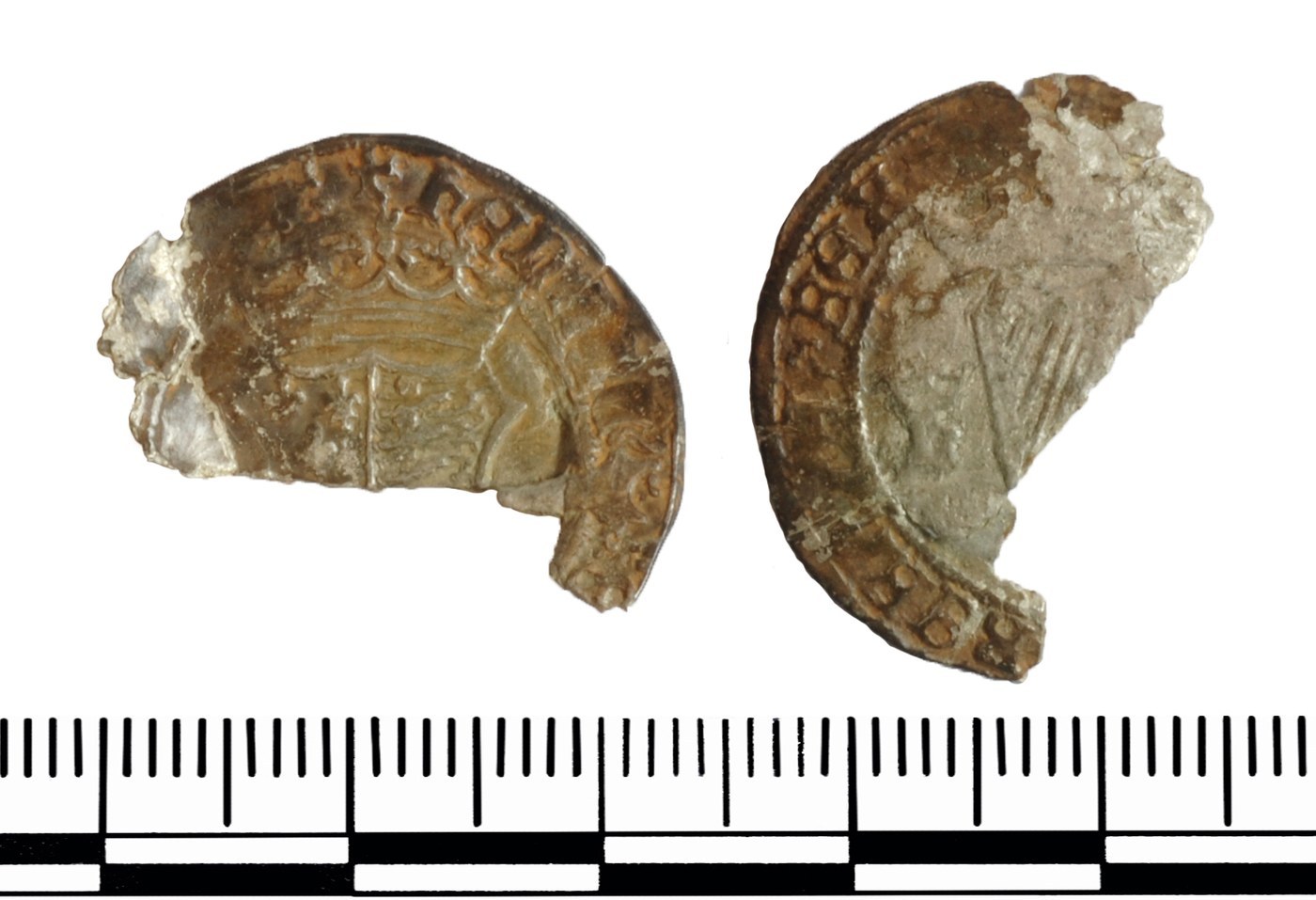
Start with the physical fabric. A genuine groat of this type is a hand-hammered silver coin, usually around 25–26 mm in diameter, with an irregular outline, uneven relief, and often some weakness or doubling from the striking process. A perfectly round, machine-sharp coin with a milled edge is not a Tudor hammered groat and should raise immediate suspicion.
Read the two sides as a pair. A portrait issue shows a crowned facing bust of Henry VIII on the obverse within a beaded circle and Latin legend. Turn it over and look for the heraldic side: the crowned Irish harp is the key diagnostic, often flanked by small crowned initials, while closely related issues display a crowned royal shield. The presence of the harp is the strongest single clue that you are looking at an Irish issue rather than an English groat.
Work through the legend carefully, even where it is worn. You want the king's name (a form of HENRIC VIII) and his Irish title. An earlier "Lord of Ireland" style (Dominus / D G Hibernie) points to before 1541, while "King of Ireland" (Rex Hibernie) points to 1541 or later. City or mint references and the crowned letters beside the harp further narrow the variety, so photograph or sketch every legible letter.
Be alert to look-alikes and pitfalls. English groats of Henry VIII share the bust and silver fabric but lack the harp; later Irish base issues and posthumous strikings in Henry's name can look coppery due to debasement, which is normal rather than a sign of fakery. Cast copies, tooled surfaces, and modern replicas exist, so treat coins that feel too crisp, too light, or too uniform with caution.
For confident attribution, compare against a specialist reference for Irish hammered coinage and, for any purchase of consequence, seek a professional opinion or third-party authentication. The combination of hammered fabric, harp reverse, crowned bust or shield, and a matching Latin legend is what confirms the type.
Frequently asked questions
What is the single most reliable feature to check?
The crowned harp on the reverse is the strongest indicator of an Irish issue; combined with a crowned bust or shield and a Latin legend naming Henry and Ireland, it confirms the type.
How is it different from an English groat of Henry VIII?
English groats share the silver fabric and royal bust but do not carry the Irish harp or the Ireland titles (Dominus or Rex Hibernie) found in the legends of the Irish coins.
Should I be worried if the coin looks coppery or dull?
Not necessarily. Later issues were debased with less silver, so a duller or coppery tone is consistent with a genuine late or posthumous groat rather than proof of a fake.
Do I need an expert to authenticate one?
For low-value worn pieces a good reference may suffice, but for scarce varieties or higher-grade coins, professional authentication and variety attribution are strongly advised before buying or selling.