
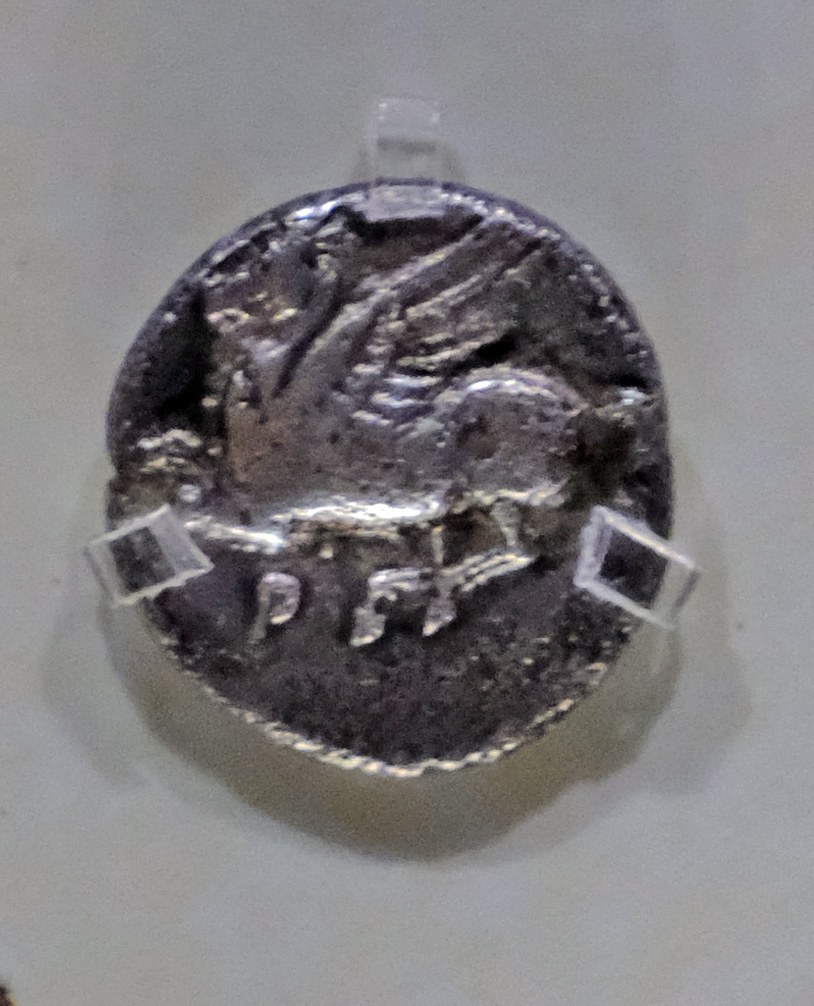
Corinthian Drachm
A silver drachm of ancient Corinth pairing a helmeted head of Athena with the city's emblem, the winged horse Pegasus, struck in the mid-4th century BC.
- Country
- Ancient Greece
- Denomination
- Drachm
- Metal
- Silver
Got a coin like this?
Identify any coin from a photo, free.
Overview
The Corinthian drachm is a small silver coin of the Greek city-state of Corinth, one of the great trading powers of the ancient Mediterranean. This type joins a profile head of the goddess Athena with the winged horse Pegasus, the two devices that defined Corinth's coinage for generations. The example described here dates to roughly 350–338 BC, the last decades of Corinth's independent silver output before Macedonian dominance reshaped the Greek world.
The drachm was a fraction of the more famous Corinthian stater, the large silver "colt" or "pegasus" coin that circulated widely across Corinth's colonies and trade network. As a smaller denomination, the drachm carried the same civic imagery on a reduced flan, making it a compact and affordable way for modern collectors to own a genuine piece of classical Corinthian coinage.
Because it is an ancient hand-struck coin, every example is individual, with its own centering, strike, and surfaces. Its enduring appeal comes from the clean pairing of Athena and Pegasus, figures drawn from Greek myth that tie the coin directly to the identity of Corinth.
History & Background
Corinth sat astride the isthmus linking mainland Greece to the Peloponnese, controlling land traffic and two harbors, which made it one of the wealthiest and most commercially active city-states of the classical age. From the archaic period onward the city struck silver on the Corinthian standard, and its coins traveled far through an extensive network of colonies in western Greece and beyond.
Corinth's coinage was famous for its winged horse Pegasus, so much so that its staters were nicknamed "colts." The head of Athena, patron of craft and warfare, was the standard companion device. The years around 350–338 BC fall in the mature phase of this long tradition, shortly before the Battle of Chaeronea in 338 BC, after which Philip II of Macedon established hegemony over the Greek cities.
Corinthian-style Pegasus coinage was so influential that many colonies and allied cities issued their own "pegasi" imitating the Corinthian design, often adding local symbols or letters. This wide family of related coins is part of what makes the Corinthian series historically important and collectible today.
How to Identify
The obverse shows the head of Athena in profile, typically wearing a Corinthian-style helmet pushed back on the head. Details of the helmet crest and the goddess's hair are the main features to look for, along with any small symbols or letters placed in the field, which helped distinguish issues and mints.
The reverse displays Pegasus, the winged horse, usually shown flying or walking with the wings spread. On Corinth's own coinage the archaic form often carries the letter koppa (an early Greek letter resembling a Q) as the civic initial for Corinth, though the placement and presence of legends vary by period and denomination.
As a drachm rather than a stater, this coin is physically small, a silver piece well under the size of the familiar Corinthian stater, and correspondingly light in weight. It is struck on a compact flan, so it is common for part of the design to run off the edge. The metal is silver, hand-struck, so expect slightly irregular shape, off-center strikes, and individual surfaces rather than the uniformity of machine-made coinage.
Value & Collectibility
Corinthian silver is widely collected, and genuine drachms of this era are obtainable, though the smaller fractional denominations are scarcer than the common staters. Value depends heavily on the strike, centering, style, and surface quality. Well-centered coins with a clear Athena head and a complete Pegasus command a premium, while off-center, worn, or corroded examples sell for less.
As a general guide, modest circulated or off-center ancient Corinthian silver fractions often trade in the low-to-mid range typical of affordable Greek silver, while sharp, attractive, and well-preserved pieces can bring considerably more. Because these are ancient hand-struck coins, no two are identical and each is priced on its own merits rather than by a fixed catalog value.
Exact prices vary with the market, the specific issue, and eye appeal, so treat any figure as a range rather than a quote. Ancient Greek silver is also frequently faked and sometimes "tooled" or cleaned, so provenance and authentication materially affect value on higher-end pieces.
Frequently asked questions
What is the winged horse on the reverse?
It is Pegasus, the winged horse of Greek myth and the emblem of Corinth. The device was so identified with the city that Corinthian coins were nicknamed "colts" or "pegasi."
Who is on the obverse?
The head in profile is the goddess Athena, usually shown wearing a Corinthian-style helmet. Athena and Pegasus together are the classic pairing of Corinth's silver coinage.
How old is this coin?
This type dates to roughly 350–338 BC, the mid-4th century BC, in the decades just before Macedon under Philip II established control over the Greek city-states.
Is a drachm the same as a Corinthian stater?
No. The stater is the larger, more famous Corinthian silver coin. The drachm is a smaller fractional denomination carrying similar civic imagery on a smaller, lighter flan.
Is it real silver?
Yes, genuine examples are struck in silver. Because they are ancient hand-struck coins, they show irregular shape, individual strikes, and surfaces rather than machine-made uniformity.
Corinthian Drachm guides
In-depth guides for identifying, valuing, and collecting Corinthian Drachm.
Other coins you may enjoy
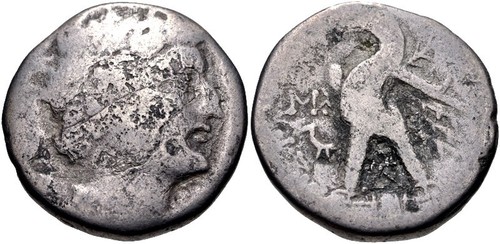
Tetradrachm of Ptolemy XII
80-51 BC
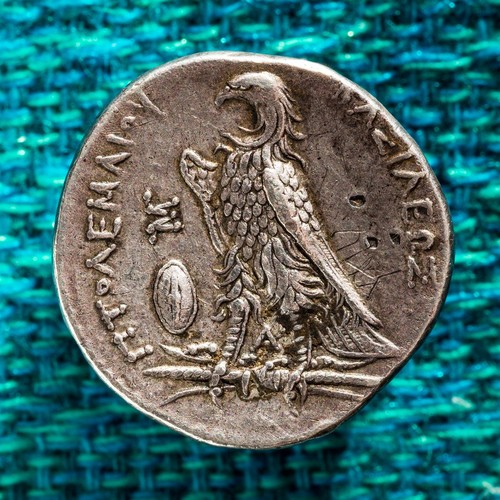
Tetradrachm of Ptolemy I
305-283 BC
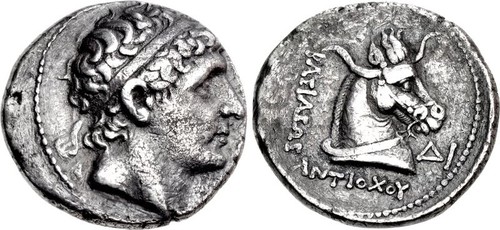
Tetradrachm of Antiochos I Soter
281-261 BC
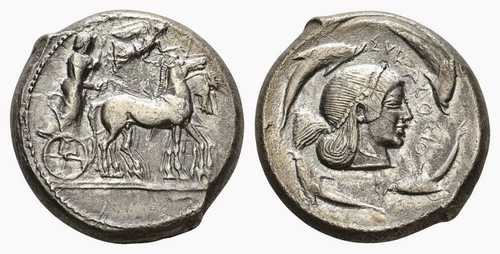
Syracuse Tetradrachm
c. 5th-4th century BC (Classical period)
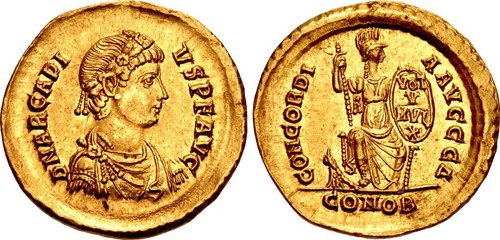
Solidus of Arcadius
AD 395-402
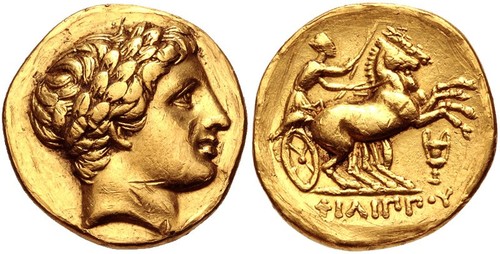
Philip III Gold Stater
323-317 BC
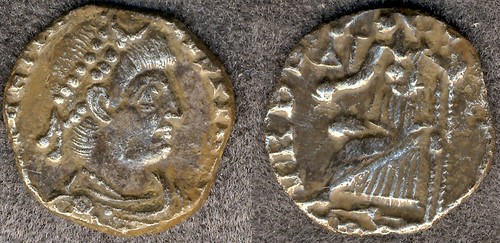
Siliqua of Gratian
AD 367-383
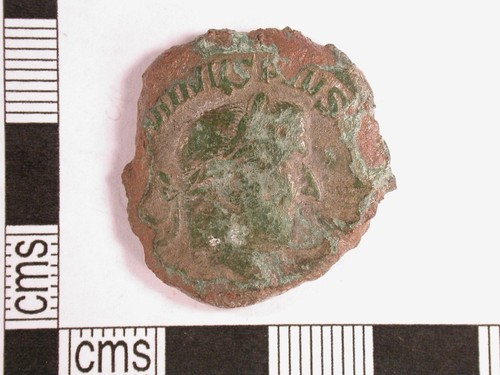
Sestertius of Maximinus Thrax
235-238 AD
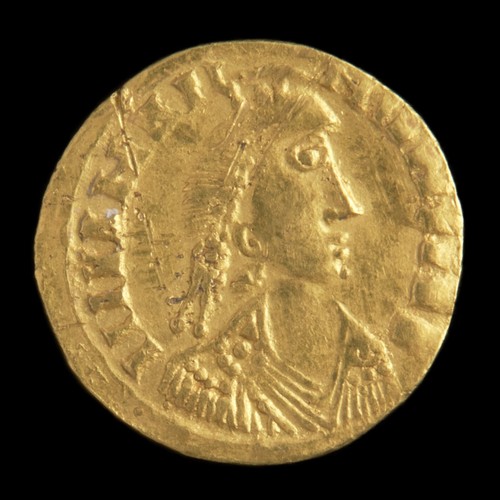
Solidus of Valentinian III
AD 425-455
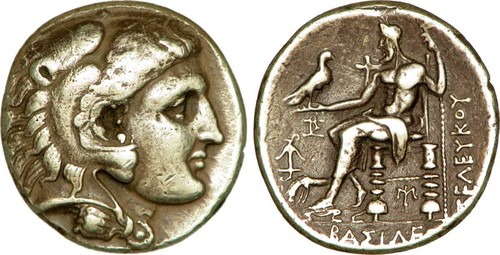
Seleucus I Nicator Tetradrachm
Late 4th-3rd century BC
Nummus of Magnentius
AD 350-353
Follis of Galerius
AD 308-310