
How to Identify the Corinthian Drachm
A collector's guide to confirming an ancient Corinthian silver drachm by its Athena head, Pegasus reverse, small flan, and hand-struck fabric.
Read the full Corinthian Drachm encyclopedia entry →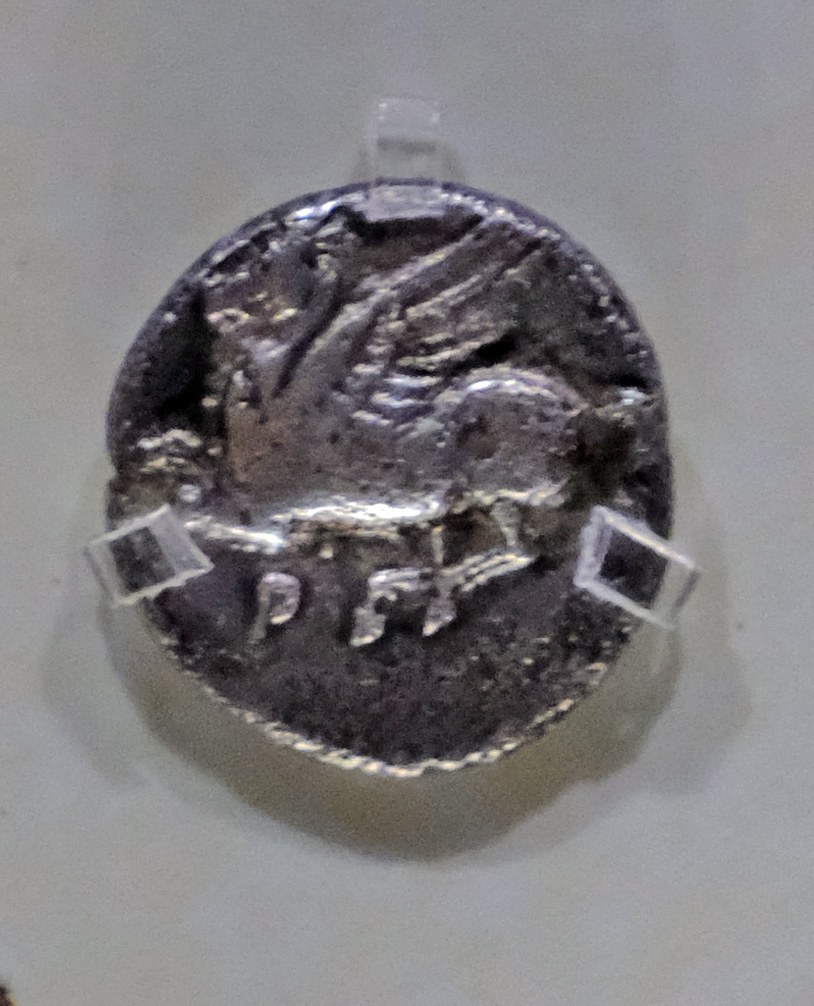
Read Both Devices First
Start with the two defining images. The obverse should show a profile head of Athena, typically in a Corinthian helmet, and the reverse should show Pegasus, the winged horse. This Athena-and-Pegasus pairing is the signature of Corinth and its related "pegasi" coinage. If either side is missing that device, you are likely looking at a different city or type.
Look for the Corinthian Mark and Field Symbols
Corinth's own issues frequently carry the letter koppa, an archaic Greek letter shaped somewhat like a Q, as the city initial, most often associated with the Pegasus side. Small symbols, monograms, or letters in the field beside Athena were used to distinguish issues and, on the wider family of coins, different mints. Note any such marks carefully, as they help separate genuine Corinthian strikings from the many colonial and allied imitations of the Pegasus type.
Confirm It Is a Drachm, Not a Stater
Size and weight are the quickest way to place the denomination. The Corinthian stater is the large, familiar "colt"; the drachm is a distinctly smaller and lighter silver coin struck on a compact flan. Because the flan is small, expect parts of the helmet crest or the horse's wings and legs to run off the edge. Weigh and measure the coin and compare it against reference weights for Corinthian fractions rather than assuming any Pegasus coin is a stater.
Rule Out Look-Alikes
Many colonies and allied cities, especially in western Greece, struck their own Pegasus coins imitating Corinth, often with local symbols or different obverse heads. Ambracia, Leukas, Syracuse and others produced related "pegasi." The obverse head style, the field letters, and the specific form of the Pegasus all help distinguish true Corinthian issues from these relatives. Do not rely on the winged horse alone.
Authenticate the Fabric
Genuine ancient silver of this era is hand-struck, so look for a slightly irregular flan, an off-center or double strike, and surfaces consistent with age rather than perfectly smooth, uniform metal. Cast fakes with seams or bubbly surfaces, coins that are too regular, or pieces with wrong weight are warning signs. Because ancient Greek silver is widely faked, cleaned, or tooled, favor coins with documented provenance and consider third-party authentication for anything beyond a modest example.
Frequently asked questions
What quickly distinguishes a Corinthian drachm from the stater?
Size and weight. The drachm is a small, light silver fraction on a compact flan, while the stater is the larger, well-known "colt." Weigh and measure the coin against reference figures rather than assuming.
What does the koppa mark mean?
Koppa is an archaic Greek letter, roughly Q-shaped, used as Corinth's civic initial on much of its coinage. Its presence supports a true Corinthian attribution, though placement varies by period and denomination.
How do I tell a Corinthian coin from a colonial imitation?
Many allied cities copied the Pegasus design. Check the obverse head style, any field letters or symbols, and the exact form of the horse. The winged horse alone is not enough to confirm Corinth itself.
How can I spot a fake?
Watch for casting seams, bubbly or too-uniform surfaces, and incorrect weight. Genuine pieces are hand-struck with slightly irregular flans. For valuable examples, seek provenance and third-party authentication.