
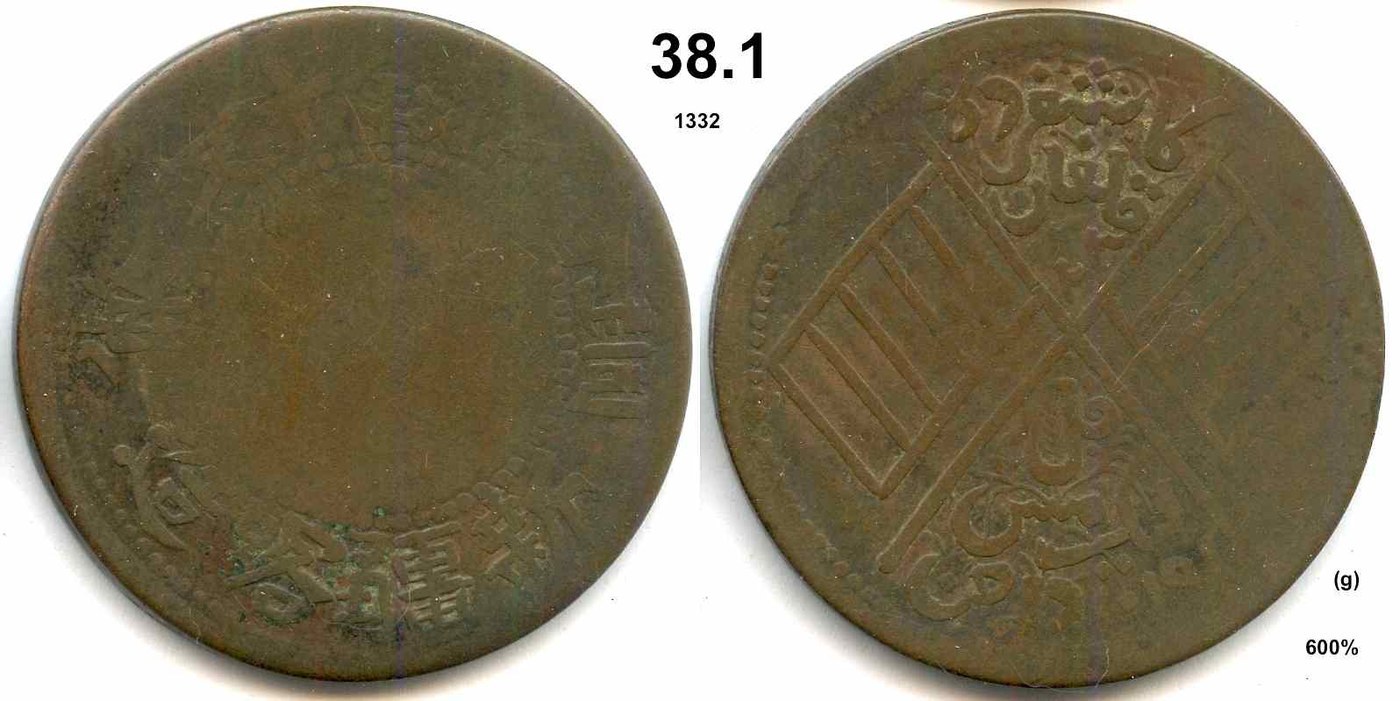
10 Cash (Republic)
A Republic of China bronze 10 Cash: a round machine-struck copper piece with a central ornament and characters on one face and a decorative inscribed reverse.
- Country
- China
- Denomination
- 10 Cash
- Metal
- Bronze
Got a coin like this?
Identify any coin from a photo, free.
Overview
The coin pictured is a 10 Cash piece of the Republic of China era, a small bronze (copper-alloy) circulation coin from the period following the fall of the Qing dynasty in 1912. Unlike the older round-with-square-hole cast cash, this is a modern machine-struck coin with no central hole, made on Western-style presses that China adopted in the late imperial and early republican years.
The obverse shows a simplified layout built around a central decorative element flanked and framed by Chinese characters giving the issuing authority and the denomination. The reverse carries a decorative diamond-shaped pattern at its center surrounded by an inscription, a common arrangement on republican copper coins where an ornamental device replaces the imperial dragon of earlier issues.
The 10 Cash was a workhorse of everyday commerce during the early Republic, valued at ten of the traditional copper "cash" units. Enormous quantities were struck across many provinces, so the type as a whole is common, though individual varieties, mints, and dates range from ordinary to genuinely scarce.
History & Background
When the Republic of China was founded in 1912, the new government and the provinces continued to need low-value copper coinage for daily transactions. They inherited the milled 10 Cash format that late-Qing mints had already begun producing on modern machinery, and simply replaced imperial symbolism such as the dragon and reign-title legends with republican designs and inscriptions.
Production was highly decentralized. Numerous provincial mints, as well as national issues, struck copper 10 Cash coins, which is why the series shows wide variation in style, calligraphy, and ornament from one issue to the next. Common republican motifs on this denomination include crossed flags, ornamental rosettes, and geometric devices, paired with legends naming the Republic and stating the value in Chinese and sometimes in English.
Over the 1910s and 1920s, heavy over-issue of copper coins by competing authorities contributed to inflation and a decline in the real value of the cash unit. The bronze 10 Cash was eventually superseded as China moved toward a more unified currency, leaving these coins as abundant survivors of a turbulent, fragmented monetary period.
How to Identify
Identify this piece as a round, holeless, machine-struck bronze coin rather than a cast cash with a square center hole. The brown copper-alloy surface, raised rim, and pressed relief all point to a modern (post-1900) striking. The presence of a central ornament with surrounding Chinese characters on one face and a diamond-patterned, inscribed other face matches the Republic-era 10 Cash format.
Read the characters to confirm the denomination and issuer: republican copper coins typically state the value (ten cash) and name the Republic or a province in Chinese, and many also carry an English or romanized legend such as the value spelled out. The specific mint and date are established from these legends and any English wording, since the series spans many provincial and national issues.
Because designs vary so widely, treat the central device (rosette, flags, or geometric ornament), the surrounding inscription, and the coin's diameter and weight as the key diagnostics, then match them against a specialized catalog of Chinese republican copper coins to pin down the exact type and variety.
Value & Collectibility
Most Republic-era bronze 10 Cash coins are common and inexpensive, since they were struck in vast numbers across many provinces. Well-worn everyday examples typically sit in the modest, entry-level collectible range, and the type is often encountered in bulk lots and beginner collections of Chinese coins.
Value rises with condition, sharpness of strike, and scarcity of the specific mint, date, or variety. Coins with clear detail, original surfaces, and desirable or less-common issues bring meaningful premiums, and certain rare varieties or error strikes are sought after by specialists. Cleaning, corrosion, and heavy wear all reduce desirability.
Because a single "10 Cash" label covers hundreds of distinct issues, values span a very wide range. For an accurate figure, identify the exact province, design, and date, then compare against recent sales of the matching variety; professional attribution or grading helps for better examples.
Frequently asked questions
Is this a cast coin with a square hole?
No. This is a modern machine-struck bronze coin with a solid center and a raised rim, not a traditional cast cash with a square hole. It was made on Western-style coining presses during the Republic of China era.
What does '10 Cash' mean?
Cash was China's traditional low-value copper unit. A 10 Cash coin was worth ten of those units and served as small change for everyday purchases in the early Republic.
Is my 10 Cash coin valuable?
Most are common and modestly valued because they were struck in huge quantities. Value depends on the specific province, date, variety, and condition, with sharp or scarce examples worth more than worn common ones.
Why do these coins look so different from one another?
Many provincial and national mints produced 10 Cash coins during the Republic, each with its own designs, calligraphy, and ornaments. That decentralization is why the series shows such wide variation.
How do I find out exactly which one I have?
Read the Chinese characters and any English legend to identify the issuing authority and value, note the central design and the coin's size and weight, then match those details against a catalog of Chinese republican copper coins.
10 Cash (Republic) guides
In-depth guides for identifying, valuing, and collecting 10 Cash (Republic).
Other coins you may enjoy
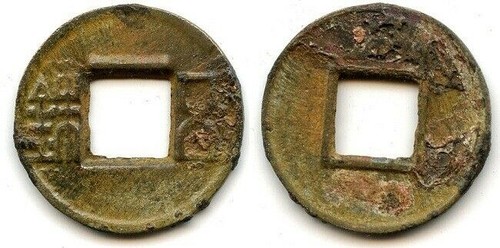
Wu Zhu Cash
Han Dynasty (issue attributed to the reign of Emperor Xuandi, 74-49 BC)
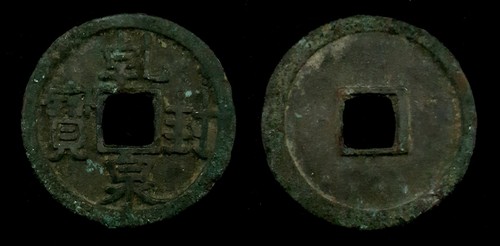
Qian Feng Quan Bao
Tang Dynasty, Qianfeng era (666-667 CE)

Qianlong Tongbao (An Nam)
18th century (Qianlong period, mid-to-late 1700s)
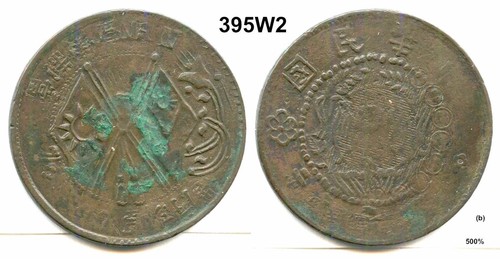
Ho-Nan 100 Cash
Republic of China era (circa 1920s–1930s)
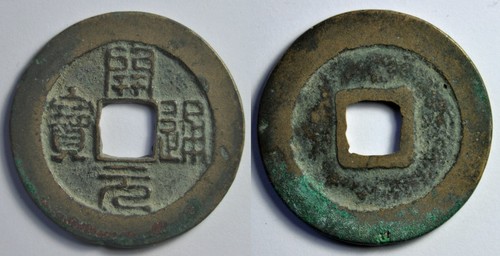
Kai Yuan Tong Bao
Tang Dynasty (7th-10th century AD)
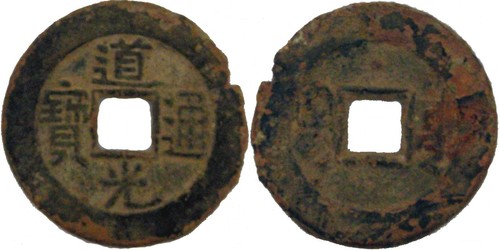
Daoguang Tongbao
1821–1850
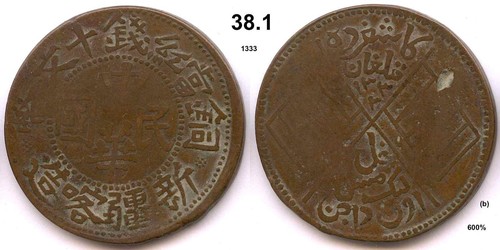
Aksu Mint 10 Cash
Republic of China period (early 20th century)