

Qianlong Tongbao (An Nam)
A bronze round cash coin with a square center hole bearing the four characters Qianlong Tongbao, cast in An Nam (Vietnam) in the imitative Chinese style.
- Country
- Vietnam
- Denomination
- 1 Cash
- Metal
- Bronze
Got a coin like this?
Identify any coin from a photo, free.
Overview
The coin pictured is a cast bronze cash coin of the traditional East Asian type: a round disc with a square central hole, carrying four Chinese characters reading Qianlong Tongbao (乾隆通寶). The name refers to the reign title Qianlong, and Tongbao means "circulating treasure," a standard phrase on cash coinage. This particular example is attributed to An Nam (Annam), a historical name for Vietnam, where coins in the Chinese style were cast for local circulation.
Coins of this class are small, low-value pieces of about one cash, the base monetary unit strung together in bundles for everyday transactions. Unlike modern struck coins, they were cast in molds, giving them the slightly soft edges, casting seams, and variable finish typical of the technique.
The An Nam attribution reflects that Vietnamese mints and private casters frequently reproduced popular Chinese reign-title coins, including Qianlong Tongbao, rather than the coin necessarily being a Chinese imperial product. Such pieces are collected as examples of Vietnamese and broader East Asian cash coinage and its shared script and format.
History & Background
The Qianlong reign title belongs to the Qing emperor who ruled China in the mid-to-late 18th century, and genuine Chinese Qianlong Tongbao cash were produced in enormous quantities across many mints. Because Chinese cash circulated widely throughout East and Southeast Asia, their designs were also copied and cast locally, including in Vietnam, where the state and private founders produced coins bearing familiar Chinese reign titles.
In An Nam (Vietnam), cast bronze and brass cash had been the everyday money for centuries, threaded on strings and used for small purchases. Vietnamese-made Qianlong Tongbao pieces belong to this long tradition of round-with-square-hole coinage that shared the Chinese written characters and format while serving the local economy.
These coins circulated through the 18th and into the 19th century, often alongside genuine Chinese cash and Vietnamese reign-title issues of native rulers. As a result, surviving examples are common and represent a durable, region-spanning monetary system rather than a single tightly dated issue.
How to Identify
Identify the piece first by form: a round bronze coin with a square hole at the center, cast rather than struck. The obverse carries four Han characters arranged top-bottom-right-left reading Qianlong Tongbao (乾隆通寶). Read the top and bottom characters first (Qian Long, the reign title), then the right and left (Tong Bao).
The reverse on these coins is typically plainer. Chinese imperial Qianlong cash usually show Manchu mint marks in the reverse fields, while many Vietnamese and imitative pieces have a blank reverse or simplified markings. The photographed example shows Qianlong Tongbao characters as the primary identifier; any reverse marks, or their absence, together with the casting style help point toward a Vietnamese (An Nam) origin rather than an official Chinese mint.
Size, weight, and casting quality are diagnostic: An Nam pieces are often smaller, lighter, or more crudely cast than mainstream Chinese issues, with thinner flans and less crisp characters. Because reign-title cash were cast for well over a century by many hands, precise mint and date attribution requires comparing the calligraphy, diameter, and any reverse marks against specialized references on Vietnamese and Chinese cash.
Value & Collectibility
Common cast Qianlong Tongbao cash, including Vietnamese An Nam imitations, are among the more affordable collectible coins. Ordinary circulated examples typically trade for modest sums, and they are frequently sold in bulk lots because so many survive. Their appeal lies in history and type rather than rarity or metal content.
Value rises for pieces with clear characters, unusual reverse marks, distinctive calligraphy styles, or well-documented mint attributions. Crisp, well-preserved specimens and scarcer varieties command more than worn, corroded, or damaged coins, and correct identification of a specific mint or variety can meaningfully affect price.
Because countless varieties and imitations exist across China and Vietnam, treat any single price as approximate. For a specific coin, compare against recent sales of the same size, calligraphy, and reverse type, and consult specialist cash-coin references or a knowledgeable dealer for attribution.
Frequently asked questions
What do the characters on this coin say?
The four characters read Qianlong Tongbao. Qianlong is the reign title and Tongbao means "circulating treasure," a standard phrase on cash coins. Read the top and bottom characters first, then right and left.
Is this a Chinese or Vietnamese coin?
This example is attributed to An Nam (Vietnam). Vietnamese mints and private casters widely copied popular Chinese reign-title coins like Qianlong Tongbao, so the same characters appear on both Chinese imperial and Vietnamese-made cash.
Why does it have a square hole in the middle?
The square central hole is a defining feature of East Asian cash coins. It allowed coins to be strung together in bundles for counting and carrying, and it aided the casting and finishing process.
Is it made of gold or silver?
No. This is a base-metal cash coin, cast in bronze (a copper alloy). Cash coins were low-value everyday money and carry no precious-metal content.
Are these coins rare or valuable?
Common cast Qianlong Tongbao cash are inexpensive and survive in large numbers. Value depends on condition, calligraphy, reverse markings, and specific mint or variety attribution rather than on the metal.
Qianlong Tongbao (An Nam) guides
In-depth guides for identifying, valuing, and collecting Qianlong Tongbao (An Nam).

Other coins you may enjoy
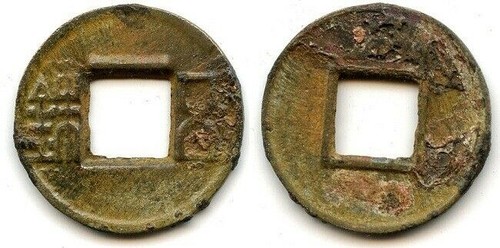
Wu Zhu Cash
Han Dynasty (issue attributed to the reign of Emperor Xuandi, 74-49 BC)
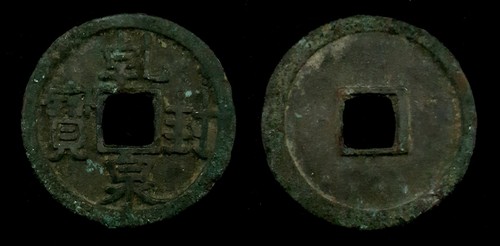
Qian Feng Quan Bao
Tang Dynasty, Qianfeng era (666-667 CE)
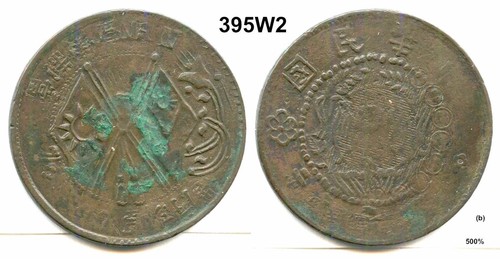
Ho-Nan 100 Cash
Republic of China era (circa 1920s–1930s)
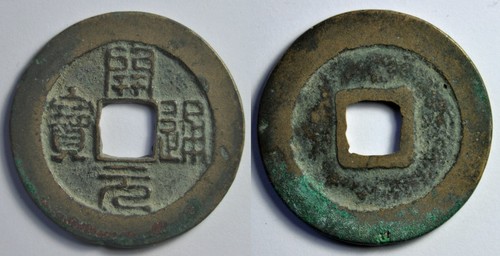
Kai Yuan Tong Bao
Tang Dynasty (7th-10th century AD)
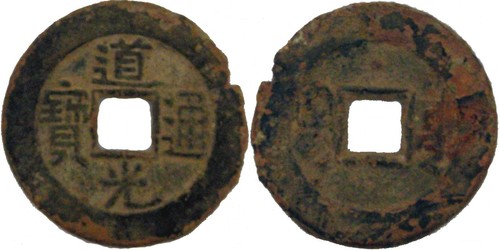
Daoguang Tongbao
1821–1850
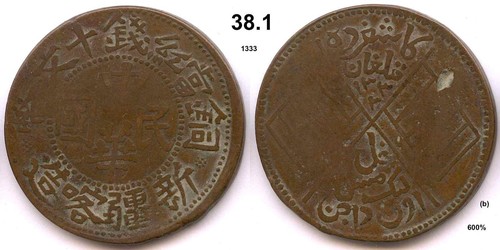
Aksu Mint 10 Cash
Republic of China period (early 20th century)
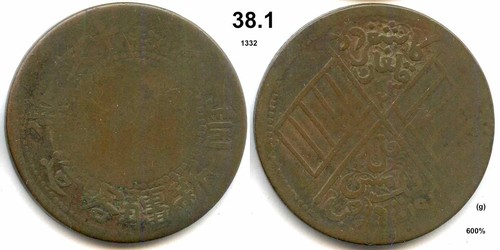
10 Cash (Republic)
Republic of China era (from 1912; many issues struck through the 1910s-1920s)