
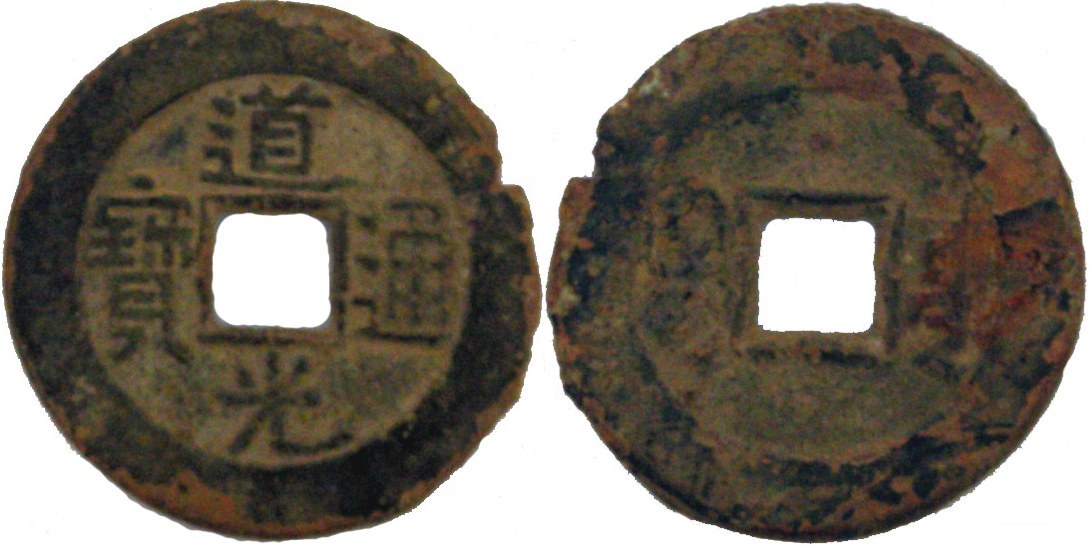
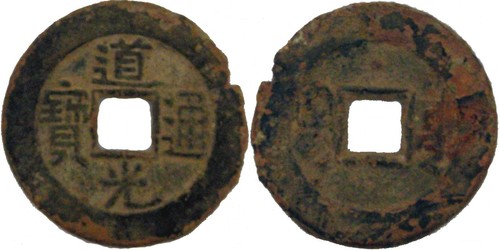
Daoguang Tongbao
A round Chinese bronze cash coin with a square center hole, cast under the Qing emperor Daoguang; this example bears the Bao Quan mint mark.
- Country
- China
- Denomination
- 1 Cash
- Metal
- Bronze
Got a coin like this?
Identify any coin from a photo, free.
Overview
The Daoguang Tongbao is a Chinese cast-bronze cash coin produced during the reign of the Qing dynasty's Daoguang Emperor (1821–1850). Like other traditional Chinese coins, it is round with a square hole in the center, a form that had been used in China for nearly two thousand years. The example pictured shows the obverse reading Daoguang Tongbao and a reverse carrying the Bao Quan mint mark.
The four characters on the obverse are arranged around the square hole and read top–bottom–right–left: Dao Guang (the reign title) and Tong Bao ("circulating treasure"). The reverse is inscribed not in Chinese but in Manchu script, naming the mint that cast the coin. On this piece the reverse identifies the Bao Quan mint, the Board of Revenue mint in Beijing.
Rather than being struck like Western coins, these pieces were cast in molds, which gives them their characteristic soft relief, flat fields, and file-marked edges. The Daoguang Tongbao was everyday small change, produced in enormous quantity across many provincial and central mints throughout the emperor's roughly three-decade reign.
History & Background
The Daoguang Emperor ruled the Qing dynasty from 1821 to 1850, a period marked by economic strain, opium trade, and the First Opium War. Throughout his reign, cash coins bearing the reign title Daoguang Tongbao were cast to serve as the base copper-alloy currency of the empire, circulating alongside silver used for larger transactions.
Production of cash coins under the Qing was decentralized. A network of mints – two central ones in Beijing (Bao Quan, under the Board of Revenue, and Bao Yuan, under the Board of Works) plus numerous provincial mints – each cast coins with its own name shown in Manchu on the reverse. This is why Daoguang Tongbao coins survive with many different reverse mint marks, of which Bao Quan is one of the most common.
Because casting was spread across so many workshops and continued for decades, the quality, weight, and alloy of Daoguang cash varied considerably. Coins from this era were made in vast numbers, and large quantities survive today, making the Daoguang Tongbao a familiar and accessible type for anyone collecting Chinese cash coins.
How to Identify
The defining features are the round shape with a central square hole, a bronze or brass color, and four Chinese characters around the hole reading Daoguang Tongbao. The two characters above and below the hole read Dao Guang; the characters to the right and left read Tong Bao. Reading the reign-title characters is the surest way to attribute the coin to the Daoguang period rather than to another Qing emperor.
The reverse carries two Manchu characters flanking the hole that name the mint. On the pictured coin these identify the Bao Quan mint, the Board of Revenue mint in Beijing. Different mints used different Manchu names, so the reverse is what distinguishes one Daoguang Tongbao from another rather than the obverse, which is shared across all of them.
These are cast coins, so expect a slightly grainy surface, soft edges to the characters, and evidence of the casting sprue having been filed off the rim. Typical single-cash pieces are small, on the order of 22–25 mm across, and light in weight. Size, a genuine cast (not struck) appearance, and legible Daoguang and Manchu legends together confirm the identification.
Value & Collectibility
Daoguang Tongbao cash coins were produced in immense quantities and many survive, so common examples – including ordinary Bao Quan pieces – are among the more affordable Chinese coins, typically trading for only a few dollars each in average circulated condition. They are frequently sold in bulk lots as well as individually.
Value rises with condition, sharpness of the casting, and scarcity of the particular mint or variety. Coins from rarer provincial mints, unusually large or well-made specimens, or pieces with clear, bold characters and attractive patina can bring meaningful premiums over common Bao Quan issues.
Because so many similar-looking cash coins exist and reproductions and tourist copies are common, condition and authenticity matter more than the base type. For anything beyond a low-value common example, it is worth comparing against reference listings for the specific mint and variety rather than relying on a single fixed figure.
Frequently asked questions
What do the characters on the Daoguang Tongbao mean?
The four Chinese characters on the obverse read Daoguang Tongbao. "Daoguang" is the reign title of the emperor who ruled from 1821 to 1850, and "Tongbao" means "circulating treasure," a standard term for cash coinage.
What is the writing on the reverse?
The reverse is inscribed in Manchu script, not Chinese, and names the mint that cast the coin. On this example the two Manchu characters identify the Bao Quan mint, the Board of Revenue mint in Beijing.
Is this coin made of gold or silver?
No. The Daoguang Tongbao is a copper-alloy cash coin, described here as bronze. It was low-value everyday money; silver was used separately for larger sums during the Qing period.
Why does it have a square hole in the middle?
The round coin with a square central hole is the traditional Chinese cash form used for nearly two thousand years. The hole allowed coins to be strung together in bundles for easy handling and counting.
Are Daoguang Tongbao coins rare or valuable?
Most are common. They were cast in huge numbers over three decades and many survive, so ordinary examples like the Bao Quan issue are inexpensive. Rarer mints, better condition, or scarce varieties command higher prices.
Daoguang Tongbao guides
In-depth guides for identifying, valuing, and collecting Daoguang Tongbao.
Other coins you may enjoy
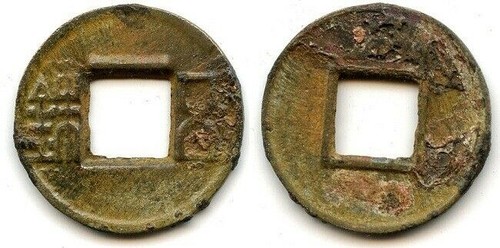
Wu Zhu Cash
Han Dynasty (issue attributed to the reign of Emperor Xuandi, 74-49 BC)
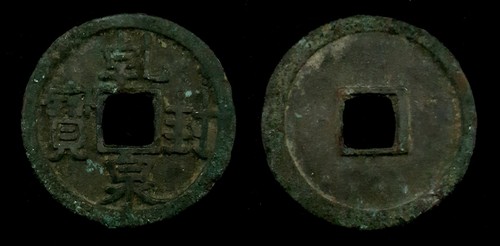
Qian Feng Quan Bao
Tang Dynasty, Qianfeng era (666-667 CE)

Qianlong Tongbao (An Nam)
18th century (Qianlong period, mid-to-late 1700s)
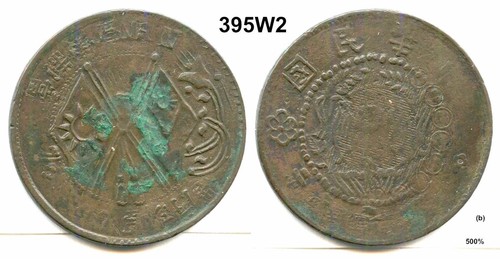
Ho-Nan 100 Cash
Republic of China era (circa 1920s–1930s)
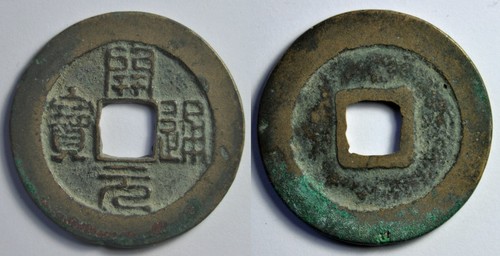
Kai Yuan Tong Bao
Tang Dynasty (7th-10th century AD)
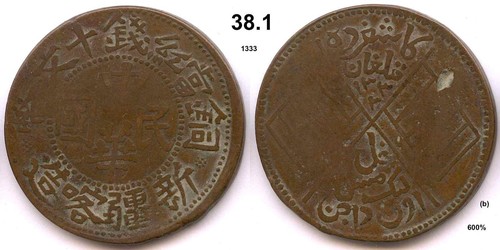
Aksu Mint 10 Cash
Republic of China period (early 20th century)
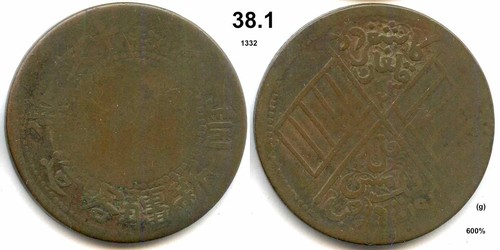
10 Cash (Republic)
Republic of China era (from 1912; many issues struck through the 1910s-1920s)