
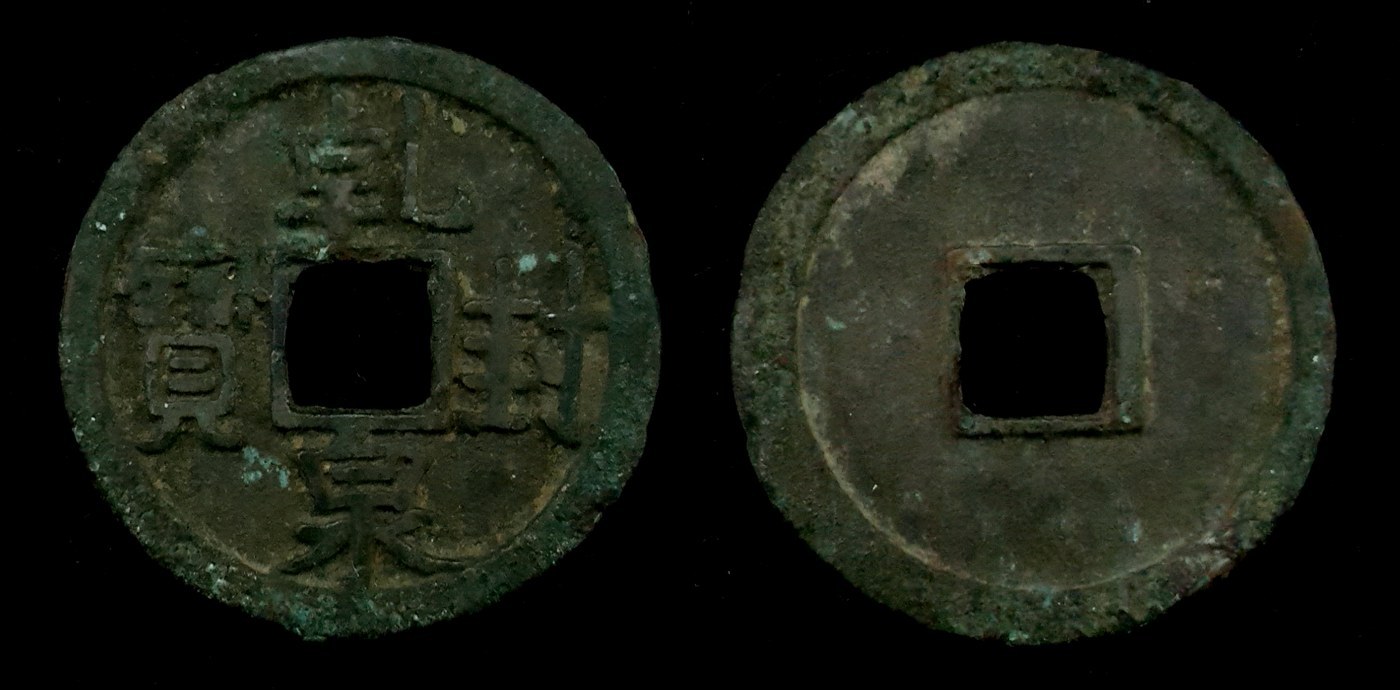
Qian Feng Quan Bao
A round bronze Tang cash coin with a square center hole, cast under Emperor Gaozong in the short-lived Qianfeng era and worth ten ordinary cash.
- Country
- China
- Denomination
- Quan Bao
- Metal
- Bronze
Got a coin like this?
Identify any coin from a photo, free.
Overview
The coin pictured is a Qian Feng Quan Bao (乾封泉寶), a cast bronze cash coin of the Chinese Tang dynasty. Like the Chinese coinage of its era it is a round disc with a square hole at the center, made by casting metal in a mold rather than by striking. Four Chinese characters are arranged around the hole on the face.
The legend reads Qian Feng Quan Bao. Qian Feng (乾封) is the reign-era name used by Emperor Gaozong, and Quan Bao (泉寶) means roughly "currency treasure" — quan being an old, poetic word for money and bao meaning treasure or valuable. The four characters are normally read in the order top, bottom, right, left around the central hole.
The Qian Feng Quan Bao was issued as a large-denomination piece, nominally worth ten of the ordinary Kaiyuan Tongbao cash then in circulation. It was cast for only a very short time, which makes it one of the more notable and scarce coins of the early Tang. The reverse of the coin pictured shows a decorative field with additional marks; genuine Tang issues most often have plain backs, so the reverse detail is an important point to examine closely.
History & Background
The Qian Feng Quan Bao was cast in 666 CE, during the Qianfeng era of Emperor Gaozong of the Tang dynasty. Its name comes directly from that reign period, following an older Chinese practice of naming coins after the era in which they were issued. It was one of the relatively few Chinese coins to use the phrase Quan Bao (泉寶) rather than the far more common Tong Bao (通寶) or Yuan Bao (元寶).
The coin was introduced as a high-value token, decreed to circulate at the value of ten of the standard, smaller Kaiyuan Tongbao coins despite not containing ten times the metal. This kind of overvalued large cash tended to encourage people to hoard the older, more trusted coins and pass along the new ones, disrupting everyday trade. The experiment proved unpopular and destabilizing.
As a result the Qian Feng Quan Bao was abolished after only about a year, and the familiar Kaiyuan Tongbao coinage was restored. Because it was produced for such a brief window, authentic Tang examples are comparatively scarce, and the name later became attractive to makers of charms, amulets, and reproduction castings that borrow its four characters.
How to Identify
Identify a Qian Feng Quan Bao first by its form and fabric: a round bronze coin with a square central hole, showing the soft, slightly rounded relief and casting texture of a cast (not struck) coin. Look for casting seams or filing on the rim rather than the crisp, uniform edges of a machine-struck piece.
The decisive detail is the four-character legend around the hole reading Qian Feng Quan Bao (乾封泉寶), normally read top, bottom, right, then left. The presence of Quan Bao (泉寶) rather than Tong Bao or Yuan Bao is a strong pointer to this specific type. Note the calligraphic style of the characters and how evenly they are spaced around the square hole.
Examine the reverse carefully. Many genuine Tang cash coins have plain backs, sometimes with only a simple rim, crescent, or dot. The coin pictured shows a decorative reverse with additional characters, which on coins bearing this legend is frequently a sign of a later charm, amulet, or commemorative casting rather than a circulating Tang original. An ornate or heavily inscribed back is therefore a feature to weigh, not to assume, when placing the piece.
Value & Collectibility
Value for a Qian Feng Quan Bao depends heavily on whether a given piece is an authentic short-lived Tang issue or a later charm, amulet, or reproduction that reuses the legend. Genuine early-Tang originals are scarce and can carry meaningful collector value, especially with clear characters, honest patina, and sound surfaces. Decorative-reverse charms and modern castings are generally common and inexpensive.
Across both groups, value turns on type, casting quality, character clarity, size, and condition. A sharp, well-centered coin with legible legend and stable green or brown patina is worth more than a corroded, weak, or off-center casting. Ornate reverse designs may appeal to charm collectors on their own merits.
Because the name is so widely imitated, treat any single price with caution and compare against recent sales of the same type. Higher-value examples that are presented as genuine Tang coins benefit strongly from expert opinion or third-party authentication before purchase.
Frequently asked questions
What does Qian Feng Quan Bao mean?
Qian Feng (乾封) is the name of a reign era of Emperor Gaozong of Tang, and Quan Bao (泉寶) means roughly "currency treasure" — quan is an old poetic word for money and bao means treasure. Together the four characters name the coin after the era in which it was cast.
How old is a Qian Feng Quan Bao coin?
The type was cast in the Qianfeng era, around 666 CE, during China's Tang dynasty, and was withdrawn after only about a year. Genuine examples are therefore roughly 1,350 years old, though many pieces bearing this legend are later charms or reproductions.
Why was this coin only made for a short time?
It was issued as an overvalued large coin worth ten ordinary cash, which led people to hoard the older, trusted coins and disrupted trade. The experiment proved unpopular, so it was abolished after about a year and the standard Kaiyuan Tongbao coinage was restored.
Is my Qian Feng Quan Bao gold or silver?
No. It is a cast bronze (copper-alloy) coin. Genuine old examples typically show a green or brown patina from age rather than the color of a precious metal.
Why is there a square hole in the middle?
The square hole is standard for Chinese cash coins. It let cast coins be strung on a square rod so their edges could be filed smooth, and allowed coins to be carried in strings. This round-coin-with-square-hole form was used in China for around two thousand years.
Qian Feng Quan Bao guides
In-depth guides for identifying, valuing, and collecting Qian Feng Quan Bao.
Other coins you may enjoy
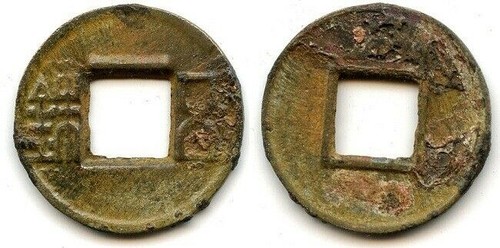
Wu Zhu Cash
Han Dynasty (issue attributed to the reign of Emperor Xuandi, 74-49 BC)

Qianlong Tongbao (An Nam)
18th century (Qianlong period, mid-to-late 1700s)
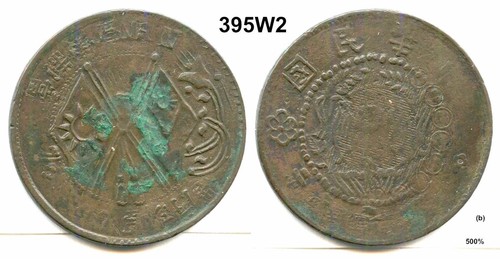
Ho-Nan 100 Cash
Republic of China era (circa 1920s–1930s)
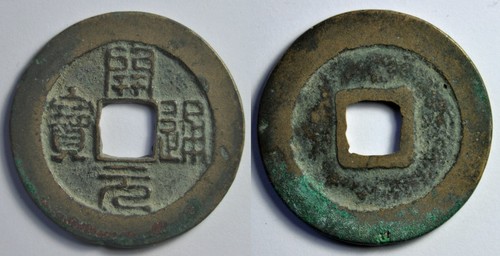
Kai Yuan Tong Bao
Tang Dynasty (7th-10th century AD)
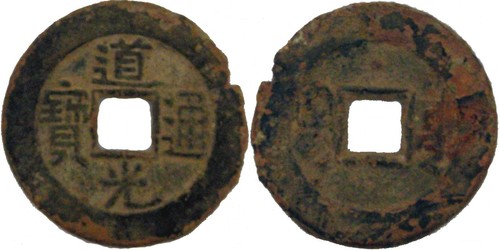
Daoguang Tongbao
1821–1850
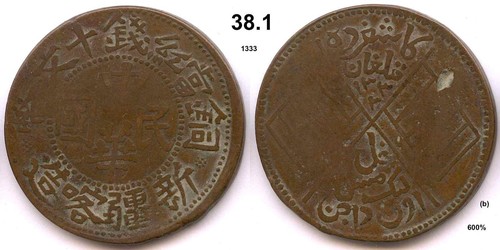
Aksu Mint 10 Cash
Republic of China period (early 20th century)
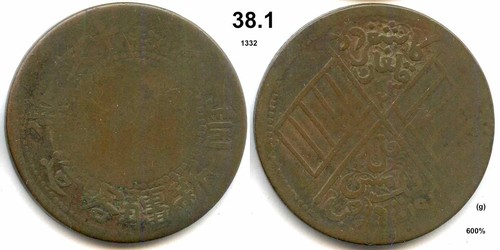
10 Cash (Republic)
Republic of China era (from 1912; many issues struck through the 1910s-1920s)