
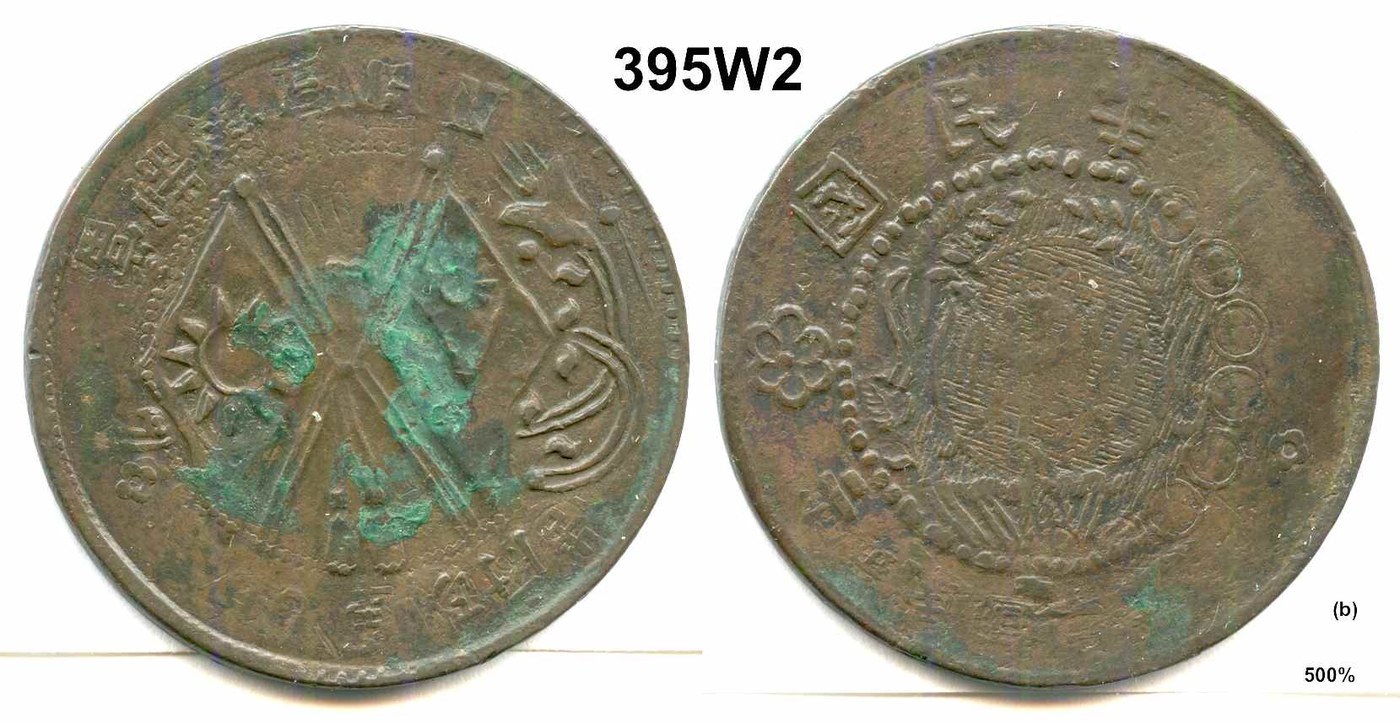
Ho-Nan 100 Cash
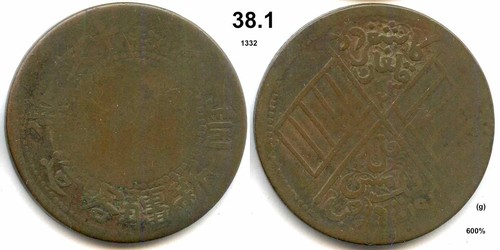
A large struck bronze 100-cash coin of Henan Province from Republican China, with ornate Chinese characters on one face and a decorative pattern on the other.
- Country
- China
- Denomination
- 100 Cash
- Metal
- Bronze
Got a coin like this?
Identify any coin from a photo, free.
Overview
The coin pictured is a Ho-Nan (Henan) 100 Cash, a large bronze provincial coin struck in Henan Province during the Republic of China era. "Ho-Nan" is an older romanization of Henan, a province in central China; the piece is denominated at 100 cash (100 wen), a value it carried as a machine-struck substitute for the older strung copper cash it was meant to replace.
Despite the "cash" denomination, this is not a traditional cast coin with a square central hole. It is a struck disc with raised rims, produced on modern minting machinery. One face carries Chinese characters naming the province and the value within an ornate border, and the other shows a decorative pattern framing a central inscription.
Because Henan issued these large copper pieces in quantity and in many minor varieties, surviving examples differ in the exact wording, the ornament, the sharpness of strike, and the color and wear of the bronze. The coin is a product of the fragmented, province-by-province coinage of early Republican China.
History & Background
After the fall of the Qing dynasty in 1911, coinage in China became heavily decentralized, with individual provinces striking their own copper and silver pieces. Henan Province, in central China, was among those that issued large machine-struck copper coins denominated in cash and in wen to serve everyday commerce as the old cast cash system broke down.
The large 100-cash coppers belong to this Republican provincial series. They were produced in the unsettled economic conditions of the era, when inflation and a shortage of small change pushed provinces to strike high-denomination coppers. Henan issued the type in several varieties, and because striking was often done on worn or improvised machinery, quality varies from coin to coin.
Provincial coppers of this kind circulated until the Nationalist government's later efforts to standardize and centralize Chinese coinage gradually withdrew the patchwork of local issues. Surviving Henan 100-cash pieces are today collected as artifacts of that fragmented, province-by-province chapter of modern Chinese money.
How to Identify
Identify a Ho-Nan 100 Cash first by its fabric: a fairly large, thick bronze disc that is struck (with raised rims and a beaded or lined border) rather than cast, and with no square central hole. The presence of an intact center and a machined rim separates it at once from the older cast cash tradition.
Read the inscriptions. One face carries Chinese characters identifying Henan Province and the 100-cash value (look for the characters for "one hundred" and for the cash/wen unit) set within an ornate frame of decorative elements. The opposing face shows a decorative pattern — commonly a floral or rosette motif, wreath, or crossed-flag device typical of Republican coppers — surrounding a central inscription. There may also be Western lettering or a date on some varieties.
Measure the coin and note details. These are large-module coppers, noticeably bigger and heavier than a small everyday cash coin. Record the diameter, weight, and border style, and compare the exact wording and ornament against reference plates, because Henan struck the type in several varieties that differ in legend arrangement and decorative detail.
Value & Collectibility
The Ho-Nan 100 Cash is a collectible Republican-era provincial copper rather than a precious-metal coin. Values are driven by variety, strike quality, and condition far more than by metal content, since the coin is bronze.
Many Henan coppers were struck in quantity and circulated hard, so well-worn, common examples sit at the affordable end of the world-coin market. Scarcer die varieties, sharply struck pieces, and coins with clear detail and even patina command more collector interest, and premiums rise steeply for the best-preserved survivors.
Because values range widely by variety and grade, treat any single figure with caution and compare against recent sales of the same variety and condition. Cleaning, corrosion, and damage reduce value, and desirable or high-grade pieces benefit from expert attribution before purchase.
Frequently asked questions
What does "Ho-Nan" mean on this coin?
"Ho-Nan" is an older romanization of Henan, a province in central China. The coin was struck by Henan Province during the Republic of China era and is denominated at 100 cash.
Is the Ho-Nan 100 Cash made of gold or silver?
No. It is a bronze (copper-alloy) coin. Genuine examples usually show a brown or reddish-brown patina from age and circulation, not the color of a precious metal.
Why doesn't it have a square hole like older Chinese cash?
Because it is a modern struck coin, not a traditional cast cash. Although its value is stated in cash, it was machine-struck as a solid disc with raised rims during the Republican period, when provinces replaced the old strung cash with milled coppers.
How much is a Ho-Nan 100 Cash worth?
It depends heavily on variety and condition. Common, worn examples are modestly priced, while scarce varieties and sharply struck, well-preserved coins are worth considerably more. Compare against recent sales of the same variety and grade.
Ho-Nan 100 Cash guides
In-depth guides for identifying, valuing, and collecting Ho-Nan 100 Cash.
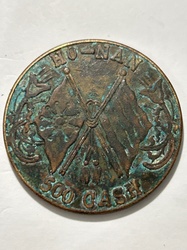
Ho-Nan 100 Cash identified by the community
Real coins identified with Coin Identifier.
Other coins you may enjoy
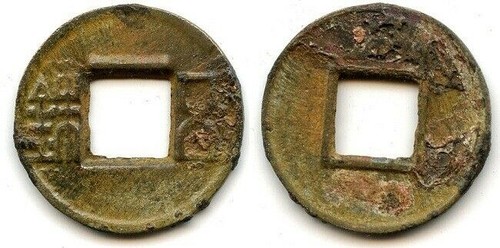
Wu Zhu Cash
Han Dynasty (issue attributed to the reign of Emperor Xuandi, 74-49 BC)
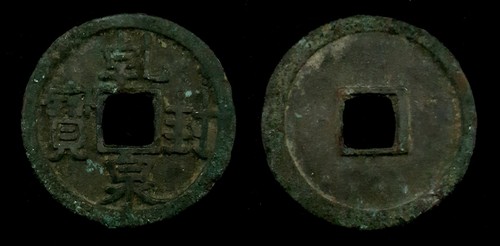
Qian Feng Quan Bao
Tang Dynasty, Qianfeng era (666-667 CE)

Qianlong Tongbao (An Nam)
18th century (Qianlong period, mid-to-late 1700s)
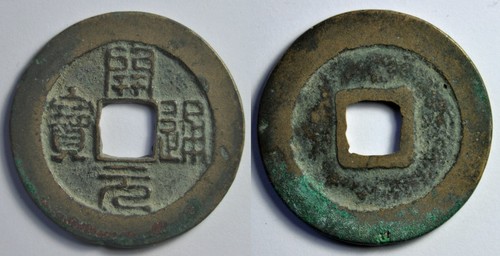
Kai Yuan Tong Bao
Tang Dynasty (7th-10th century AD)
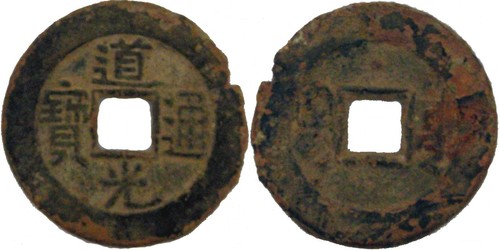
Daoguang Tongbao
1821–1850
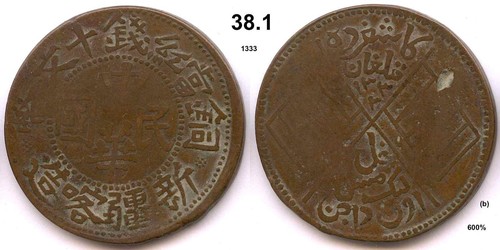
Aksu Mint 10 Cash
Republic of China period (early 20th century)
10 Cash (Republic)
Republic of China era (from 1912; many issues struck through the 1910s-1920s)